Women of Faith and Freedom Mark March 8
- By WRN Editorial Staff --
- 08 Mar 2026 --
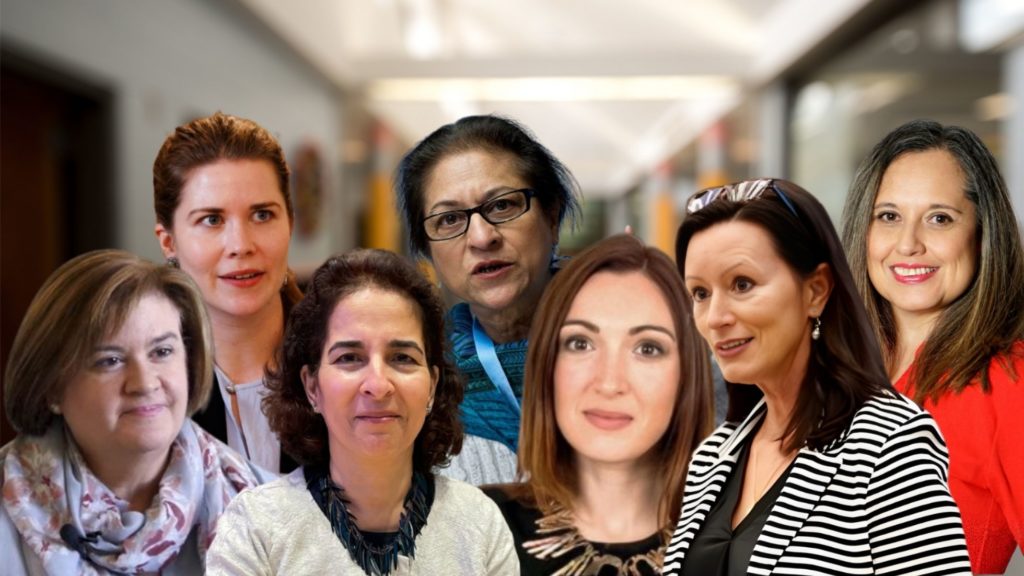
International Women’s Day becomes a moment not only of celebration, but of recognition for women strengthening religious life, defending conscience, and protecting freedom of religion or belief worldwide.
Across the world, International Women’s Day is being marked not only with tributes to women’s achievements, but also with renewed attention to the women who help shape religious communities and defend the freedom of others to live according to conscience. In faith settings, rights institutions, governments, and international bodies, women are increasingly visible in a field that touches some of the most sensitive questions in public life: belief, identity, dignity, and peaceful coexistence.
This year’s observance carries a notably hopeful tone. In many places, women are being recognized not only for service within churches, temples, synagogues, mosques, and faith-based organizations, but also for their role in defending human rights in plural societies. That matters because freedom of religion or belief is rarely an abstract issue. It affects how people worship, speak, educate their children, bury their dead, form communities, and participate fully in public life without fear or discrimination.
Some of the most uplifting signs come from religious communities themselves. In India, the Kashi Vishwanath Temple in Varanasi offered women devotees special access on the occasion, framing the gesture as a recognition of women’s dignity and spiritual importance. In Christian circles, the World Council of Churches has connected this year’s conversations to women’s rights, dignity, and agency, while the Holy See has emphasized the importance of women’s participation in shaping the future.
These gestures may seem symbolic, but symbols often matter in religious life. They signal who is seen, who is valued, and whose voice is welcomed. They also point to a reality often overlooked in more combative public debates: religion is not only a site of inherited tradition. It is also a place where women continue to build community, sustain compassion, and press institutions to become more attentive to justice and inclusion.
Women defending freedom of religion or belief
International Women’s Day is also an opportunity to recognize women who defend freedom of religion or belief in a very concrete way. Around the world, they serve as lawyers, diplomats, scholars, public officials, commissioners, and advocates. Their work is often patient rather than dramatic, but it is indispensable. It includes protecting minorities from discrimination, encouraging fair laws, documenting abuses, supporting dialogue across differences, and reminding institutions that freedom of conscience belongs to everyone, whether religious or not. They have defended Christians of all denominations, Hindus, Buddhists, Agnostics, Scientologists, Bahais, Zoroastrians, Jainist, and everybody else in the large spectrum of belief.
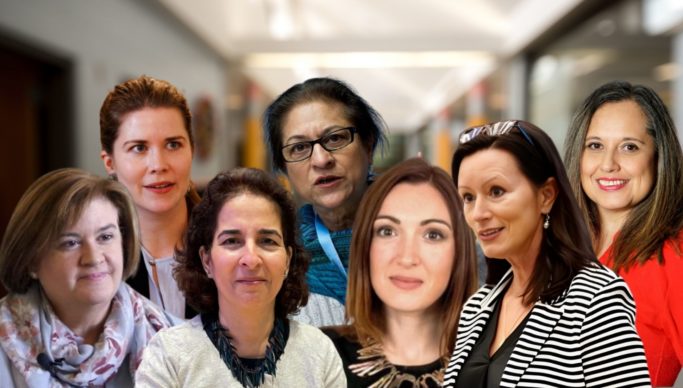
The history of the United Nations Special Rapporteur on freedom of religion or belief illustrates that role clearly. Since the mandate was established in 1986, only a small number of experts have held it. Among them, two women stand out with particular significance: Asma Jahangir, the renowned Pakistani human rights lawyer who served from 2004 to 2010, and Nazila Ghanea, who took up the mandate in 2022. Their work helped show that freedom of religion or belief is inseparable from broader questions of equality, minority protection, and human dignity.
Jahangir brought to the role the authority of a lawyer who had already become internationally respected for defending women, dissidents, and vulnerable communities. Her years as Special Rapporteur helped reinforce the idea that religious freedom should never be treated as a narrow or isolated concern. It intersects with education, family life, legal equality, and freedom from coercion. Ghanea has continued that line of work with sustained attention to equal citizenship, minority rights, and the everyday harms that follow when states fail to protect freedom of conscience in practice.
The work of women in this field extends well beyond the UN system. At the OSCE Office for Democratic Institutions and Human Rights, Susan Kerr has long been associated with efforts to strengthen protection for freedom of religion or belief and to promote practical dialogue across religious and belief communities. In the same wider ODIHR environment, Mikaela Christiansson has also been linked to work addressing intolerance and discrimination affecting Christians and members of other religions. Such institutional work may appear technical from the outside, but it often helps create the conditions in which vulnerable communities are heard rather than sidelined.
National governments also matter. In Spain, Mercedes Murillo Muñoz serves as Director General for Religious Freedom, a role that reflects the continuing importance of managing religious diversity with constitutional seriousness and public responsibility. In the United States, Maureen Ferguson is a commissioner of the U.S. Commission on International Religious Freedom, contributing to one of the world’s most visible institutional efforts to monitor violations and keep religious freedom on the international policy agenda. Another important voice in this wider network is Fernanda San Martín Carrasco, Director of the International Panel of Parliamentarians for Freedom of Religion or Belief. Through IPPFoRB, she works with legislators and parliamentary actors across regions, helping connect religious freedom to democratic debate, public policy, and international cooperation.
More than representation
What makes these examples meaningful is not merely that women hold prominent roles. It is the nature of the work itself. Defending freedom of religion or belief requires persistence, moral clarity, and an unusual willingness to listen to communities that often feel ignored or misunderstood. It means distinguishing between neutrality and indifference. It means understanding that minority rights are not optional extras, but part of the democratic promise itself.
Women working in this field have frequently helped broaden the conversation beyond abstract legal formulas. In practice, they have drawn attention to what freedom of conscience looks like in daily life: whether a believer can worship openly, whether a dissenter can speak honestly, whether a minority can organize lawfully, whether a family can observe religious rites without harassment, or whether a person can change religion or abandon belief without intimidation or retaliation.
That is one reason International Women’s Day resonates so strongly in this area. The day is not only about achievement in the conventional sense. It is also about recognizing forms of courage that make plural societies livable. Some of that courage is highly visible, as in the work of UN experts, commissioners, or senior officials. Some of it is quieter, expressed by women in local communities who mediate tensions, support targeted families, document abuses, defend prisoners of conscience, or help young people resist prejudice.
Faith, dignity, and hope
For readers interested in the relationship between religion and public life, perhaps the most encouraging aspect of this year’s observance is that it does not fit neatly into a familiar narrative of conflict between faith and women’s rights. In many contexts, women are demonstrating the opposite. They are showing that religious conviction can sustain courage, that moral leadership can emerge from service, and that defending freedom of belief can be part of a larger commitment to human dignity.
That does not erase real tensions inside religious institutions or suggest that progress is even across all traditions and countries. It does, however, offer a fuller and more human picture. On this International Women’s Day, women are not only being honored within religious communities. They are also helping defend the very freedom that allows diverse religious and belief communities to exist side by side.
From the United Nations and the OSCE to national administrations, parliamentary networks, and civil society platforms, women continue to strengthen one of the most fragile and necessary freedoms in public life: the freedom to believe, not believe, change belief, and live according to conscience. That is not only a women’s story. It is a story about the moral health of open societies.
And that is why this year’s Women’s Day, seen through the lens of religion and rights, feels more than ceremonial. It feels like a reminder that some of the strongest guardians of freedom are also among its most constructive bridge-builders.