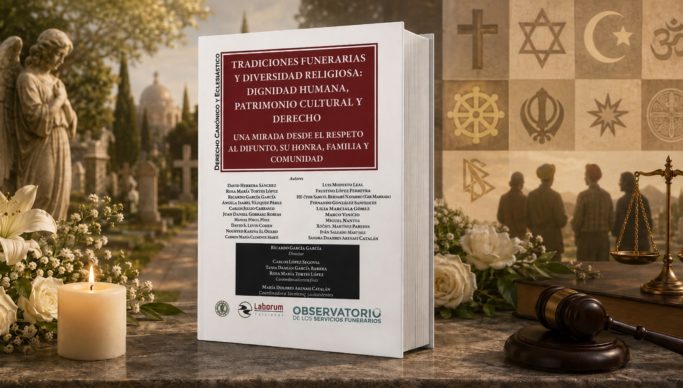
New Book Maps Spain’s Diverse Funeral Traditions
- By WRN Editorial Staff --
- 10 Jul 2026 --
A major interdisciplinary volume examines how religious freedom, human dignity and cultural heritage continue beyond death.
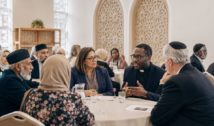
A newly published book is bringing together legal scholars, religious representatives and funeral-sector specialists to address a question that modern societies often leave unanswered: what does genuine respect for religious and cultural diversity require when a person dies?
Tradiciones funerarias y diversidad religiosa: dignidad humana, patrimonio cultural y derecho, published in Spain by Ediciones Laborum, examines the treatment of the deceased, the rights of families and the funeral traditions of religious and non-religious communities present in contemporary Spain.
The 495-page Spanish-language volume carries the subtitle A Perspective Based on Respect for the Deceased, Their Honour, Family and Community. Directed by Ricardo García García, professor of State Ecclesiastical Law at the Autonomous University of Madrid (former Director of Relations with the Religious Denominations at the Spain Ministry of Justice), it combines demographic analysis, constitutional law, religious law and practical guidance for funeral professionals and public authorities.
Its central argument is direct: mortal remains cannot be treated merely as biological material or “polluting waste.” The body retains a profound relationship with the dignity, memory and identity of the person who has died, while funeral rites remain important expressions of religious freedom, family life and cultural heritage.
Religious freedom at the end of life
Freedom of religion or belief is usually discussed in relation to worship, education, employment, dress or public expression. The new book extends that discussion to death, burial, cremation, mourning and remembrance.
Funeral practices are not simply private customs. They may determine how a body is washed, clothed or positioned; how quickly burial should take place; who may handle the deceased; whether cremation is accepted; which prayers are said; and how relatives and the wider community participate in mourning.
When institutions overlook those requirements, the consequences can be deeply distressing. A standard procedure that appears neutral may conflict with the convictions of the deceased or the family. Delays, unsuitable facilities, the removal or imposition of religious symbols, and the absence of appropriate burial spaces can all interfere with the practical exercise of freedom of religion or conscience.
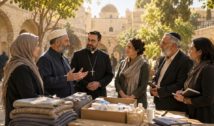
The volume therefore presents funeral services as an essential point of contact between individual rights, religious communities, municipal authorities, healthcare rules and commercial providers. It argues that legal equality cannot be achieved by forcing every family into the same ceremonial model. Equal treatment sometimes requires informed accommodation of different practices.
A portrait of a changing Spain
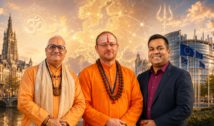
The opening section places funeral practice within Spain’s changing demographic and religious landscape. Although Catholicism has historically shaped the country’s cemeteries and public rituals, Spain is now home to increasingly visible Evangelical, Orthodox Christian, Muslim, Jewish, Buddhist, Hindu, Bahá’í, Scientology and other religious communities.
Secularisation has also changed how many families approach death. Atheists, agnostics and people with no formal religious affiliation may still seek meaningful ceremonies built around memory, music, silence, personal testimony and the life story of the deceased.
This diversity is not theoretical. It affects funeral homes, crematoria, cemeteries, hospitals and municipalities every day. It also raises questions about whether public facilities provide suitable multifaith or neutral spaces and whether staff receive enough training to ask families the right questions.
The book’s legal chapters examine the relationship between human dignity, freedom of belief, privacy, data protection, consumer rights, public health and access to a dignified burial. They also address Spain’s decentralised regulatory system, in which the national government, autonomous communities and municipalities exercise different responsibilities.
Traditions described in their own terms
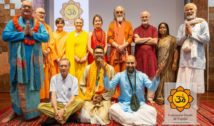
A substantial part of the book is devoted to the teachings and practices of individual communities. Rather than treating religious funerals as variations on a single dominant model, the contributors explain how each tradition understands death, the status of the body, the needs of mourners and the practical requirements of funeral care.
The Catholic chapter examines canon law, funeral liturgies, cemeteries, columbaria and the Church’s rules on burial and cremation. It also considers the circumstances in which ecclesiastical funerals may be granted or refused, placing the dignity of the deceased and freedom of religion or conscience within the wider legal framework.
The section on Evangelical churches reflects the diversity of Protestant communities and the absence of a single universal funeral rite. Scripture, preaching, congregational singing and support for the bereaved occupy a central place, while many Evangelical services focus primarily on comforting the living and affirming the hope of resurrection.
Orthodox Christian practice is presented through its understanding of death as a passage from temporal to eternal life. The chapter describes preparation of the body, vigils, burial services, the preference for interment rather than cremation, and the continuing commemoration of the dead at established intervals after the funeral.
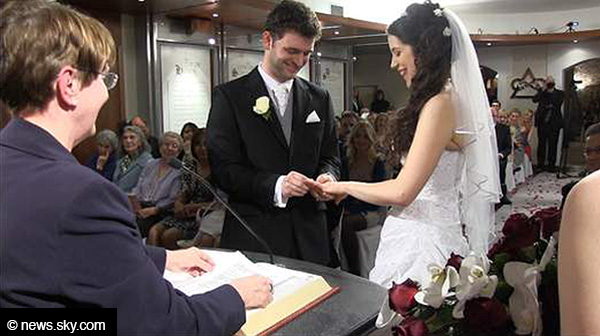
The volume also examines the Sephardic Jewish principle of kavod ha-met, the honour owed to the deceased. Ritual purification, simple shrouds, prompt burial and respect for the integrity of the body form part of a wider religious duty carried out by the community and, traditionally, by the Hevra Kadisha.
The chapter on Islam explains the washing and shrouding of the body, the funeral prayer and burial facing the qibla. It also addresses the importance of avoiding unnecessary delay, the general rejection of cremation, the participation of family and community, and the continuing responsibilities of condolence and prayer after burial.
Bahá’í teachings are explored through their understanding of death as the soul’s passage to another stage of existence. The chapter discusses the prayer for the dead, preparation of the body, the funeral ring, burial rather than cremation, and the rule that the body should not normally be transported more than one hour from the place of death.
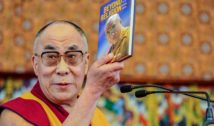
The Buddhist contribution considers death in relation to consciousness, rebirth and spiritual preparation. Particular attention is given to Tibetan Buddhist practice, including the importance of a calm environment, the possible need to leave the body undisturbed for a period, the role of spiritual teachers and the treatment of the body before cremation or burial.
The Church of Jesus Christ of Latter-day Saints presents death as a temporary separation of body and spirit. Funeral services are generally reverent, centred on Jesus Christ and the hope of resurrection, while also offering practical and spiritual support to the family; burial is commonly preferred, and the grave may be dedicated through a priesthood prayer.
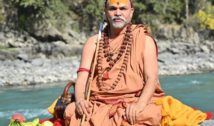
The Hindu chapter explains Antyeshti, the final rite of passage within Sanatana Dharma. The body may be washed, prepared and placed before sacred fire, while prayers and mantras accompany cremation; later observances can include the collection and immersion of the ashes and shraddha rites honouring ancestors and assisting the soul’s transition.
Contemporary European pre-Christian religions are treated as distinct living traditions rather than as a single category. The chapters on Ásatrú, Druidry and Celtiberian Wicca describe approaches shaped by cyclical understandings of life and death, reverence for nature, ancestral memory and ceremonies adapted to the beliefs and wishes of the deceased community member.
The Scientology chapter, written by Ivan Arjona-Pelado, begins from the belief that the person is a thetan, an immortal spiritual being whose existence is not limited to one body or lifetime. Its funeral practice is comparatively simple and may include either burial or cremation, while the service helps acknowledge the completed life, support the deceased’s spiritual transition and assist mourners through remembrance, pastoral care, assists and auditing.
The final contribution considers atheism, agnosticism and religious indifference. It emphasises that the absence of religious doctrine does not mean the absence of convictions, symbolism or ceremony, and examines personalised farewells built around memory, music, silence, testimony and the life story of the deceased.
From academic study to practical guidance
The book grew from cooperation among universities, religious communities and the Observatory of Funeral Services. Its ambition is not confined to academic debate. Many chapters offer recommendations for funeral companies, cemetery managers and public bodies.
These include consulting families before placing religious symbols, maintaining adaptable ceremonial spaces, establishing contact with local religious representatives and avoiding assumptions based on a person’s name, nationality or background.
The contributors also encourage professionals to understand the difference between practices that are optional and those considered religiously essential. For one family, cremation may be preferred; for another, it may be unacceptable. Some traditions require burial as soon as reasonably possible, while others place particular importance on vigils, prayers, the orientation of the body or later commemorative services.
This knowledge can prevent avoidable conflict at a moment when families are especially vulnerable. It can also help funeral professionals provide a service that is not only efficient, but humane.
Funeral rites as living heritage
One of the book’s most distinctive proposals is that funeral traditions should be understood as part of society’s intangible cultural heritage. Rituals surrounding death transmit beliefs about the person, the body, the community, memory and transcendence. Even as practices evolve, they continue to connect generations.
The volume does not argue that every historical custom must remain unchanged. Rather, it warns that modernisation should not reduce death to administration, logistics or disposal. Technical efficiency, public health and environmental responsibility remain necessary, but they should coexist with dignity, religious liberty and attentive care for families.
That message extends beyond Spain. Migration and religious diversification are requiring governments and funeral providers across Europe to reconsider facilities, regulations and professional training. Families themselves are also becoming more religiously mixed, making listening and personalisation increasingly important.
Tradiciones funerarias y diversidad religiosa enters that discussion with an unusually broad collection of voices. Its lasting contribution may be its insistence that pluralism must be respected not only in the way people live, worship and identify themselves, but also in the way they are mourned, honoured and laid to rest.
Authors and Chapters (in Spanish)
- David Herrera Sánchez and Rosa María Tourís López — “The Starting Point: Spain’s Population, Statistics and Funeral Projections”
- Rosa María Tourís López — “Funeral Services, Religious Diversity and the Right to a Dignified Burial in Spain: A Study of the Basic Legal Framework at State, Regional and Municipal Levels, and the Internal Law of Religious Entities”
- Ricardo García García — “Fundamental and Constitutional Rights and Freedoms in Death: ‘Human Remains Are Not Mere Polluting Waste’ and Funeral Practices as Intangible Cultural Heritage of Humanity”
- Andrés Jaime Valencia Pérez — “The Main Religious Traditions Present in Spain: Data on Religious Entities”
- Carlos López Segovia — “Ecclesiastical Funerals, Funeral Services and Burials in the Catholic Church: A Canon Law Perspective”
- Juan Damián Gandía Barber — “Funerals and Burials in Evangelical Churches: A Practical Approach”
- Marius Picu Picu — “Death and Mourning in the Orthodox Church”
- David S. Levy Cohén — “Funeral Honour, Ceremony, Burial and Human Dignity: A Jewish Perspective from the Sephardic Rite”
- Mohamed Ajana El Ouafi — “Funeral Rites, Funerals and Burials in Islam: A Perspective from the Muslim Community”
- Clarisa Nieva Echeverría — “Death and Mourning in the Bahá’í Faith”
- Luis Morente Leal — “Death in Buddhism, with Special Reference to the Tibetan Funeral Process”
- Faustino López Requena — “Death and Mourning in the Beliefs of The Church of Jesus Christ of Latter-day Saints”
- H.E. Pujya Swami Rameshwarananda Giri Maharaj — “Funeral Rites, or Antyeshti, in Hinduism and Sanatana Dharma”
- Fernando González Sarrenes, Luís M. Gonzàlez Gibert, Marta Vey Oset, Míchel Nantes and Xoán “Milésio” Paredes — “Funeral Rituals and Religious Tradition among European Pre-Christian Religions”
- Iván Arjona-Pelado — “Scientology: Death Is Not the End — Mourning, Funerals and Spiritual Transition”
- María Dolores Asensi Catalán — “Funeral Honour and Remembrance from the Perspectives of Atheism, Agnosticism and Religious Indifference in Spain: Principles for a Personalised and Humanised Funeral Service”