


Celebrations across continents highlight Falun Gong’s spiritual identity and the continuing limits on belief in China.
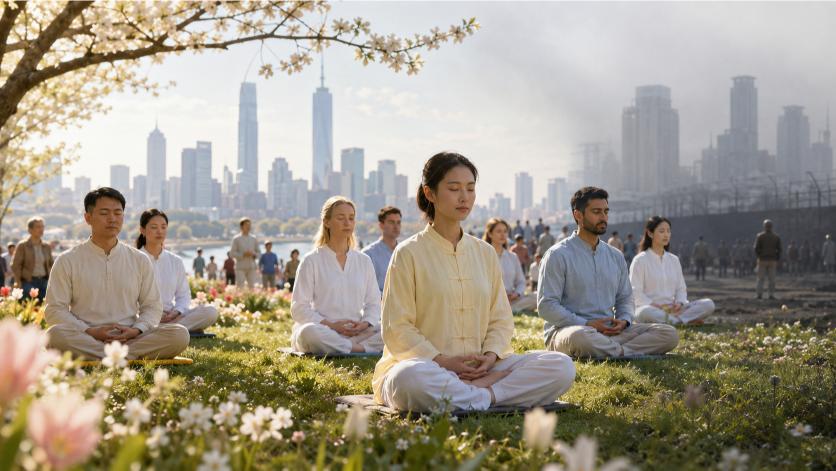
Falun Dafa practitioners in China and around the world marked World Falun Dafa Day on May 13, celebrating the 34th anniversary of the practice’s public introduction in China while also drawing attention to the long-running repression faced by adherents inside the country.
According to the Falun Dafa Information Center, this year’s commemorations included public gatherings, parades, performances and official messages of support in several countries. Inside mainland China, where open celebration remains restricted, practitioners reportedly sent greetings, poems, calligraphy, photographs and digital cards to Minghui.org, a website widely used by Falun Gong practitioners to document personal experiences and reports of persecution.
A day of gratitude and visibility
World Falun Dafa Day is observed each year on May 13. The date commemorates the public introduction of Falun Dafa, also known as Falun Gong, by Li Hongzhi in Changchun, China, in 1992. It also coincides with the birthday celebrated by practitioners for the movement’s founder.
Falun Dafa’s own materials describe it as a spiritual practice “rooted in Buddhist tradition,” combining moral self-cultivation with meditation and gentle exercises. Its central principles are commonly rendered as Truthfulness, Compassion and Forbearance. The official Falun Dafa website says the practice is now followed in more than 100 countries and that its teachings have been translated into more than 50 languages.
This year’s public commemorations were especially visible in Canada. Minghui reported that practitioners held group exercises and artistic performances on Parliament Hill in Ottawa on May 5, with 19 Members of Parliament attending or speaking at the event. Another Minghui report said Ottawa Mayor Mark Sutcliffe proclaimed May 2026 as Falun Dafa Month, recognizing the practice as part of the city’s cultural and spiritual diversity.
Celebration shaped by repression
For many practitioners, the day is both joyful and political in the broader human-rights sense. Outside China, celebrations often include music, meditation demonstrations, banners and cultural performances. In China, the same observance is described by practitioners as quieter and more private because of the risks attached to public association with Falun Gong.
The Chinese government banned Falun Gong in 1999, portraying it as a threat to the Communist Party and classifying it with language that practitioners and human-rights groups reject. A November 2025 UK Home Office country policy note states that Falun Gong practitioners in China may face harassment, arrest, detention, long prison sentences and coercive pressure to renounce their beliefs. The same note says reported estimates of the number of practitioners vary widely and are difficult to verify.
Freedom of religion and belief groups have also continued to raise concerns about China’s wider religious-control system. Freedom House states in its 2025 China report that several religious communities, including Falun Gong practitioners, Tibetan Buddhists, Muslim groups and Christian house churches, face harsh persecution under policies that seek tighter state control over religious life.
A wider religious-freedom issue
The Falun Dafa Day celebrations therefore sit at the intersection of spirituality, cultural identity and civil liberties. For adherents, the date is a moment to express gratitude for a practice they say has brought health, discipline and moral purpose. For rights advocates, it is also a reminder that belief communities can be vulnerable when a state treats independent religious or spiritual organization as a political threat.
That tension has become international. Falun Gong communities abroad have reported pressure, harassment and attempts to silence public advocacy. Human-rights organizations and legislators in several countries have increasingly described such cases as examples of transnational repression, particularly where foreign governments or their proxies are accused of trying to intimidate diaspora communities.
Allegations of forced organ harvesting have added another grave layer to the issue. In 2021, UN human-rights experts said they were alarmed by reports that detainees from ethnic, linguistic and religious minorities, including Falun Gong practitioners, had allegedly been subjected to medical testing and organ removal without consent. China has denied such allegations, while rights advocates have continued to call for independent access, transparency and accountability.
The European Parliament has also addressed the subject. In a 2022 resolution on reports of continued organ harvesting in China, lawmakers urged EU institutions and member states to condemn abuses and to take steps to prevent European complicity in unethical transplant practices.
Why the anniversary matters
World Falun Dafa Day is not simply an internal anniversary for one spiritual movement. It has become a public marker of how religious and spiritual minorities survive under pressure, how diaspora communities preserve identity, and how governments abroad respond when freedom of belief becomes part of foreign policy and human-rights diplomacy.
The contrast is striking: in Ottawa, practitioners could meditate openly in front of Parliament; in mainland China, supporters reportedly sent discreet greetings through online channels. That difference captures the central issue behind the commemoration. For Falun Gong practitioners, May 13 is a day of celebration. For observers of religious freedom, it is also a measure of whether conscience can be lived openly without fear.
As this year’s events showed, the movement remains visible globally despite more than two decades of repression in its country of origin. Whether through public parades, municipal proclamations, quiet messages from inside China or continued appeals to international institutions, Falun Dafa Day has become both a spiritual observance and a continuing statement about the right to believe, practice and gather freely.