Spain’s Hindu Federation Re-elects Krishna Kripa Dasa as President
- By WRN Editorial Staff --
- 20 Mar 2026 --

The Federation’s renewed leadership says its next three-year term will focus on representation, coordination and stronger public recognition for Hindu communities across Spain.
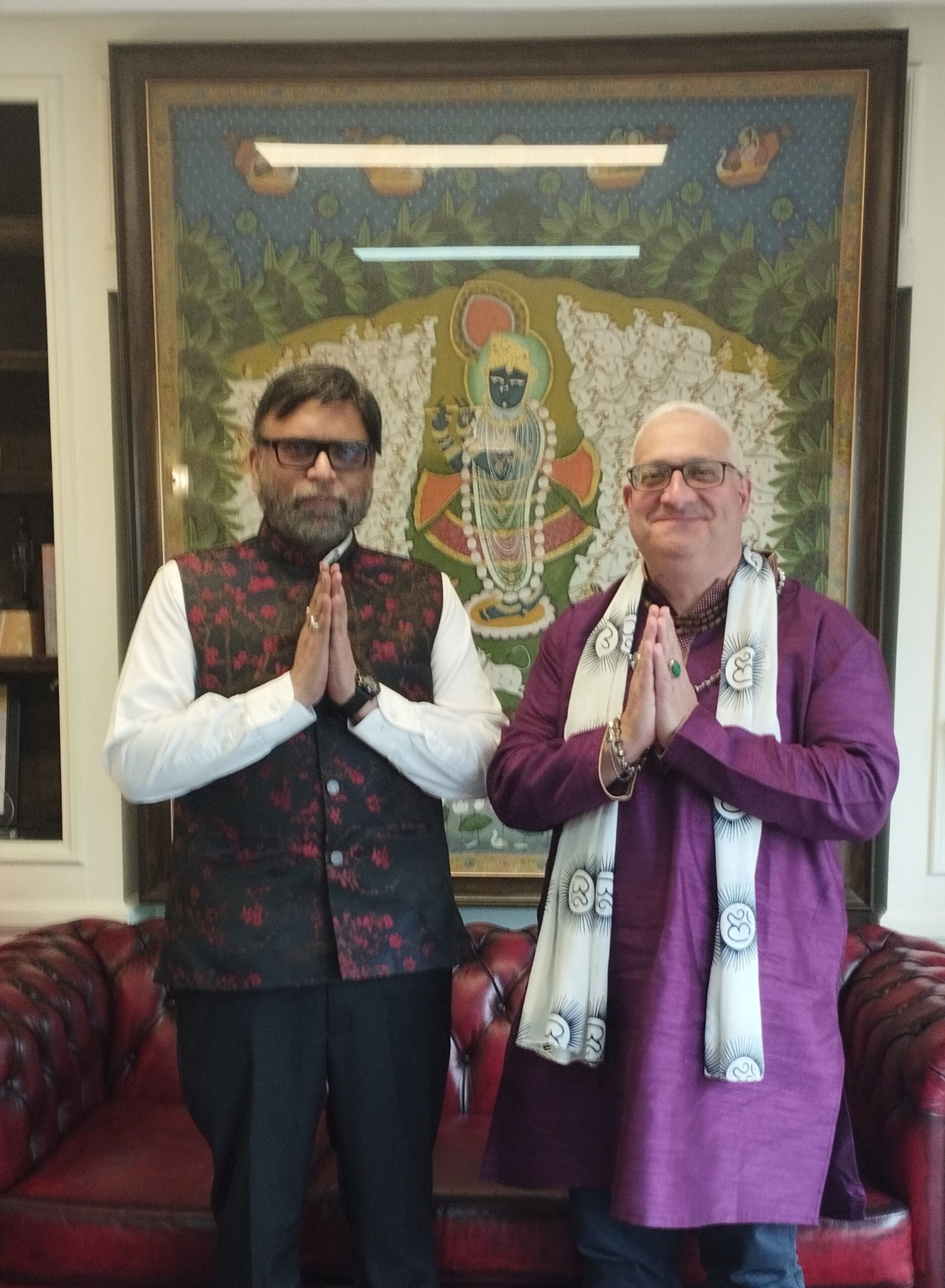
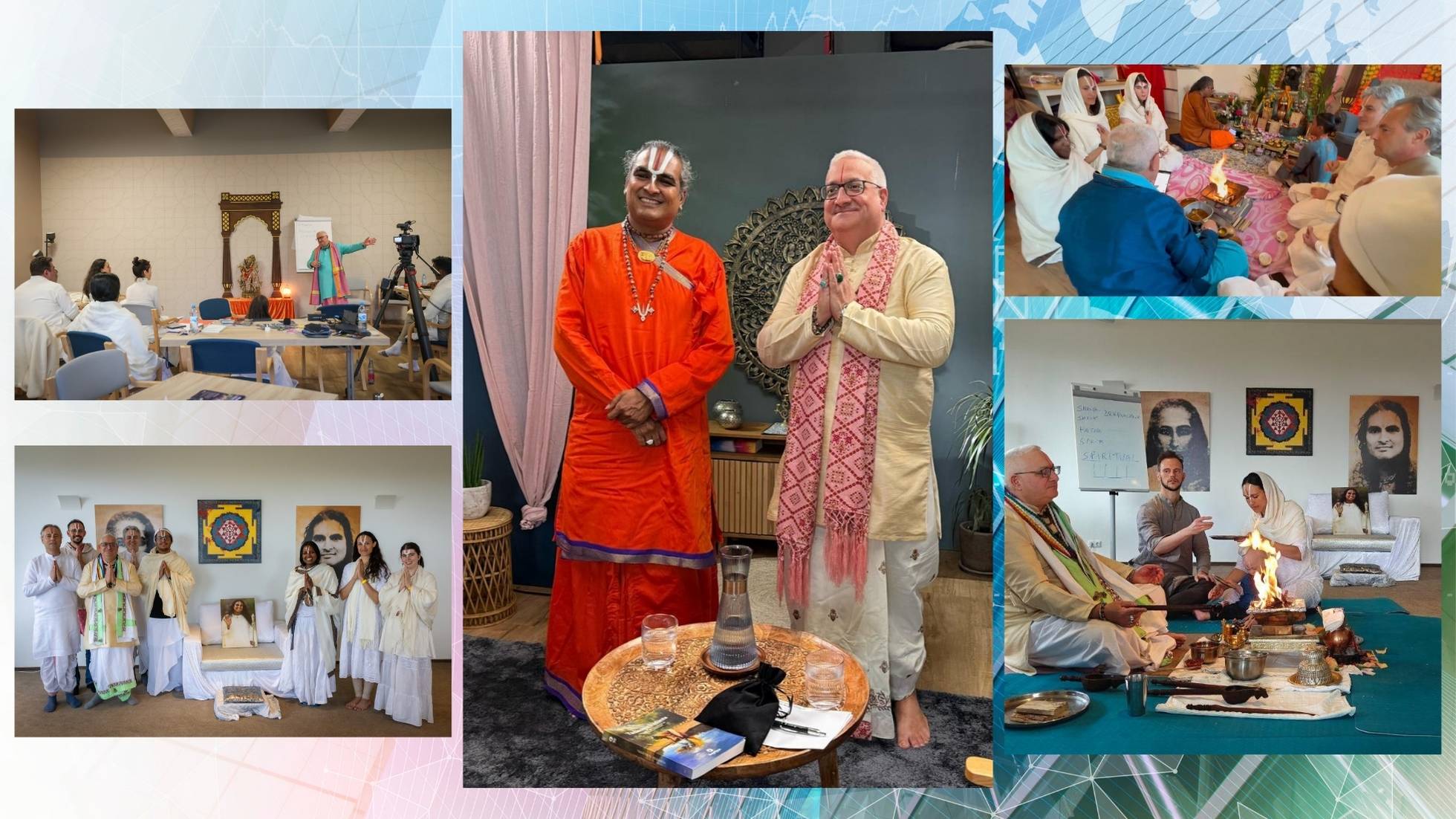
The Hindu Federation of Spain has renewed its governing board and unanimously re-elected Juan Carlos Ramchandani, also known as Pandit Krishna Kripa Dasa, as president for the 2026–2029 term. The decision was taken during the federation’s annual General Assembly, held online on 10 March because member associations are spread across different parts of the country.
According to local reports in El Faro de Ceuta and La Verdad de Ceuta, the assembly also approved the federation’s annual accounts and budget, planned activities for the coming year, and agreed to admit a new member body, Sanatan Bhakti Seva of Barcelona. The addition highlights the federation’s continued expansion and the wider geographic spread of Hindu life in Spain.
The re-election of Ramchandani extends a leadership period that now approaches eleven years. During that time, he has become one of the most visible Hindu representatives in Spain, known for combining pastoral work, writing, religious education and interfaith engagement.
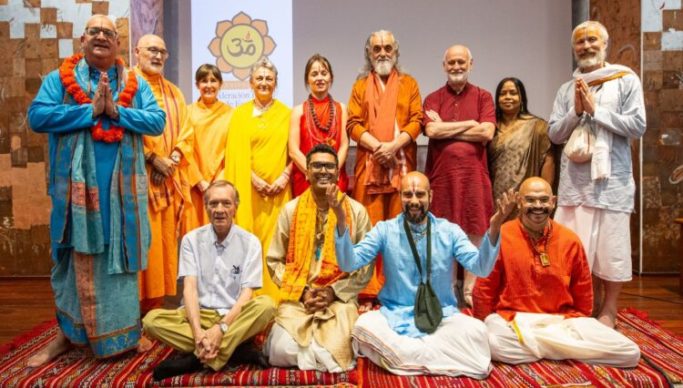
The new board brings together representatives from several Hindu traditions and regional communities. Alongside Ramchandani as president, the leadership includes Gopishvara Das of the Centro Védico Jagannatha in Tenerife as vice-president; Shrivatsa Govinda Dasa of Sanatan Bhakti Seva in Barcelona as secretary; and Shánkara of the Asociación Hindú Veda Dharma in Madrid as treasurer. Two board members, Swami Prema Rajendra of Jahnava Mandir Ashram in Almería and Shankari Shaktini of Vaidika Pratishtha Sangha in Granada, will serve as members-at-large. The federation also continues to receive advisory support from Sri Swami Rameshwarananda Giri of the Centro Vedántico in Acebo, Cáceres, especially in matters concerning public administration and interreligious dialogue.
A national voice for Hindu communities
The board renewal may appear procedural, but it carries wider significance. Spain’s Hindu communities are shaped by different devotional traditions, philosophical schools, migration histories and regional settings. The federation’s role is therefore not to standardise belief or ritual practice, but to provide a common platform for representation while respecting the autonomy of its member associations.
That was central to the message emerging from the assembly. The federation said it aims to represent Hindu communities before the Spanish government and regional and local administrations, while avoiding interference in the internal organisation and forms of worship of each member body. In practice, this means cooperation on public recognition, religious rights, visibility and institutional dialogue.
In comments reported after the vote, Ramchandani said the new mandate should be seen as “an opportunity to continue moving forward in a spirit of cooperation” and to advance shared goals for the benefit of Hindu communities across Spain. The emphasis on cooperation reflects a broader challenge facing minority faiths in Europe: building a collective public voice without erasing internal diversity.
The federation has also stressed that both the president and the rest of the board serve on a voluntary basis and without remuneration. That detail matters because minority faith representation often depends less on large institutions than on sustained personal commitment from community leaders willing to devote time to administration, advocacy and dialogue.
The question of recognition
Among the federation’s long-term priorities is broader institutional recognition for Hinduism in Spain, including the goal of obtaining notorio arraigo, a legal status used in Spain to acknowledge the notable social presence of a religious tradition. Scholars and public experts on religious pluralism have for years pointed to Hinduism’s long-standing presence in Spain and to the efforts of Hindu representatives to secure fuller recognition within the country’s legal and administrative framework.
That objective gives the board renewal importance beyond internal governance. It comes at a time when religious diversity in Spain is increasingly visible, but not always equally understood. Hindu communities have longstanding roots in places such as Ceuta and the Canary Islands, as well as growing presences in Madrid, Barcelona, Andalusia and elsewhere. Yet public knowledge of Hinduism often remains limited, shaped more by stereotypes or fragments of popular culture than by awareness of lived communities, temples, priests and family traditions.
In that context, the federation’s work forms part of a broader effort to make Hinduism more visible in public life: not as an abstract idea, but as an organised and established part of Spain’s religious landscape. The admission of a new member entity from Barcelona reinforces that point and underlines the national reach of Hindu communities across the country.
Why this matters
For World Religion News readers, the significance of this development lies less in the mechanics of an election than in what it says about the consolidation of Hindu institutional life in Spain. Minority faith communities often move from local presence to organised worship, then to representative structures, and finally to a longer process of public recognition and equal treatment within national frameworks. The Hindu Federation of Spain is clearly operating in that later stage.
The 2026 assembly therefore marks continuity and consolidation. A long-serving president remains in office with unanimous backing, a new board reflects the breadth of Hindu communities across Spain, and the federation has reaffirmed its role as a representative body engaged in dialogue with public institutions.
At a time when religious pluralism in Europe is often discussed mainly through conflict or legal disputes, this story offers a different picture: one of patient institution-building. It is a reminder that recognition is often advanced not only through court cases or political debate, but through organisation, credibility and steady civic engagement.