Eid Mubarak Marks Ramadan’s Close Worldwide
- By WRN Editorial Staff --
- 20 Mar 2026 --

Muslim families, mosques and communities are welcoming Eid al-Fitr with prayer, charity and reunion, as the holy month of Ramadan gives way to one of Islam’s most joyful annual observances.
Across much of the Muslim world, the greeting “Eid Mubarak” is being exchanged as believers mark Eid al-Fitr, the festival that begins with the month of Shawwal and brings Ramadan to a close. For many Muslim communities in 2026, the date falls on Friday, 20 March, after the Fiqh Council of North America announced that the first day of Shawwal would be Friday, 20 March 2026. At the same time, as many Muslims know well, the exact date of Eid can vary by country or community because the start of the new month is tied to moon-sighting traditions and religious methodology.
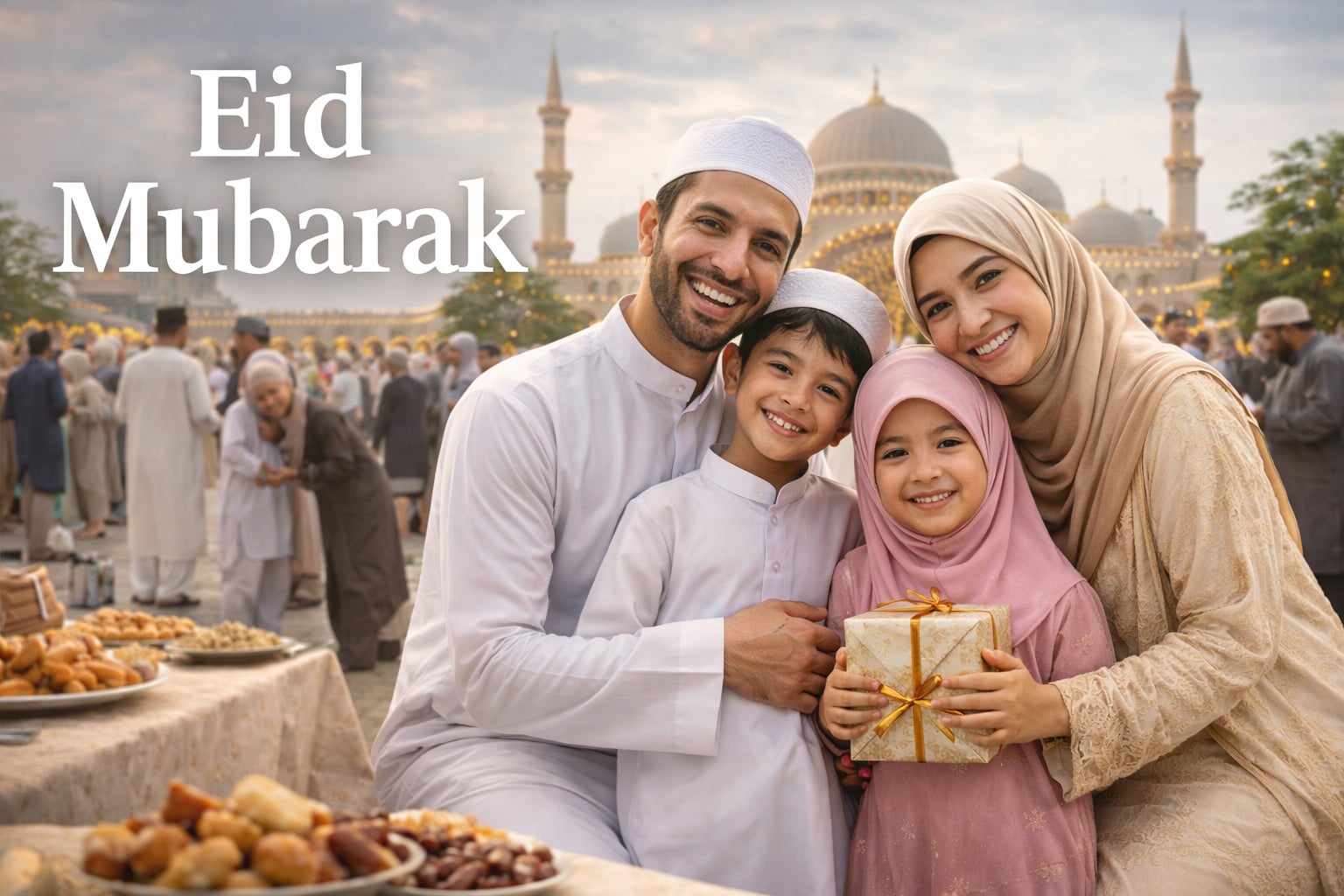
That variation does not change the deeper meaning of the day. Eid al-Fitr is not simply the end of fasting, but the culmination of a month devoted to prayer, discipline, restraint and remembrance of God. After weeks of abstaining from food and drink from dawn to sunset, Muslims enter Eid with a sense of gratitude, renewal and spiritual release. The morning typically begins with communal prayer, often in mosques or large open spaces, where worshippers gather in festive clothes and greet one another in a visible display of unity.
Another essential part of the festival is zakat al-fitr, the charitable donation that must be given before the Eid prayer so that those in need can also take part in the celebration. That obligation gives Eid a significance that is both spiritual and social. The festival is not meant to be enjoyed only in private. It also expresses a core Islamic principle: that devotion to God should be accompanied by care for others, especially at moments of collective joy.
In homes around the world, Eid continues through family visits, shared meals, sweet dishes and gifts for children. Customs vary widely from one country to another, and even from one household to the next, but the rhythm is familiar: prayer, reunion, hospitality and generosity. In Europe, the Middle East, Africa and Asia, Eid also reshapes public space, as worshippers move from prayer into visits, celebrations and community gatherings that stretch across generations.
This year’s Eid arrives at a time when many Muslim communities are also facing war, displacement and economic strain. Humanitarian organisations such as Islamic Relief have warned that many families are approaching Eid in grief, fear and uncertainty. That tension is part of what gives the festival its emotional depth. Eid is not a denial of hardship. It is a declaration that gratitude, prayer and solidarity remain meaningful even in difficult times.
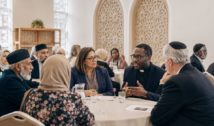
For Muslims living as minorities in Europe and elsewhere, Eid has also become a more visible public moment. What was once kept largely within families and mosque communities is now increasingly recognised in schools, workplaces and civic life. In many cities, Eid prayers bring together worshippers from multiple cultural and linguistic backgrounds, making the festival one of the clearest public expressions of Islam’s diversity as a global faith.
The phrase “Eid Mubarak,” often translated as “Blessed Eid,” captures that spirit well. It is both greeting and prayer, joy and blessing at once. Whether marked in a crowded city mosque, a village prayer ground or a family apartment far from one’s country of origin, the message remains the same: that the discipline of Ramadan has given way to a day of thanksgiving, fellowship and shared celebration.
For readers of World Religion News, Eid al-Fitr is a reminder that religious festivals endure not only because of tradition, but because they continue to offer meaning in modern life. Prayer at dawn, charity before celebration, family after worship, and gratitude at the centre of the day — these are not incidental customs, but a religious pattern that has bound communities together across centuries and continents.