Dalai Lama Marks 91st Birthday in Ladakh
- By WRN Editorial Staff --
- 07 Jul 2026 --
Celebrations for the Tibetan Buddhist leader renewed attention on faith, exile, and the unresolved question of religious authority.
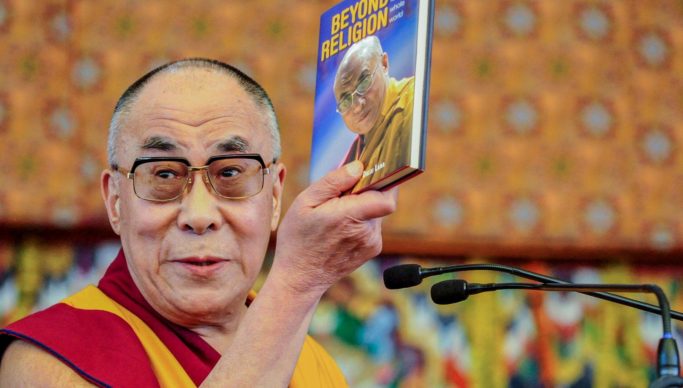
The 14th Dalai Lama marked his 91st birthday on July 6 in Leh, Ladakh, where followers gathered for prayers, music, and public celebrations around one of the world’s most recognizable religious figures. The event, reported by the Associated Press and documented by the Office of His Holiness the Dalai Lama, was more than a birthday ceremony: it was another reminder that Tibetan Buddhism’s most sensitive spiritual question remains inseparable from politics, exile, and freedom of religion.
At the Shewatsel teaching ground in Leh, devotees lined the road with white silk scarves as the Dalai Lama arrived for the celebration. The scene carried familiar elements of Tibetan Buddhist devotion: ritual offerings, prayers for long life, public expressions of gratitude, and the presence of monks, lay followers, local leaders, and international supporters. For many Tibetans, the annual birthday is both a religious observance and a collective act of cultural memory.
The Dalai Lama, born Tenzin Gyatso in 1935, fled Tibet in 1959 after the failed uprising against Chinese rule and later established his exile base in Dharamshala, India. He stepped down from political leadership in 2011, transferring authority to elected Tibetan exile institutions, but he remains the central spiritual figure of Tibetan Buddhism and a global advocate for compassion, nonviolence, interfaith dialogue, and Tibetan cultural survival.
A birthday shaped by succession
This year’s celebration came one year after the Dalai Lama made one of the most consequential statements of his later life. Ahead of his 90th birthday in 2025, he confirmed that the institution of the Dalai Lama would continue after his death and stated that responsibility for recognizing his future reincarnation would rest with the Gaden Phodrang Trust, the foundation he established for that purpose. The decision ended years of speculation that he might choose to be the last Dalai Lama.
The announcement also sharpened the long-running dispute with Beijing. China’s government maintains that the recognition of senior Tibetan Buddhist reincarnations must comply with Chinese law and state approval. Human rights groups and Tibetan exile representatives argue that such claims amount to state interference in a religious process. Amnesty International described Chinese efforts to control the succession as an attack on freedom of religion or belief.
For Tibetan Buddhists, reincarnation is not a ceremonial appointment comparable to an election or government nomination. It is a spiritual process involving religious signs, senior lamas, ritual investigation, and recognition within a lineage. That is why the Dalai Lama’s insistence that no outside authority should interfere carries such weight among his followers.
For China, the issue is bound to sovereignty and control over Tibet. Beijing regards the Dalai Lama as a separatist, an accusation he rejects. He has long advocated a “Middle Way” approach seeking meaningful autonomy for Tibetans within the People’s Republic of China rather than independence. But even that position has not resolved the deeper conflict: who has the authority to define Tibetan religious life?
Faith, memory, and public space
Birthday celebrations for the Dalai Lama are not only about one man. They express the resilience of a community whose religious and cultural institutions have been transformed by exile. In India, Nepal, Europe, North America, and other parts of the Tibetan diaspora, public commemorations often combine prayer, cultural performance, political remembrance, and appeals for nonviolence.
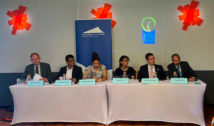
This year, celebrations were held across India and among Tibetan communities abroad. In Brussels, the Office of Tibet hosted a reception marking the birthday and the closing of a “Year of Compassion,” bringing together supporters of Tibet from Belgium and other parts of Europe. In the Netherlands, Tibetan community members gathered in Amsterdam for a two-day celebration. These events show how the Dalai Lama’s influence extends beyond monastic institutions into civic, diplomatic, and interreligious spaces.
That public dimension is important. The Dalai Lama has spent decades presenting Buddhist ethics in language accessible to non-Buddhists: compassion, inner peace, responsibility, and the cultivation of warm-heartedness. His teachings have reached far outside the Tibetan world, yet his own community continues to face the unresolved question of whether its religious future can be protected from political control.
The shadow of the Panchen Lama
The succession dispute is shaped by a painful precedent. In 1995, the Dalai Lama recognized a young boy, Gedhun Choekyi Nyima, as the 11th Panchen Lama, the second-ranking figure in Tibetan Buddhism. The child disappeared from public view soon afterward. Chinese authorities later installed their own approved Panchen Lama, while Tibetan exile groups and human rights organizations continued to ask about Gedhun Choekyi Nyima’s whereabouts.
That episode remains central to Tibetan fears about the next Dalai Lama. If Beijing recognizes one successor and Tibetan religious authorities recognize another, the result could be rival claimants, divided loyalties, and a prolonged struggle over legitimacy. For a tradition built on spiritual continuity, such a rupture would be more than administrative confusion. It would touch the religious identity of millions of Tibetan Buddhists.
The Dalai Lama’s 2025 succession statement was designed to prevent that uncertainty. But it did not remove the political risk. Instead, it clarified the lines of disagreement: Tibetan religious authorities insist the matter belongs to Tibetan Buddhist tradition; China insists it has legal authority over the process inside its territory.
A living symbol at 91
At 91, the Dalai Lama’s public appearances are inevitably watched for signs of health, continuity, and institutional preparation. Yet his birthday celebrations remain notably gentle in tone. The language around him is still the language of long life, compassion, patience, and service. That contrast — between the serenity of Buddhist devotion and the intensity of geopolitical conflict — has defined much of his public life.
For World Religion News readers, the story matters because it sits at the crossroads of faith and power. It raises questions that reach beyond Tibetan Buddhism: Can a state claim authority over the inner processes of a religious tradition? Can exile communities preserve sacred institutions across generations? And how do spiritual leaders prepare their followers for continuity without allowing political actors to seize the moment of transition?
The birthday in Ladakh did not answer those questions. But it made clear that the Dalai Lama, even in advanced age, remains a living symbol of a religious community determined to define its own future. For devotees who gathered in prayer, the day was an act of gratitude. For governments and human rights observers, it was another sign that the question of the next Dalai Lama will remain one of the most sensitive religious freedom issues in Asia.