Malaysia Moves Against Unauthorised Worship Sites, Fueling Debate Over Temples, Land Rights, and Interfaith Harmony
Malaysia’s government has announced a tougher approach toward unauthorised houses of worship—an intervention that has quickly become a national flashpoint in a country where religion is closely tied to identity, politics, and community life. Prime Minister Anwar Ibrahim said authorities would act against worship sites that do not comply with existing laws, particularly those built on land without legal ownership or approval, while warning against vigilantism and insisting enforcement should not be used to inflame religious tensions.
The policy push follows weeks of public dispute over “illegal” temples and shrines and comes amid heightened sensitivities around a proposed protest in Kuala Lumpur and a long-running relocation case involving a century-old Hindu temple in the capital. Supporters argue the government is reaffirming the rule of law and applying regulations equally to all religions. Critics fear that enforcement without clear safeguards could translate into demolition-heavy action that deepens mistrust—especially among Malaysia’s Hindu minority.
Anwar’s Message: Enforcement, but No Vigilantism
Speaking on February 9, Anwar said the government would no longer allow houses of worship that do not follow the law, and that local councils had been empowered to “clear” unauthorised structures, according to The Straits Times. He argued the issue was about equal application of regulations rather than a denial of religious rights, saying that mosques, churches, and other worship buildings should be permitted when built according to legal requirements.
At the same time, he warned against people taking matters into their own hands—an apparent response to rhetoric calling for demolition campaigns. “This country is governed by law,” he said, in remarks reported by The Straits Times. The statement sought to stake out a narrow line: strict enforcement on paper, but restraint in practice, with government—not activists—controlling decisions.
Why Temples Became the Focus
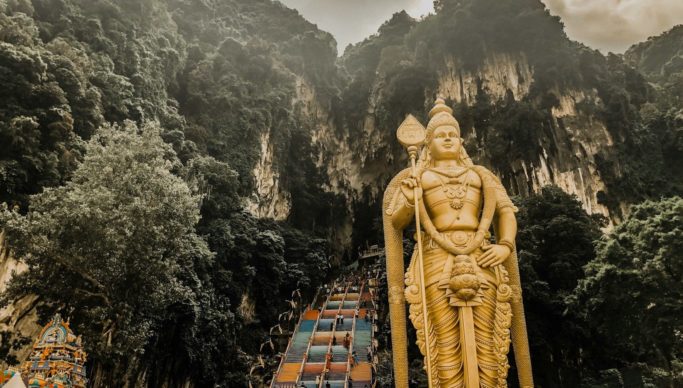
Although Anwar’s comments addressed houses of worship broadly, much of the public controversy has centered on Hindu temples—some of them long-standing sites whose land status is contested. The Straits Times noted recent disputes involving a century-old temple near Jalan Masjid India in Kuala Lumpur, as well as similar cases elsewhere, highlighting how religious buildings can sit at the intersection of history, urban development, and changing land laws.
In Malaysia, Islam is the religion of the federation, and religious administration is deeply structured through state institutions. Hinduism—practiced mainly by the ethnic Indian community—is a minority faith but part of the country’s plural religious landscape. The politics of “unauthorised” worship sites can therefore be perceived not merely as a planning dispute, but as a question of whether minority communities are being treated fairly and whether their historical presence is being respected.
Arrests After a Rally Plan, and a Broader Political Temperature
The debate escalated after authorities moved to stop a planned rally over “illegal” places of worship. Police detained multiple individuals linked to the proposed demonstration, including a controversial preacher, according to reporting by The Star and The Straits Times. The timing—coinciding with the visit of India’s Prime Minister Narendra Modi—added a diplomatic and communal layer to an already sensitive domestic issue, even as organisers denied political motives.
Some of those arrested say they plan to pursue legal action over the blocked rally and arrests, according to Free Malaysia Today. The episode has intensified scrutiny of how authorities manage religiously sensitive disputes: preventing unrest while also ensuring the state is not seen as suppressing expression selectively.
Relocation vs. Demolition: What “Action” Looks Like
One of the most contentious questions is what enforcement will mean on the ground. Legal advocates warn that broad directives can be interpreted by local councils as permission for sweeping demolitions. The Straits Times reported that Lawyers for Liberty director Zaid Malek cautioned that “cleaning up” could be read as a demolition mandate unless alternatives are clearly offered and institutional safeguards are set out.
Others argue that older temples—some built long before independence or before modern planning regimes—sit in a legal grey zone created partly by administrative failures. Critics say the state cannot solve such disputes solely by punishment when land title problems may reflect decades of inconsistent governance and the absence of systematic regularisation.
Calls for a “freeze” on demolitions have emerged from Hindu temple representatives, who say a pause could reduce tensions while authorities pursue solutions, according to Free Malaysia Today. Lawyers and civil-society voices have also urged a cautious, law-based approach that recognises the wider social implications of enforcement actions, rather than treating the issue as a simple municipal clean-up, as described by Free Malaysia Today.
A High-Profile Case in Kuala Lumpur
Complicating the picture is a highly visible Kuala Lumpur temple relocation controversy linked to a major development plan. In January, The Star reported that Federal Territories Minister Hannah Yeoh said a new site had been prepared for the relocation of the Dewi Sri Pathrakaliamman Temple as part of plans connected to the Masjid Madani project. Coverage of the issue has underlined how urban development and religious presence can collide, with each side arguing that law, history, and community dignity must be protected.
For many Malaysians, the dispute has become symbolic: not only about one temple or one mosque, but about how a multi-religious society negotiates competing claims in the heart of a rapidly changing city.
Institutional Gaps and the “Penang Model”
Beyond individual cases, some analysts point to institutional gaps in how Malaysia manages non-Muslim worship sites. The Straits Times reported arguments that Penang offers an alternative model, where a Hindu endowments board oversees temples and supports regularisation and relocation—reducing the likelihood that disputes are handled purely through enforcement.
Advocates of statutory governance say formal structures can shift temple management away from informal arrangements and toward transparent, accountable processes—an approach echoed in commentary calling for institutionalising temple administration, such as a recent column in Malaysiakini. While Malaysia’s religious administration differs across states and communities, the broader point is widely recognised: clear, stable mechanisms reduce the space for politicised conflict.
What’s at Stake for Religious Coexistence
Malaysia’s religious diversity is often described as a lived reality—expressed through neighbourhoods where mosques, temples, churches, and gurdwaras exist within close proximity. But it is also a political reality, shaped by constitutional arrangements, state-level religious authority, and the way identity can be mobilised during moments of national tension.
That is why the government’s framing matters. If enforcement is seen as even-handed, predictable, and accompanied by workable pathways—such as relocation, compensation, or regularisation—authorities may be able to reduce conflict while strengthening public confidence. If it is seen as selective or punitive, it risks turning planning disputes into communal grievances.
In recent reporting, the Prime Minister has tried to set boundaries: uphold the law, reject vigilantism, and insist that religious rights are protected within legal rules. Whether that balance holds will likely depend on how local councils and enforcement agencies interpret “immediate action”—and whether minority communities see genuine consultation and fair outcomes, not only warnings.
For many Malaysians, the current dispute is not just about land titles and paperwork. It is about recognition—whose sacred spaces are treated as integral to the nation’s story, and whose are treated as disposable obstacles to be removed. As debates continue, the most sustainable outcome may hinge on a practical question: can the state enforce planning law while offering dignified, workable alternatives that protect religious life and social cohesion?
The coming weeks will test whether Malaysia can reduce the heat around “unauthorised” worship sites by moving from slogans and street mobilisation to clear rules, transparent decisions, and solutions that keep interfaith harmony intact.