Kenyan Lutheran Church elects its first female presiding bishop, marking milestone for women’s leadership
- By WRN Editorial Staff --
- 21 Feb 2026 --
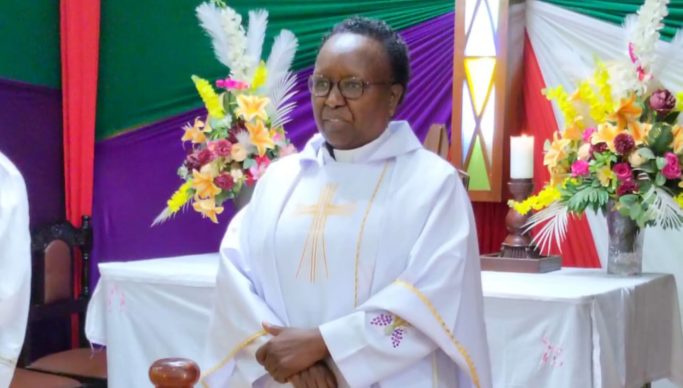
The Religion News Service reports that the Kenya Evangelical Lutheran Church has elected the Rev. Catherine Ngina Musau as its first female presiding bishop, a historic first for the denomination and a notable moment in the wider conversation about women’s leadership in Kenyan church life.
Musau, 55, was elected at the church’s general assembly in Malindi on Nov. 28 and is expected to be installed in June, according to the RNS report.
A church milestone shaped by an unexpected early influence
In the RNS interview, Musau traces part of her vocational journey to her teenage years at a Catholic mission school, where a priest and several nuns encouraged her faith and modeled a life of service. That early influence, she said, helped shape her decision to pursue ministry—an unusual path in a setting where senior church roles have long been dominated by men.
Her election is also significant within her own denomination’s history: Musau was ordained in 2003 and became the Kenya Evangelical Lutheran Church’s first female pastor, RNS reported.
Leading a 50,000-member denomination with a public-service profile
As presiding bishop, Musau is set to lead a church RNS describes as having around 50,000 members, with missions in eastern and southern Kenya and a strong following among the Maasai community near the Tanzania border. The church is also known for relief and development work, including responses to flooding, hunger, and poverty; care for orphans; and HIV and AIDS interventions, the report said.
Musau’s academic background includes a master’s degree in Christian-Muslim relations from St. Paul’s University in Limuru, according to RNS. She has also held local leadership responsibilities, including heading the Kilifi Deanery in recent years.
Priorities: mission, integrity, and financial stewardship
In comments reported by RNS, Musau outlined priorities that blend pastoral aims with institutional reform: mission and evangelism, discipleship, spiritual formation, and leadership integrity for both ordained and lay leaders. She also highlighted diakonia—a tradition of compassion and service—framing it as “faith in action.”
She further emphasized financial stewardship, including transparency and accountability, as part of a push for self-sustainability. The RNS report notes her concern that churches can lose public trust when they are seen as affected by power abuses, financial mismanagement, internal disunity, or political entanglements.
Women’s leadership and the weight of culture
Musau’s election arrives in a national context where church leadership often intersects with deeply rooted social expectations. RNS notes that patriarchal structures—within both church institutions and surrounding culture—can make it difficult for women to rise to senior roles.
Musau told RNS that biblical texts are sometimes interpreted selectively to justify women’s subordination, arguing for a broader reading that recognizes female leadership figures in scripture. She also pointed to mentoring as a practical need: younger women, she said, often require support to navigate leadership expectations and challenge norms that limit their opportunities.
Local roots, global connections
RNS situates the Kenya Evangelical Lutheran Church within a longer missionary history, describing its origins in German and Swedish Lutheran work in the region and its later evolution into an independent Kenyan church body. Today, the church operates across multiple counties and maintains partnerships with international Lutheran counterparts, including the Evangelical Lutheran Church in America and Lutheran churches in Germany, the report said.
Musau’s election has also been noted by international Lutheran networks. The Lutheran World Federation, a global communion of Lutheran churches, publicly congratulated her as the first woman elected to the role in her denomination.
Why it matters now
In many Christian traditions—especially in parts of Africa where church life remains influential in education, health, and community welfare—leadership decisions can carry significance well beyond internal governance. Musau’s election highlights the ongoing shifts taking place in some denominations as they reassess how authority, calling, and representation are understood.
For supporters, the moment represents a tangible opening for women’s leadership at the highest level of a Kenyan Protestant church. For observers watching the interplay of faith and society, it also raises broader questions: how churches form leaders, how they interpret tradition amid changing expectations, and how they sustain public trust through integrity and service.