Geneva Marks 40 Years of FoRB Mandate
- By WRN Editorial Staff --
- 06 Mar 2026 --
EU-hosted commemoration becomes a call for implementation, accountability, and stronger protection for believers and non-believers alike
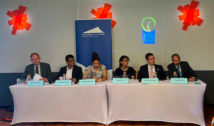
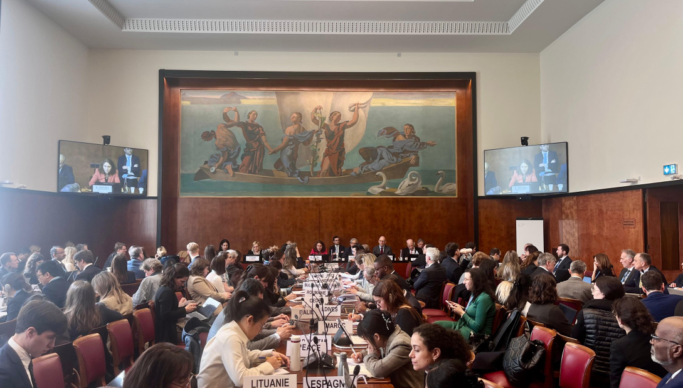
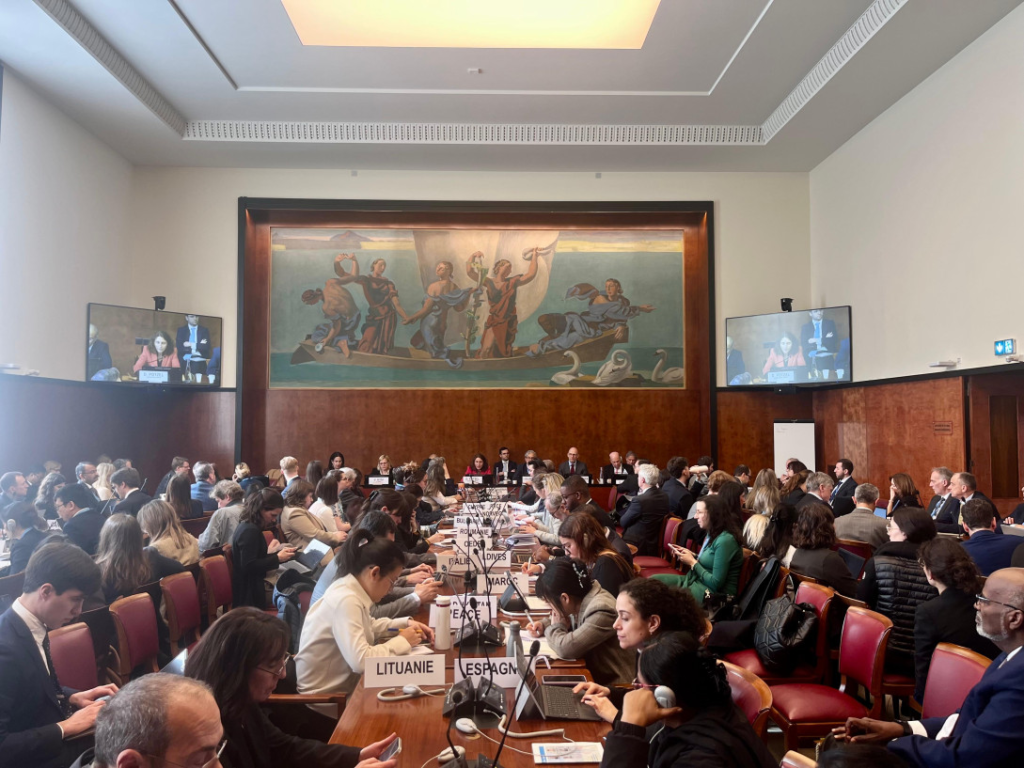
An event hosted by the European Union Delegation to the United Nations in Geneva to mark the 40th anniversary of the UN Special Rapporteur on freedom of religion or belief was less a ceremonial milestone than a sober reminder that the right remains under pressure across the world. What emerged from the discussion was not triumphalism, but a shared concern that international standards have advanced faster than real-life protection.
Opening the event, EU Ambassador Deike Potzel framed the anniversary in stark human terms. Every day, she said, people are bullied, denied work, threatened, or detained because of their religion or belief, or because they have none. The central problem, in her words, is no longer a lack of norms. “We are rich in norms but often too weak in implementation,” she said, capturing the message that would define the rest of the discussion.
That phrase landed because it reflected a wider truth familiar to diplomats, rights advocates, and religious communities alike. Over four decades, the mandate has helped clarify standards, develop jurisprudence, and keep violations of freedom of religion or belief on the international agenda. But as several speakers made clear, anniversaries matter little if the child bullied at school, the family afraid to worship, the convert targeted for changing belief, or the non-believer threatened for dissent still sees no practical change.
A milestone marked by urgency, not complacency
Potzel stressed that freedom of religion or belief and freedom of expression should not be treated as rival rights. They are, she argued, “interdependent, interrelated and mutually reinforcing.” She also pointed to international frameworks such as the OIC-backed resolution 16/18 and the Rabat Plan of Action as practical tools for confronting incitement while protecting free expression. Her warning about the digital sphere was especially pointed: “The digital space must not become a sanctuary for intolerance.”
The anniversary therefore became a lens through which to examine current threats. The discussion repeatedly returned to the gap between formal commitment and political reality: rising hatred online, increased pressure on religious minorities, the fragility of social cohesion, and the manipulation of religious identity in conflicts and domestic politics. Rather than treating freedom of religion or belief as a narrow legal niche, the speakers consistently described it as a foundational right tied to education, work, public participation, equality before the law, and social peace.
That broader framing is also reflected in the recent work of the mandate itself. The Special Rapporteur’s recent reports have explored not only hatred on the basis of religion or belief, but also the relationship between hatred and legal protection, and the connection between peace and freedom of religion or belief. The Geneva event brought those themes into a diplomatic setting, with governments from different regions emphasizing that this right cannot be defended in isolation from the wider human rights framework.
Nazila Ghanea’s challenge to Geneva
When Nazila Ghanea, the current UN Special Rapporteur on freedom of religion or belief, took the floor, she made clear that the gathering should be understood as a “commemoration rather than celebration.” Her remarks were among the strongest of the day, combining legal precision with moral clarity.
Ghanea described the mandate as broad and inclusive, rooted in freedom of thought, conscience, religion, and belief as protected across international human rights instruments. She emphasized that the beneficiaries of this right cannot be narrowly imagined or selectively protected. “If freedom of religion or belief does not challenge us, then we are not respecting it,” she said. That challenge, she suggested, applies not only to governments violating the right, but also to institutions and societies that still fail to imagine its full reach.
She pushed the room to think beyond familiar categories and extend protection to those who are often excluded, marginalized, or spoken about in dismissive language. In one of the event’s clearest moments, she rejected pejorative terminology and reminded participants that the right includes the freedom to have, adopt, and change one’s religion or belief. Later, responding to interventions from the room, she summed up the principle in simple terms: “Equality and inclusivity are the watchwords.”
Ghanea’s intervention also helped re-center the anniversary on victims and rights-holders rather than institutions. The true test of the mandate, as several speakers echoed, is not the prestige of the office or the elegance of Geneva’s language. It is whether communities on the ground are safer, freer, and treated equally.
A rare cross-regional convergence
One of the most notable features of the event was its cross-regional character. Pakistan, Morocco, Costa Rica, Norway, and Albania all contributed in ways that showed the mandate still commands broad diplomatic investment, even if governments differ on emphasis.
Pakistan’s Ambassador Bilal Ahmad, speaking as OIC coordinator, placed the mandate in a longer historical and legal arc. He argued that religious hatred, when left unanswered, “does not remain static,” but instead spreads and deepens into discrimination, hostility, and violence. His intervention linked the mandate to the lessons of the Holocaust, the post-war human rights project, and the urgent need for international consensus on responding to religious intolerance in a period of renewed polarization and conflict.
Morocco’s Ambassador Omar Zniber focused on implementation and enforcement, particularly the role of courts and institutional tools. He also proposed that the Human Rights Council consider a more structured mechanism for collecting international data on discrimination, xenophobia, racism, and hate speech. In practical terms, that was one of the most concrete institutional proposals to emerge from the session.
Costa Rica’s Ambassador Christian Guillermet Fernández offered perhaps the frankest intervention of the day, warning that intolerance is not only something states denounce abroad. It can also surface inside negotiations, among political actors, and within civil society itself. His remarks served as a reminder that Geneva cannot claim moral distance from the very problems it debates.
Costa Rica’s Ambassador Christian Guillermet Fernández delivered one of the event’s most striking interventions by warning that the struggle for freedom of religion or belief is not only about violations “out there” in distant states, but also about the attitudes and pressures that can surface inside Geneva itself. Grounding his remarks in Article 18 of the International Covenant on Civil and Political Rights, he stressed two non-negotiable pillars of the right: pluralism and the absolute rejection of coercion. But he then moved beyond diplomatic routine, cautioning that some negotiations are increasingly affected by ideological and religious positions that run against international human rights law. His challenge was unmistakable: if diplomats ask the world to uphold freedom of religion or belief, the United Nations system must also examine its own internal culture, its own language, and its own readiness to defend that freedom consistently, without selectivity or discomfort.
Norway’s Ambassador Tormod C. Endresen brought the discussion back to the local level. He insisted that “interfaith dialogue is key,” but added that it cannot happen “by chance or ad hoc.” His example of faith leaders in Oslo standing together to protect one another’s places of worship gave the event one of its most human images: solidarity not as slogan, but as a working civic habit.
Albania’s Ambassador Vasilika Hysi likewise stressed that freedom of religion or belief is “not only a legal norm,” but “a principle that underpins mutual respect and peaceful coexistence in diverse societies.” Her intervention fit the overall tone of the event: legal protection matters, but so do education, public policy, and the patient work of building cultures of respect.
What the anniversary really revealed
The strongest outcome of the Geneva commemoration may have been its refusal to treat freedom of religion or belief as a ceremonial topic. The event repeatedly showed that the right remains entangled with some of the hardest questions facing the international system: how to counter hatred without eroding liberty, how to protect minorities without creating new hierarchies of recognition, how to address online radicalization, and how to ensure that multilateral commitments actually reach people’s daily lives.
That is why Potzel’s opening formulation stayed with the room. The standards exist. The legal architecture exists. The mandate exists. But implementation remains uneven, and in many places plainly inadequate. If the anniversary had a lesson, it was that the next phase of the mandate cannot be satisfied with reaffirmation alone. It must be judged by whether rights on paper become rights in practice.
Forty years on, the Special Rapporteur’s mandate remains indispensable precisely because the threats it addresses have not faded. They have evolved, globalized, digitized, and in some contexts hardened. The Geneva event showed that there is still broad diplomatic recognition of the problem. The harder question, and the more urgent one, is whether that recognition can now be translated into consistent protection for all: believers, converts, dissenters, minorities, and those who hold no religion at all.
That would make the anniversary more than a commemoration. It would make it consequential.