Barcelona congress warns religious freedom is “under siege”
- By WRN Editorial Staff --
- 31 Jan 2026 --
Blanquerna-University Ramon Llull’s three-day forum closes Friday midday after debate by experts from 27 countries
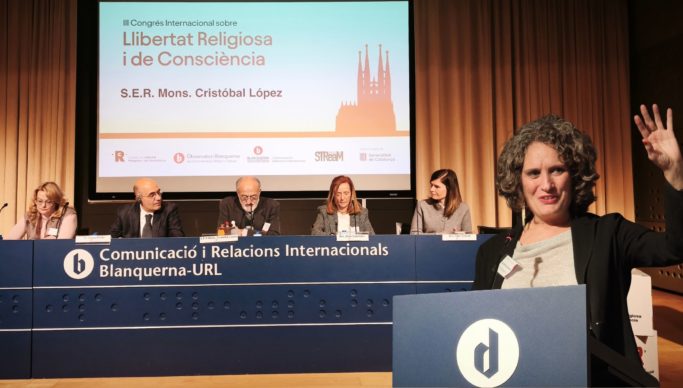
The III International Congress on Freedom of Religion and Freedom of Conscience concluded in Barcelona at midday on Friday, 30 January 2026, after three days of discussion on the growing pressures facing freedom of belief, non-belief and conscience worldwide. The event was hosted at the Blanquerna Faculty of Communication and International Relations of the Universitat Ramon Llull, and organised through the university’s Chair of Freedom of Religion and Conscience together with the Blanquerna Observatory on Communication, Religion and Culture.
According to the organisers, the congress brought together specialists from 27 countries and featured a substantial scientific programme, including 123 research communications and 29 panels held in Catalan, Spanish, English, French and Portuguese. The sessions focused on practical governance of religious diversity, the promotion of freedom of religion or belief, and the prevention of violations of these rights.
“Not easy times”: a warning from Catalonia’s justice minister
In the opening session, Ramon Espadaler Parcerisas, Catalonia’s Minister of Justice and Democratic Quality, warned that “we are not living in easy times” and said that freedom of religion and freedom of conscience is “under siege.” He argued that initiatives like the congress matter because they invite institutions and citizens alike to reflect — and to act with courage — when dealing with fundamental freedoms.
Blanquerna’s leadership framed the meeting as a university response to a visible global trend of rights infringements. Míriam Díez Bosch, director of the Blanquerna Observatory, said academia “cannot remain indifferent” when freedom of religion and conscience is violated. Josep Maria Carbonell, president of the Blanquerna Foundation, described the faculty as a space of freedom, dialogue and encounter where academic reflection should go hand in hand with social commitment.
Interreligious diplomacy, minorities, and the Ukraine lens
A headline roundtable brought together a religious leader, scholars and a journalist to examine how freedom of religion is tested in today’s geopolitics and domestic polarisation. Cardinal Cristóbal López, Archbishop of Rabat, argued that religious freedom should not be treated as a tool used only when convenient, but as a necessary path “from intolerance to tolerance.” He pointed to three conditions for meaningful dialogue: a strong identity, the courage to meet the “other,” and sincerity of intent.
Fabio Petito, presented as an expert in interreligious diplomacy at the University of Sussex, stressed that religious minorities are often among the most vulnerable groups in society and linked their protection closely to human-rights policy. Zoila Combalía Solís, professor of ecclesiastical law at the University of Zaragoza, focused on democratic coexistence, arguing for a shared civic minimum alongside genuine respect for diversity — and urged that pluralism be seen as an opportunity, not a threat. Ukrainian journalist and religious analyst Tetiana Derkach said Ukraine’s experience shows that the future of inter-Orthodox relations depends not only on governance issues, but also on the willingness of churches to assume responsibility.
A visibly multi-faith gathering
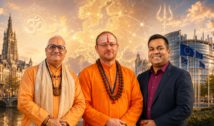
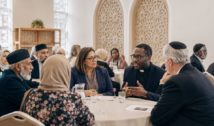
While the organisers’ public summaries foreground the academic and institutional programme, participants described a conference floor that reflected the reality of today’s plural Europe. Among attendees and speakers were Catholics, Protestants, Anglicans, Jehovah’s Witnesses, Scientologists, Bahá’ís, Buddhists, Hindus, and others, underscoring that debates about freedom of religion or belief increasingly involve many communities sharing the same civic space.
Closing session and awards
The congress concluded on Friday with an intervention by Ramon Bassas, director general for religious affairs in the Government of Catalonia, in conversation with Díez Bosch and congress coordinator Lana Kazkaz. The closing programme also included awards recognising top student and doctoral work in the field of freedom of religion and conscience.
For Barcelona, the congress also fits within a broader local trend of interconvictional engagement — an approach visible in initiatives such as the city’s Night of Religions, which has aimed to normalise dialogue and public understanding of diverse faith communities.
This report is based on information published by Església de Barcelona and the official congress listings from Universitat Ramon Llull.