Al-Aqsa “Status Quo” Strains as Ramadan Begins Under Tight Security in Jerusalem
- By WRN Editorial Staff --
- 23 Feb 2026 --
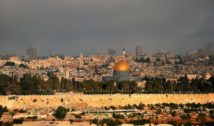
As Ramadan opened in Jerusalem, the compound Muslims know as Al-Aqsa Mosque and Jews revere as the Temple Mount again became the focal point of a familiar—and volatile—argument: who may pray there, and under what conditions. In recent days, a mix of tightened access rules, arrests and administrative bans involving Islamic Waqf personnel, and rising reports of Jewish prayer on the compound have prompted warnings that the long-standing “status quo” governing worship at the site is fraying.
The dispute is not merely local. The Jerusalem holy compound is among the world’s most symbolically charged religious spaces, revered by billions, and historically capable of turning a political spark into a regional fire. Analysts and observers have long warned that even small changes to practice or policing at the site can become catalysts for broader confrontation. That sensitivity is amplified at Ramadan, when the compound typically draws hundreds of thousands of worshippers—especially on Friday prayers.
A fragile arrangement under pressure
Since Israel captured East Jerusalem in 1967, a set of understandings—often described as an “unwritten” arrangement—has shaped daily life on the compound. In simplified terms, Muslims pray at the site under the administration of the Jordanian-appointed Islamic Waqf, while non-Muslims may visit during designated hours but are not supposed to hold formal prayer services. Israel controls security and access points.
In practice, that balance has always been contested, and critics say it is now being tested more aggressively. A recent report in The Guardian, echoed in The Irish Times, described the traditional arrangement as effectively “collapsing,” pointing to arrests and restrictions involving Waqf staff and heightened activity by Jewish activist groups that seek expanded rights of prayer on the compound.
At the heart of the current tension is a question that is both religious and constitutional: whether the state’s security posture is neutral enforcement or, as critics allege, a vehicle for changing religious practice on the ground. That debate plays out in arrests, gatekeeping, and administrative orders—actions that are quickly interpreted through a sacred lens.
Ramadan Friday prayers under limits
The first Friday prayers of Ramadan offered a snapshot of how quickly the religious and political dimensions intertwine. According to The Associated Press, tens of thousands gathered at Al-Aqsa under heavy policing and restrictions on who could enter. Israeli authorities allowed a limited number of West Bank Palestinians to attend, applying age requirements and permit rules, while deploying thousands of police in and around Jerusalem’s Old City.
The Islamic Waqf’s estimate of the crowd was far below what the compound sees in a typical year, the AP reported, and some worshippers said they were turned away despite having permits. Israeli police described the posture as preparedness rather than provocation, but for many Palestinians, the restrictions felt like an extension of a wider policy of control over religious life in the city.
Such disputes are not confined to a single prayer time. They become cumulative: each restriction or incident is remembered, compared, and retold—especially across social media—adding to a narrative that sacred space is being redefined without consent.
Waqf administration and policing in the spotlight
The Waqf’s role—religious, administrative, and symbolic—makes it central to the controversy. Reports of bans and detentions affecting Waqf staff have heightened fears that the body’s capacity to manage the site is being weakened precisely when its authority matters most. A Haaretz report described a break from past coordination practices over Ramadan rules, a development that—if sustained—could further politicize day-to-day religious management.
For Jordan, which has a formal role in Waqf appointments and a longstanding interest in Jerusalem’s holy sites, any perceived erosion of the arrangement is more than a domestic Israeli matter. It touches regional diplomacy and a sensitive religious legitimacy that extends beyond borders.
Meanwhile, Jewish activist movements that advocate for expanded rights at the Temple Mount argue that Jewish prayer on the site is a matter of religious freedom and historical connection. Supporters of the status quo counter that the arrangement is precisely what prevents the compound from becoming an arena of constant interreligious confrontation.
Why the site carries unique religious weight
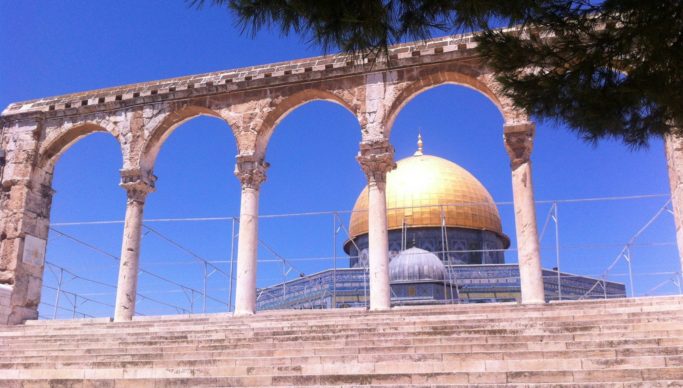
To Muslims, Al-Aqsa is Islam’s third-holiest site, associated with the Prophet Muhammad’s Night Journey and home to the Dome of the Rock and Al-Aqsa Mosque itself. For Jews, the Temple Mount is the holiest place in Judaism, tied to the First and Second Temples and centuries of longing expressed in prayer and ritual. That layered sanctity makes compromise unusually hard: any adjustment is experienced not as a policy tweak but as a theological statement.
In recent years, the compound has repeatedly been a trigger point for wider violence. In this context, the argument over “who can pray” is not only about worship. It is also about sovereignty, identity, and whether the state can appear to endorse one community’s religious claims over another’s.
A wider regional backdrop: war, trauma, and religious life
These tensions unfold against the backdrop of a region still shaped by war and displacement. In Gaza, the start of Ramadan has been marked by grief and physical ruin, including the destruction of religious sites. A recent Reuters report described Palestinians gathering to pray in makeshift spaces amid shattered mosques—an image that underscores how deeply religious practice is intertwined with survival and collective memory.
That broader trauma feeds perceptions in Jerusalem as well. For Palestinians, restrictions at Al-Aqsa are rarely seen in isolation from the wider conflict; for many Israelis, heightened security is justified by fear of attacks and unrest. The result is a feedback loop in which each side interprets the other’s actions as existential, not merely procedural.
What comes next
Religious leaders and community elders often urge restraint, especially during sacred seasons. Yet restraint is difficult when the conflict is expressed in the vocabulary of holiness. Even small incidents—an arrest, a gate closure, a contested gesture of prayer—can be amplified as proof that the other side is rewriting the rules.
In the coming weeks, much will depend on practical choices: how access is managed, whether coordination mechanisms function, whether political actors avoid symbolic provocations, and whether worshippers can observe Ramadan without the compound turning into a stage for rival claims. The challenge is not only to keep public order, but to preserve a minimum of mutual recognition in a place where the sacred is inseparable from the political.
For a site revered by multiple faiths, the “status quo” has never been a perfect solution—only a fragile ceasefire in the language of ritual. Ramadan has now begun under intense scrutiny, and Jerusalem’s holiest flashpoint is once again reminding the world how quickly religious space can become the front line of conflict.
RELATED NEWS