In Belgium, a Debate Over Religious and Ethical Education Tests Pluralism
- By WRN Editorial Staff --
- 08 Feb 2026 --
BRUSSELS — As the Flemish government advances a set of reforms aimed at restructuring religious and ethical education in public schools, an academic voice has emerged urging caution, reflection and a broader view of what such education means for a pluralistic society. Professor Jelle Creemers, a noted scholar of religion‑state relations and academic dean of the Evangelical Theological Faculteit (ETF) in Leuven, has publicly challenged the fast‑moving proposals, arguing they risk undermining both the quality and the purpose of levensbeschouwelijk onderwijs — the Dutch‑language term for religion and ethics classes offered across Flanders.
A Scholar at the Crossroads of Faith and Policy
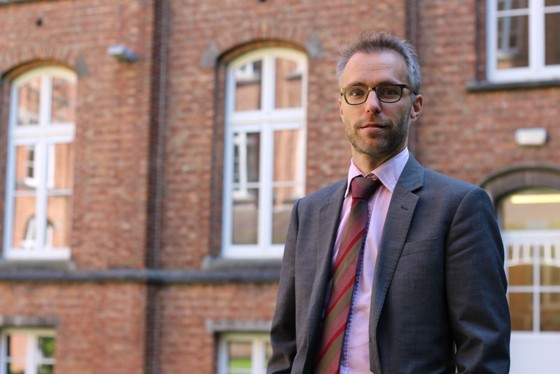
Professor Creemers, 47, is a leading figure in the study of freedom of religion or belief (FORB) in Belgium. He serves as Academic Dean of Religious Studies and Missiology at ETF Leuven, where he also directs the Institute for the Study of Freedom of Religion or Belief (ISFORB). His work focuses on the interaction between religious communities and secular governments, including the implications of policy for minority faiths within a European secular context.
Trained in theology and religious studies, Creemers has written extensively on church‑state dynamics and has participated in academic debates about religion’s place in public life. His critiques do not come from a narrow doctrinal standpoint but from a commitment to pluralism and the thoughtful integration of religion and ethics into civic life.
The Flemish Reform and Its Critics
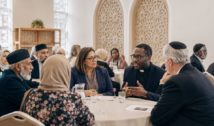
In recent months, the Flemish government has outlined plans to reform how religion and ethics are taught in publicly funded schools. Under the current system, pupils receive weekly instruction in either a recognized religion — Catholicism, Protestantism, Islam, Judaism, Anglicanism and others — or non‑confessional ethical philosophy. Proposed changes would give schools greater flexibility in how they schedule these classes and could reduce the mandatory weekly quota, a move officials say will save money and ease administrative burdens.
Supporters of reform argue that the current structure is outdated and overly burdensome, requiring a large number of specialised teachers for small class groups. They believe a more flexible system could preserve freedom of conscience while adapting to contemporary schooling patterns.
But it is precisely this flexibility — particularly when tied to cost‑saving imperatives — that has drawn Creemers’s concern. In a recent opinion piece published in Knack, a leading Belgian news magazine, he warned that reducing or reorganising levensbeschouwelijk onderwijs in haste could diminish its cultural, ethical and social value and weaken its role as a platform for rich moral formation and inter‑communal understanding.
Concerns Over Substance and Equality
Creemers’s critique emphasises that religion and ethics classes are more than administrative obligations or budget items. He argues they play a formative role in helping students articulate values, understand diverse worldviews, and engage respectfully with peers from different backgrounds. According to his analysis, trimming the structure or downplaying the substantive distinctiveness of religious traditions in education risks reducing moral education to a minimalist, generic civic exercise.
His position reflects deeper questions about equal access to meaningful study of one’s own beliefs within a publicly funded system — a point echoed by constitutional scholars who have questioned whether some reform proposals could conflict with Belgium’s basic guarantees of freedom of conscience and parental choice in education.
Broader Implications for Belgian Pluralism
The debate over levensbeschouwelijk onderwijs is part of a wider conversation in Belgium and across Europe about how secular states integrate religious diversity into public institutions. As demographic changes alter the religious landscape, policymakers face the challenge of balancing freedom of belief with practical realities of schooling and resource allocation. Creemers’s intervention underscores that these decisions are not merely technical; they speak to how societies conceive citizenship, identity and mutual respect.
For Creemers, the danger lies in equating efficiency with progress. In his view, educators and lawmakers should resist the urge to prioritise short‑term cost savings over long‑term social cohesion and the cultivation of informed moral agency among young people.
As the reforms move forward, his voice represents a call for robust public dialogue and careful evaluation of both educational and societal consequences. In an era of cultural complexity and ideological contestation, levensbeschouwelijk onderwijs — and the manner in which it is delivered — could well become a litmus test for how pluralistic democracies navigate the intersection of faith, ethics and public life.