Religion in public life: Paris, London, Texas, the Vatican—and renewed focus on worshipper safety
- By WRN Editorial Staff --
- 16 Feb 2026 --
Across Europe, the United States, and Africa, recent developments are highlighting how faith communities navigate public life—through new guidance, political debates, court proceedings, and, in some places, escalating security concerns. From a major French Muslim institution’s attempt to address contentious issues in secular society to a UK court appeal involving a Quran-burning case, the stories point to a shared question: how do states protect religious freedom while managing public order, equality, and social cohesion?
France: a new guide aims to frame Muslim practice in secular societies
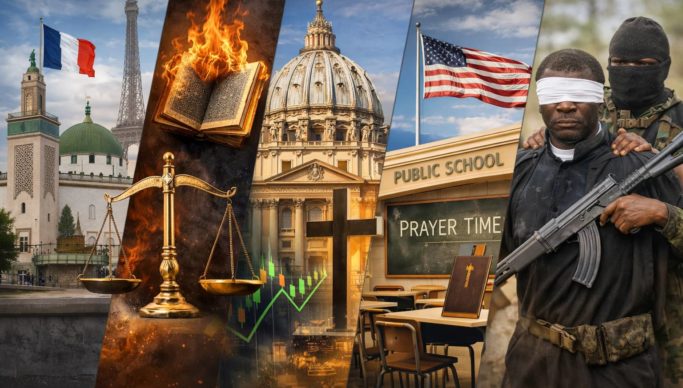
In France, the Grande Mosquée de Paris has presented a substantial reference work on living as a Muslim in Western, secular democracies. Published on 10 February 2026, the volume—reported as roughly 900 pages—organises more than 200 concepts and includes what is described as a “Charter of Paris,” with the stated aim of encouraging better acceptance of Muslims in their countries of citizenship.
According to reporting carried by Euronews with AFP, the guide addresses debates that frequently shape public controversy in France, including laïcité (state secularism), the veil, and the relationship between civil and religious marriage. The book’s framing emphasises personal choice on questions such as the veil, and presents secular civic norms as a context that Muslims can work within rather than reject.
Ireland: a mosque targeted in an arson attack
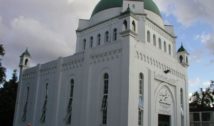
In Ireland, the Islamic Cultural Centre in Dooradoyle, Limerick, was targeted in what Gardaí described as an arson attack, after an incendiary device was thrown through a window in the early hours of 12 February. The building reportedly suffered significant damage. A man was arrested as the investigation continued.
Incidents of this kind have sharpened community concerns about the safety of worshippers and the security of religious spaces. While motives can take time to establish in court, attacks on places of worship often reverberate beyond a single congregation, affecting perceptions of belonging and trust—particularly for minority faith communities.
UK: High Court appeal follows an acquittal in a Quran-burning case
In the United Kingdom, the High Court is set to hear an appeal in Director of Public Prosecutions v Hamit Coskun, a case that has drawn attention because it sits at the intersection of religious offence, protest, and public order law. A court order published on 10 February 2026 notes that the respondent was convicted by magistrates of a public order offence after publicly burning a copy of the Quran, then acquitted on appeal to the Crown Court. The prosecution is now appealing “by way of case stated” against the Crown Court’s decision, with the appeal fixed for 17 February 2026.
Cases involving sacred texts can become flashpoints in plural societies, where courts are asked to weigh competing rights: freedom of expression, freedom of religion or belief, and the state’s obligation to prevent disorder and protect people from harassment or intimidation.
United States: updated federal guidance as Texas districts opt out of “optional prayer time”
In the United States, the Department of Education issued updated guidance on constitutionally protected prayer and religious expression in public elementary and secondary schools on 5 February 2026. The document outlines how schools should allow private religious expression while avoiding coercion or school-sponsored prayer. It also describes a certification and enforcement process tied to federal education funding.
At the state level, debates continue over how religion should appear in public school settings. In Texas, several San Antonio-area school districts have opted out of implementing a state-created “optional prayer period,” as local officials and some faith leaders raised concerns about administrative burden, legal risk, and the possibility of coercion or exclusion for minority-faith students. The measure is commonly associated with Senate Bill 11 (89R), with districts facing a deadline to decide whether to adopt the policy.
Supporters of such measures often argue they normalise religion in a public environment they view as overly cautious; critics counter that students already have rights to pray voluntarily and that state-designed prayer time can blur the line between accommodation and endorsement.
Vatican: Catholic investment benchmarks—and a warning over unsanctioned episcopal ordinations
Two developments from the Vatican in early February 2026 illustrate how Catholic institutions are addressing both finance and church governance.
First, the Vatican bank—formally the Istituto per le Opere di Religione—announced new equity benchmarks designed for values-based investing. In a 10 February press release, the IOR said it launched the Morningstar IOR Eurozone Catholic Principles and Morningstar IOR US Catholic Principles indexes, each comprising 50 medium- and large-cap companies screened for alignment with Catholic ethical criteria and the Church’s social teaching. The initiative reflects a broader trend in religiously aligned investing, as institutions seek measurable ways to apply moral frameworks to modern capital markets.
Second, the Holy See has urged the Society of St. Pius X (SSPX) to suspend planned episcopal ordinations scheduled for 1 July 2026, warning that consecrations without papal mandate would amount to a “decisive rupture” of communion—described as schism—while proposing a path of theological dialogue to clarify unresolved issues and explore a canonical status.
Nigeria: Catholic priest abducted amid persistent insecurity
In northern Nigeria, violence continues to affect religious communities and the wider civilian population. Reuters reported on 8 February that gunmen killed three people and abducted a Catholic priest and others during an attack in Kaduna state, with church and police sources giving differing totals for those kidnapped. The report identified the priest as Nathaniel Asuwaye of Holy Trinity Catholic Church in Karku, according to the Catholic Diocese of Kafanchan.
Such incidents underline how, in parts of the world facing armed banditry, insurgency, and weak state protection, the question of religious freedom can become inseparable from the basic issue of physical security.
Why these stories matter now
Taken together, these developments show religion’s continued visibility in public life—not only in houses of worship, but in courts, classrooms, policy documents, and even financial benchmarks. For faith communities, the stakes range from everyday questions of belonging in secular societies to urgent concerns about safety. For governments and institutions, the challenge is to uphold rights and pluralism without turning religion into either a privileged status or a prohibited presence.