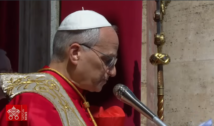
St. Francis of Assisi’s relics go on public display as pilgrims flock to mark 800 years
- By WRN Editorial Staff --
- 23 Feb 2026 --
ASSISI, Italy — The mortal remains of St. Francis of Assisi have been placed on public display for an extended period in the Umbrian hill town that bears his imprint, turning Assisi into a focal point of international Catholic attention as the Church marks the 800th anniversary of the saint’s death in 1226.
The month-long veneration, running from 22 February to 22 March 2026 in the lower church of the Basilica of Saint Francis, has drawn extraordinary interest: organizers report that hundreds of thousands registered in advance, with expectations that the total number of visitors could approach half a million by the end of the display.
A rare public veneration — and a logistical test for Assisi
Franciscan friars who care for the basilica have framed the exhibition as an invitation to spiritual reflection rather than spectacle, highlighting Francis’ message of peace and “fraternity” that continues to shape Catholic devotion and wider cultural imagination.
For the town itself, the influx is both blessing and burden. Assisi is already a global pilgrimage destination, but local officials have had to manage congestion, transportation, and security for the unusually large crowds expected during the month-long viewing. Reporting from Assisi has described new parking and shuttle arrangements designed to keep the medieval streets from becoming overwhelmed.
The relics are being displayed in a protected case in the basilica, underscoring that even modern veneration takes place against a long history in which saintly remains were sometimes targets for theft or political rivalry.
Why Francis’ body was hidden — and why it matters now
St. Francis, born in the late 12th century, renounced wealth and status to embrace poverty, care for the marginalized, and preach reconciliation — a life story that made him one of Christianity’s best-known saints. His appeal has also extended beyond church walls, shaping art, literature, and modern environmental and peace movements.
That global devotion helps explain why his bodily remains have long carried heightened meaning — and why they were, historically, carefully guarded. Accounts of the saint’s burial describe efforts to keep the location secret to prevent the removal of relics, a practice not unusual in medieval Europe, when relics could draw pilgrims, prestige, and donations.
The renewed visibility of Francis’ remains in 2026 is therefore more than a commemorative gesture. It revives a central feature of Catholic spirituality — the veneration of relics — at a time when many European churches are seeking to address secularization, generational change, and questions about what “presence” and “memory” mean in modern religious life.
Relics and Catholic practice: veneration, not worship
For Catholics, relics are traditionally understood as tangible links to lives marked by holiness, offering a physical point of contact for prayer and remembrance. Church authorities have repeatedly stressed a key distinction: relics are venerated (honored), not worshiped — a theological line meant to safeguard devotion from becoming superstition or idolatry.
In recent decades, the Vatican has also tightened procedures around authenticity, preservation, and public display. A 2017 Vatican instruction sets out canonical norms for verifying relics and overseeing their conservation and veneration — a response, in part, to past controversies involving dubious provenance or commercialization.
In Assisi, the emphasis on security and controlled access reflects both pastoral and practical concerns: organizers have made free booking mandatory to manage crowds and maintain what they describe as a “serene and reflective atmosphere.” :contentReference[oaicite:9]{index=9}
A saint with renewed relevance — from Pope Francis to a new generation
The 800th anniversary arrives with Francis’ image unusually prominent in global Catholic life. Pope Francis famously chose his papal name in reference to the saint of Assisi, signaling priorities of simplicity, concern for the poor, and a preference for peace-making — themes that Franciscan leaders say they hope the anniversary display will reawaken.
Assisi’s religious draw has also been amplified by the town’s association with newer Catholic devotions. Recent reporting notes that the popularity of soon-to-be-canonized figures — including the young Italian Carlo Acutis, closely linked with Assisi — has already been increasing pilgrim numbers, especially among younger Catholics.
That mix of the medieval and the contemporary has helped turn the current display into a broader cultural moment: a convergence of tourism, devotion, and public debate about how ancient practices continue to speak — or fail to speak — to modern sensibilities. :contentReference[oaicite:12]{index=12}
Why this matters
Whether seen through a lens of faith, heritage, or historical curiosity, the public veneration of St. Francis’ remains highlights religion’s continuing ability to mobilize large crowds in an increasingly secular Europe — and to do so through symbols rooted in the body, place, and memory. In Assisi, the lines of pilgrims underscore an enduring reality: saints are not only figures of the past, but living reference points for communities seeking meaning, identity, and hope in the present.