Vedruna bicentennial looks to “new answers” in Europe
- By WRN Editorial Staff --
- 23 Feb 2026 --
As the Carmelites of Charity Vedruna mark 200 years on Feb. 26, 2026, their provincial leader says the anniversary is a moment to “bring to the present what is essential” and rethink mission in a changing Church.
The Carmelites of Charity Vedruna—a Catholic women’s congregation founded by Saint Joaquina de Vedruna—will mark 200 years of life and mission on February 26, 2026, with celebrations centered in Vic, Catalonia, where the community began on the same date in 1826. But the bicentennial, leaders say, is not being framed simply as a commemoration of the past. It is being presented as a turning point: a chance to read the present “with new eyes” and to seek “new answers” demanded by today’s reality.
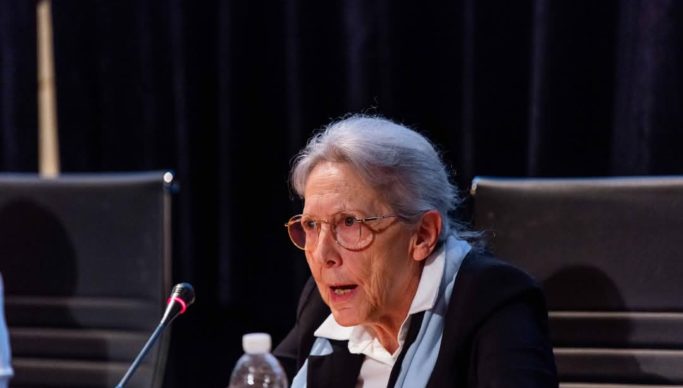
That theme is sharply articulated in a recent interview with the provincial superior for Europe, María Gracia Gil, published by Vedruna Europa. Speaking just days before the anniversary milestone, Gil describes a congregation known in many places for schools and hospitality projects, as well as a growing network of initiatives linked to prayer, formation and youth accompaniment. Yet she also names the demographic reality facing much of consecrated life in Europe: fewer sisters, fewer communities, and painful withdrawals from smaller towns and “border” missions that once embodied a pioneering spirit.
“The bicentennial,” she argues, “is a magnificent opportunity” not to freeze the story in nostalgia, but to “make an assessment, bring to the present what is central,” connect with the time being lived, and “seek the new answers that the present moment is asking—better said, demanding.” The language sets an agenda: gratitude, yes, but also discernment, courage and change.
February 26 in Vic: liturgy, memory, and a reopened house
In Vic, the date is expected to combine the public rhythms of Catholic life with a more intimate institutional memory. The congregation’s bicentennial programme indicates that February 26, 2026 will include a solemn Eucharist in Vic and the official inauguration of “Casa Manso. Joaquina de Vedruna,” the founding house associated with the earliest formation of the community. The schedule and descriptions are laid out on the congregation’s official bicentennial page.
Casa Manso is presented not as a museum piece but as a rehabilitated space designed to interpret the founder’s spiritual itinerary and the congregation’s evolution—inviting visitors into a dialogue between “past, present and future.” According to the bicentennial description, it was here that the novitiate of the first women who followed Joaquina took shape and where the first school was created—an origin story that still matters to a congregation whose identity remains closely associated with education and care.
In a European context where many religious houses have been closed or repurposed, the reopening of a foundational site carries cultural weight. It also fits a broader pattern: religious communities increasingly translate their charisms into interpretive spaces—part heritage, part spirituality, part public memory—aimed not only at Catholics but at the wider societies in which these congregations have worked for generations.
“To embrace needs”: a founding impulse, re-read today
In the interview, Gil repeatedly returns to a phrase she attributes to the founder’s original desire: “to embrace needs.” In her telling, that impulse is not a slogan but a practical spiritual instinct—one that can be re-applied in different historical moments. Today, she points to hospitality as a defining priority, especially in response to people arriving “from outside,” and describes how this plays out across different settings: in schools with many nationalities, in shared reception projects, and in sisters collaborating with other institutions.
Her emphasis mirrors a broader Catholic vocabulary that links charism and “signs of the times”: the idea that fidelity is not measured by repeating old forms, but by remaining attentive to real suffering and concrete needs as they change. Yet the interview also introduces a notable tension. If “embracing needs” is the call, how does a shrinking congregation decide which needs to embrace—and which to leave, even painfully, to others?
Gil does not romanticize the constraints. She calls the decline in numbers a “point of inflection” that forces a more careful measuring of strength and a new awareness of “minority” and vulnerability. She speaks of withdrawing from places such as Albania and Morocco, and of saying goodbye to many small towns—departures that can be emotionally costly for communities and local neighbors who experienced “the sisters” as a steady presence over decades.
From “sisters only” to “extended family”
If demographic change is the pressure point, Gil suggests it is also reshaping self-understanding. A striking thread in the interview is her insistence that Vedruna can no longer be imagined only as “sisters.” The future, she says, depends on learning to understand the congregation more clearly as an “extended family”—a broader “charismatic family” open to laypeople and other forms of belonging.
That shift is not unique to Vedruna. Across Catholic Europe, congregations are navigating the handover of schools and works to lay leadership, the creation of lay associations linked to founding charisms, and a renewed language of shared mission. But Gil frames it in concrete images: “arms lengthening,” expanding partnerships, and even an opening toward “other religions and cultures”—a recognition that mission today often unfolds in multi-faith neighborhoods and public institutions.
Her examples also underline a practical ethic: smaller does not have to mean irrelevant. She cites a case in which a Vedruna community in Carabanchel welcomed six Little Sisters of the Assumption to share the last stage of their lives together—an act of hospitality that reframes “smallness” not as failure but as a new way of living interdependence within religious life.
How Vedruna is seen today: schools, hospitality, and creative initiatives
Asked what people say Vedruna “is” today, Gil reaches for the metaphor of a kaleidoscope: turn it, and different patterns appear. She lists multiple initiatives by name—ranging from education and formation to projects of accompaniment, prayer and culture—that, she argues, respond in varied ways to the same founding concern.
She points to the congregation’s schools as a widely recognized public face, now grouped in foundations, and to the importance of accompaniment and formation programmes valued by individuals and institutions. She also highlights initiatives with a cultural and artistic footprint: the prayer-and-music project Ain Karem, which she says many parishes and Christian associations appreciate for helping them pray and live faith through music; and Eutherpe, which she describes as supporting and promoting young musicians with international recognition.
These references matter for how the bicentennial may be experienced publicly. In many places, the most visible expression of a congregation is not a convent but a school, a residence for older people, a social initiative or a youth space. A bicentennial, then, becomes a moment when those “front doors” invite the public to ask: what holds this network together, spiritually and institutionally, and what kind of future does it imagine?
Art, memory and the public language of anniversaries
Major anniversaries in the Catholic world are often treated as devotional events, but they also operate as cultural storytelling. They create symbols, slogans, music and spaces that can be shared across borders. Vedruna’s bicentennial plan, for example, includes an oratorio titled “Joaquina Luz de caridad,” scheduled for presentation in Vic during a wider council gathering in March 2026, according to the bicentennial programme. It also includes an international youth meeting planned for July 2026 in Vic, bringing young people from different countries into the founder’s birthplace.
Such elements are not ornamental. In religious life, art and ritual are often vehicles of transmission—ways of expressing a charism to people who may never read a history book or an internal document. Music, pilgrimage and interpretive spaces become the “language” through which memory is handed on. In an era when many communities are navigating institutional downsizing, that language can be a form of resilience: it says, the charism is not only about buildings or numbers, but about a spiritual impulse that can be embodied in new forms.
Why leaders call it a “risk” to stop at the past
Gil’s interview contains an explicit warning: the bicentennial can become a trap if it settles for gratitude alone. She describes a “risk” of staying in memory without letting memory provoke change—losing, in her words, “a magnificent opportunity” to discern what is essential and to respond creatively to the moment. The point of celebration, she suggests, is not self-congratulation but renewed availability—because, as she puts it, “we are for the world.”
That phrase is telling. It frames the congregation’s identity as outward-facing, and it implicitly ties the anniversary to a public responsibility. In a Europe where religious communities sometimes feel pushed to the margins, the bicentennial is being narrated as a moment of mission rather than retreat: “opening wings,” continuing to “fly,” and reading reality with enough courage to introduce necessary changes.
It is also a reminder that the public perception of Catholic religious life is no longer shaped only by internal Catholic narratives. Many Europeans encounter congregations through schools, care institutions, social projects, and cultural initiatives. The language of charism must therefore translate into social meaning: hospitality that is real, education that is credible, accompaniment that is ethical, and spirituality that is offered—not imposed—in a plural landscape.
Looking beyond February 26
February 26, 2026 will be a symbolic peak, but the bicentennial is designed as a longer journey. The programme extends into 2026 and beyond, with governance gatherings, cultural presentations and international youth events linked to the anniversary timeline. The reopening of Casa Manso, in particular, suggests that the congregation wants to invite the wider public into its story—offering a place where the figure of Saint Joaquina, the early formation of the sisters, and the congregation’s global presence can be interpreted for visitors today.
For Vedruna communities and their partners, the bicentennial’s significance may ultimately be measured less by the size of ceremonies than by what follows: whether the “new answers” leaders speak about become visible in new forms of shared mission, renewed hospitality, and creative fidelity to a founding impulse born two centuries ago in Vic.
And for an increasingly diverse Europe, the bicentennial offers a window into a living question: what does it mean for a religious charism—rooted in Catholic tradition but expressed through education, care, art and accompaniment—to remain socially intelligible and spiritually compelling in a time of rapid cultural change?
RELATED NEWS