


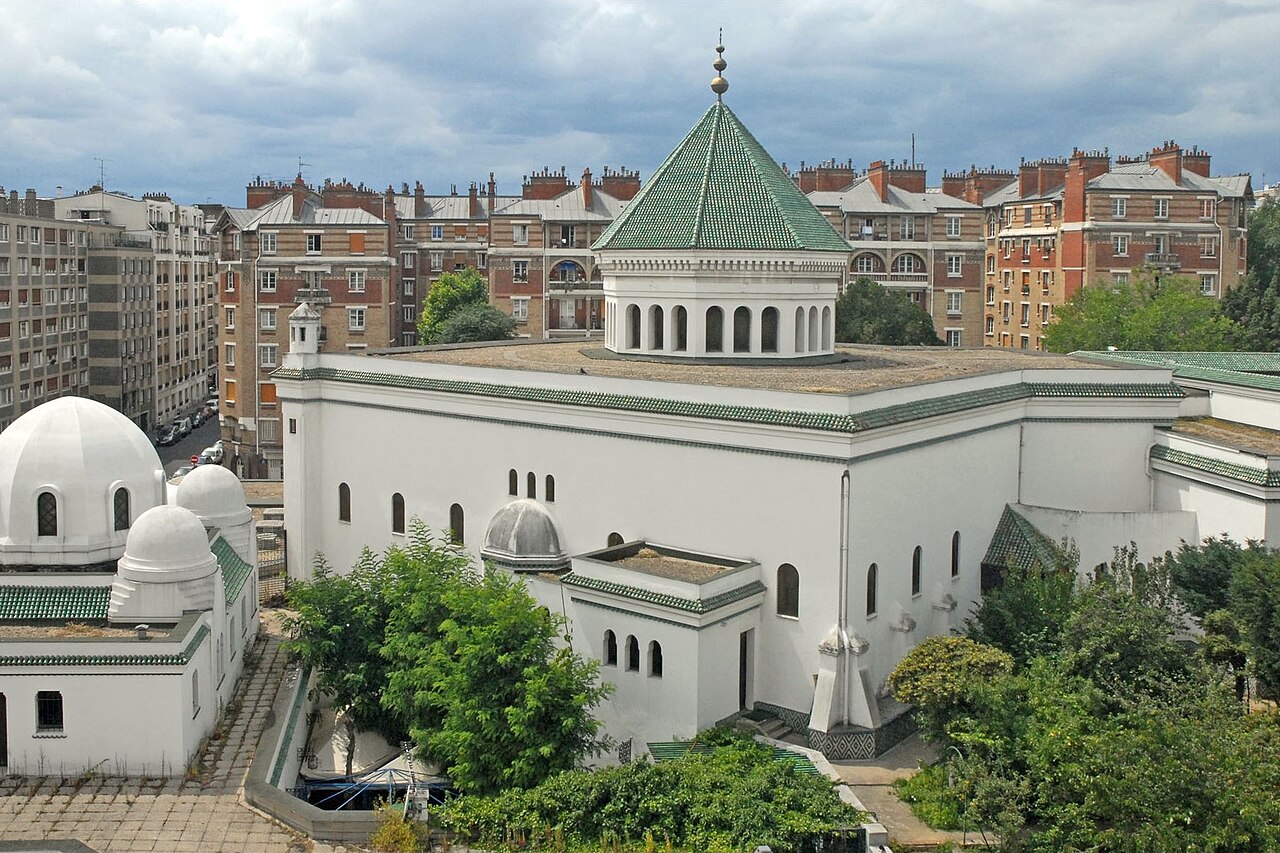
One hundred years after opening its doors, the Grand Mosque of Paris is using its centenary to look forward as well as back. The anniversary brought civic and religious representatives together around a hopeful proposition: a place of worship can preserve memory, deepen belonging and create room for dialogue across differences.
The mosque celebrated the anniversary of its inauguration on July 15, 2026. According to the institution’s account of the centenary ceremony, those attending included public officials, ambassadors, representatives of other religious communities, Muslim associations and members of civil society.
The gathering concluded with the planting of an olive tree, described by the mosque as a symbol of peace for generations to come. It was a modest gesture, but one well suited to an institution whose history is intertwined with some of France’s most difficult questions about memory, faith and national identity.
A monument to remembrance and belonging
Inaugurated in 1926, the Grand Mosque was conceived in part as a national tribute to Muslim soldiers from France’s colonial territories who fought and died during the First World War. Today, its 33-meter minaret, gardens, prayer spaces and intricate tilework make it both an active religious center and a familiar part of the Parisian landscape.
A recent Associated Press report on the anniversary described worshippers arriving from across the Paris region, including people born in France and families with roots in Algeria, Senegal and elsewhere. Their presence reflected the many paths through which Muslim life has become part of contemporary France.
Rector Chems-eddine Hafiz told Reuters that the mosque’s opening signified that “Islam entered through the front door of the Republic in 1926.” For Hafiz, the centenary belongs not only to the institution but also to Muslims whose lives and histories are part of French society.
Remembering courage across religious lines
The celebration also honored people whose lives embodied solidarity. The mosque paid tribute to Father Jacques Hamel, the Catholic priest murdered in his church ten years earlier, and welcomed his sister Roseline to the ceremony. Remembering him at a Muslim institution gave the anniversary an explicitly interreligious dimension grounded in friendship and shared grief.
The mosque’s own wartime history also carries a record of assistance across religious boundaries. As the City of Paris recounts in its centenary history, archival evidence shows that certificates identifying some North African Jews as Muslims were issued during the Nazi occupation, helping protect them from persecution. Accounts that the mosque’s underground spaces sheltered Jewish children also persist, although the number of people involved remains unknown.
That careful distinction matters. Constructive remembrance is strongest when it honors acts of courage without turning uncertain details into legend.
Dialogue as everyday work
The Grand Mosque is more than a historic monument. Alongside prayer, it hosts language education, exhibitions, literary and film initiatives, and cultural events. Its garden and courtyard also welcome visitors who may have little previous familiarity with Islam.
This openness does not erase present tensions. Hafiz has warned that anti-Muslim acts and misunderstandings about Islam remain serious concerns in France. The centenary is therefore not a declaration that the work of coexistence is complete. It is an invitation to continue it with honesty.
The newly planted olive tree captures that balance. It does not deny difficult soil; it takes root in it. As the Grand Mosque of Paris begins its second century, its most hopeful contribution may be the space it offers people to remember together, encounter one another and cultivate a more generous understanding of who belongs.
Suggested categories: Islam, Interfaith Initiatives, Europe, Religious Heritage
Suggested tags: Grand Mosque of Paris, French Muslims, interfaith dialogue, religious heritage, peacebuilding, Paris, Islam in France
Image caption: An editorial illustration inspired by the Grand Mosque of Paris centenary, where an olive tree was planted as a symbol of peace for future generations.
Alt text: Editorial illustration of a young olive tree in the tiled courtyard of the Grand Mosque of Paris, with its minaret and visitors in the background.