


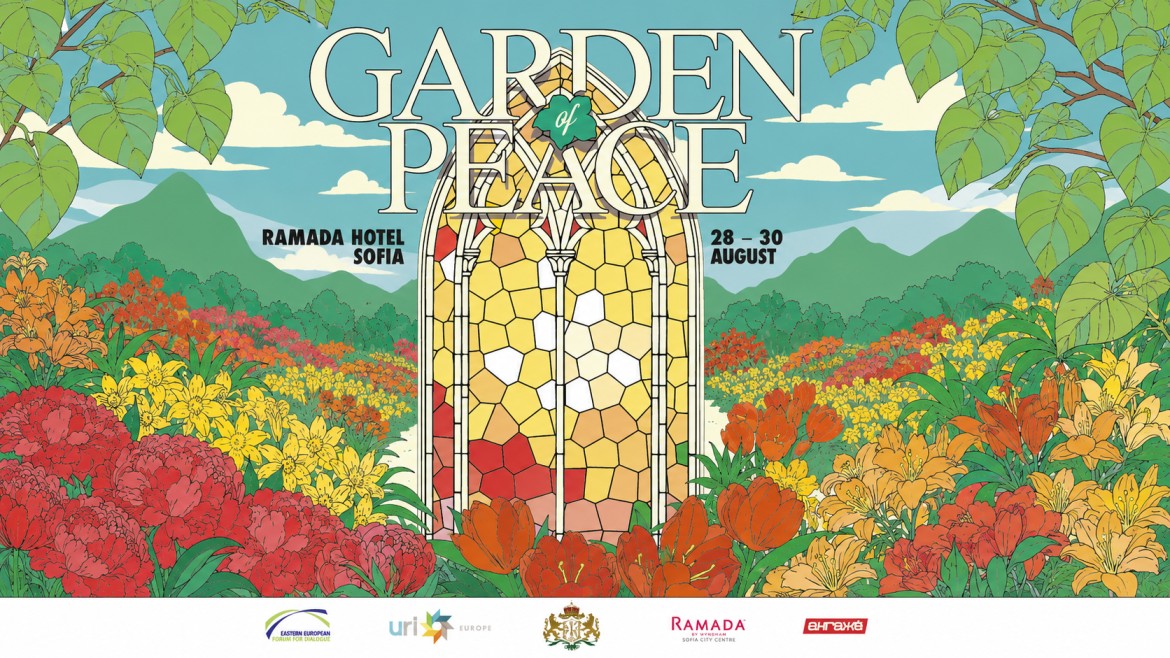
Young people from different religious and cultural backgrounds will gather in Sofia, Bulgaria, from August 28 to 31, 2026, for Garden of Peace, a four-day forum devoted to interfaith dialogue, nonviolence and inclusive community building.
Announcing the initiative, BRIDGES – Eastern European Forum for Dialogue said the gathering is being organized in connection with International Youth Day. The annual United Nations observance, marked on August 12, draws attention to young people’s concerns and recognizes their potential as partners in society.
The forum will offer participants an opportunity to exchange experiences, develop ideas and consider how young people can help create communities that are more peaceful, inclusive and sustainable. Ramada Sofia will serve as the event’s general partner, providing hospitality and support for the gathering.
Dialogue grounded in encounter
The Garden of Peace program is expected to combine conversations, practical learning and meetings with religious leaders. Its principal themes will include interreligious dialogue, a culture of peace and nonviolence, ecological justice, memory and identity, intercultural understanding, and youth participation and leadership.
Rather than treating peace as an abstract aspiration, the forum will invite young people to explore how it can be cultivated through everyday relationships and shared responsibility. Meeting people whose religious practices or cultural memories differ from their own can help participants move beyond stereotypes while remaining rooted in their respective identities.
This approach reflects the wider mission of BRIDGES, a Bulgarian nonprofit organization that promotes cooperation among people from different faiths and cultures. The organization describes dialogue as the foundation of peace and works to strengthen mutual understanding among religious communities in Bulgaria and across Eastern Europe.
BRIDGES is also a Cooperation Circle within the United Religions Initiative. Its network profile identifies Christianity and Islam among the traditions represented in its work, including Orthodox, Catholic and Protestant Christian communities. Over the years, its programs have also engaged people from other religious and cultural backgrounds.
Building on young people’s experience
Garden of Peace is designed to build upon the experiences of participants in BRIDGES’ interfaith programs during the previous two years.
In 2024, the Seeding the Peace youth camp brought together young people from Albania, Belgium, Bulgaria and the Netherlands in The Hague. Its program connected interfaith dialogue with ecological justice, creative expression and the formation of young peacebuilders.
That work continued in August 2025 with Rivers of Peace in Ruse, Bulgaria. The international camp gathered nearly 30 participants aged 15 to 17 from several European countries. Visits to Catholic, Orthodox and Muslim places of worship were combined with workshops on leadership, environmental responsibility and social engagement.
The new Sofia forum carries these conversations forward while placing additional emphasis on memory and identity. These subjects can be sensitive, particularly where communities remember historical events differently. Providing a respectful setting in which young people can listen to one another may help turn inherited differences into opportunities for understanding rather than sources of separation.
Young people as partners in peace
The forum’s focus corresponds with a broader international recognition that young people should be treated as active contributors to peace, not simply as beneficiaries of adult-led programs. The United Nations Youth, Peace and Security agenda highlights participation, prevention, protection and partnership as essential elements of sustainable peacebuilding.
Meaningful participation requires more than inviting young people to attend an event. It means giving them room to articulate their experiences, help shape solutions and carry new initiatives back into their schools, religious communities and neighborhoods.
Garden of Peace appears intended to create precisely that kind of space. Its planned discussions connect spiritual and cultural dialogue with environmental concerns and civic leadership, recognizing that peaceful communities depend on both respectful relationships and practical cooperation.
The gathering will conclude with a concert celebrating friendship and the richness of cultural diversity. Music and performance can communicate across linguistic and religious boundaries, allowing participants to experience diversity not as a problem to overcome but as a source of shared creativity.
In a period when public discussion can easily reduce religious and cultural differences to competing labels, Garden of Peace offers a more constructive model: encounter, careful listening and work undertaken together. Its lasting value will be measured not only by what happens during four days in Sofia, but by the relationships and local initiatives that participants develop after returning home.