

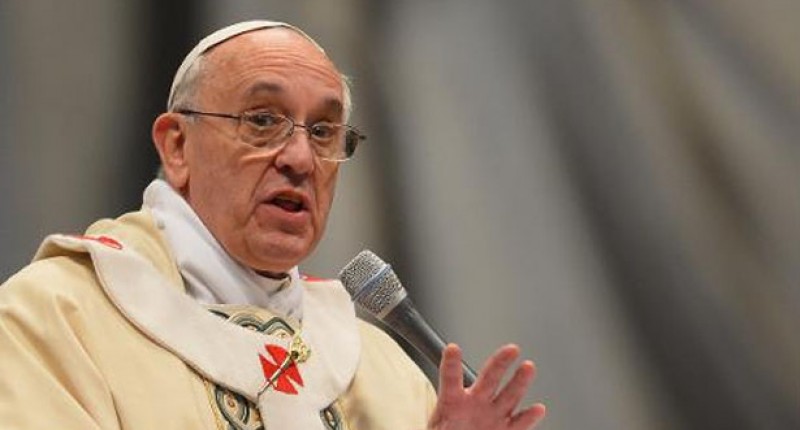
Pope Francis delivered an off-the-cuff mini-encyclical on the rights of the poor, the injustices of unemployment and the need for environmental protection Tuesday, saying he’s not preaching communism, but the Gospel.
Pope Francis has made waves with his comments about social inequality, the rights of poor people and the need to save the environment, and his speech on Tuesday continued many of those themes. His speech, given in his native language of Spanish, was more than six single-spaced pages in length, making it one of the longest since he became pope. These issues are clearly important to Pope Francis, as he often discusses such problems when addressing Catholics. He is aware that his ideas might lead some to believe he is preaching communism, but insists he is only iterating what is in the Gospel.
In the U.S., conservatives have already labeled the current pope “Marxist”. This is due to the pope’s unwavering dedication in pointing out “capitalist excesses” and his demands for governments to act in a compassionate manner by helping the needy though redistribution of social benefits. He has also called for the Catholic Church to truly be a “poor church, for the poor.”
Pope Francis gave a broad scope to his concern for the environment in Tuesday’s speech. He also spoke about the right of farmers to cultivate land, as well as his concern over the unemployment of many young people. He has promised that his next encyclical concerning the environment will also address his concerns for those who are in poverty.
The IPCC (International Panel on Climate Change) has stated that greenhouse gas emissions must be greatly reduced to avoid an average temperature increase of four degrees Celsius during the next 100 years. The impacts of such an increase would disproportionately affect those who can least afford to adapt to a changing climate; namely, the poorest and most disenfranchised.