


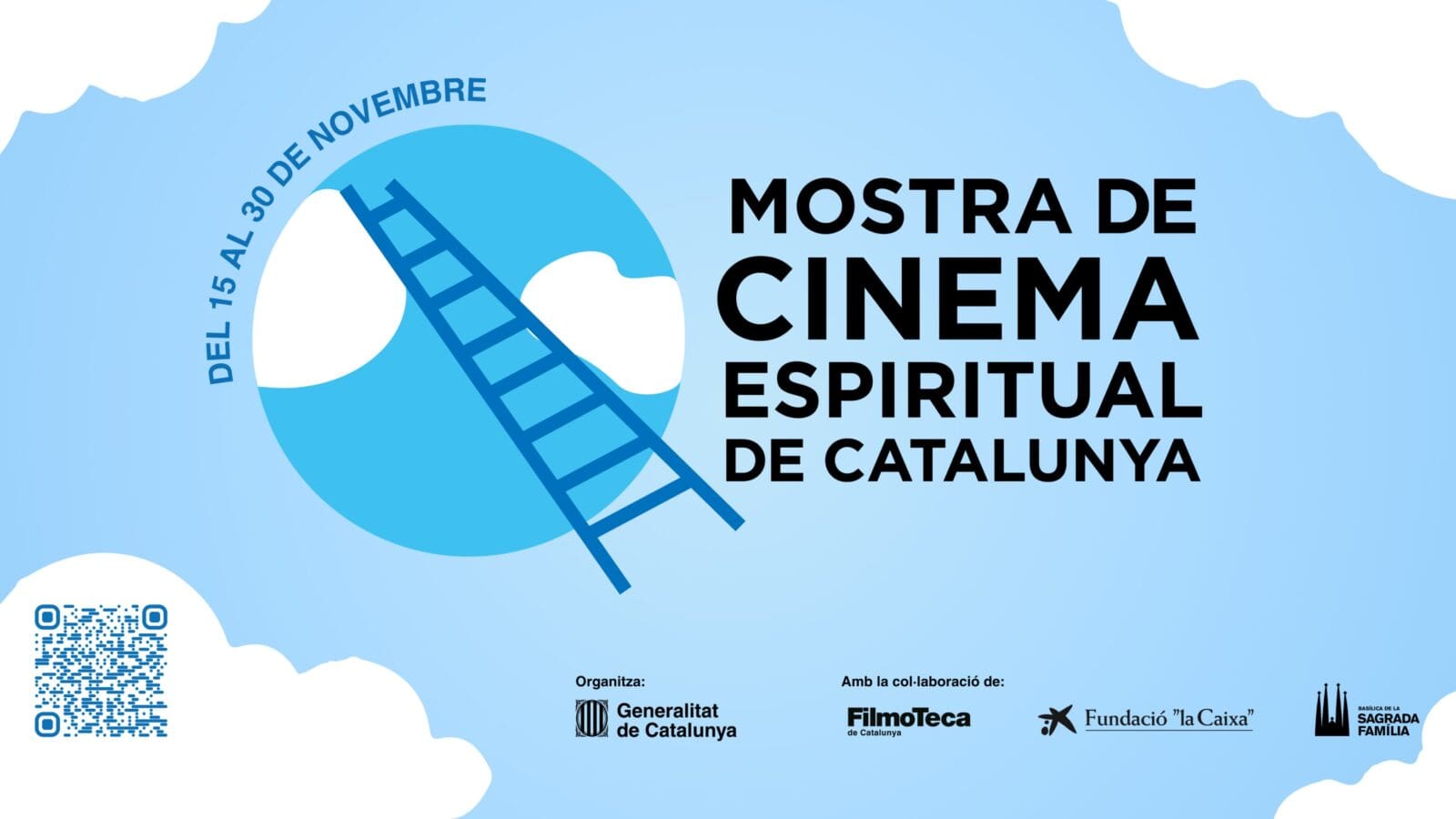
Catalonia’s annual spiritual film festival is bringing stories of faith, compassion and the search for meaning to cinemas, community spaces and religious venues across the region this November.
The 23rd Mostra de Cinema Espiritual de Catalunya runs from November 15 through November 30, with 155 screenings planned in 75 venues across 43 municipalities. Organized by the Catalan government’s Directorate General for Religious Affairs, the festival aims to make different expressions of spirituality visible and encourage interfaith dialogue and social cohesion, according to the organizers.
Among the participating venues are Protestant and Catholic churches, the Bahá’í Centre of Barcelona, the Church of Scientology of Barcelona, cinemas, libraries and cultural centers. The range of locations reflects the festival’s effort to take conversations about spirituality beyond a single community or setting.
At a press presentation, Director General for Religious Affairs Ramon Bassas said the festival could help audiences become familiar with religious diversity while exploring the deeper questions that precede formal beliefs. The conversations accompanying screenings, he suggested, can give people a starting point for further reflection.
Bassas also described a growing event. Organizers planned 155 screenings this year, up from 105 in the previous edition, he said. The number of venues rose from 62 to 75.
Faith, choice and compassion on screen
The festival opened in Barcelona on November 15 with a preview of Meditar, a documentary by Sara G. Cortijo about Amigos del Desierto, a network of meditators founded by writer and priest Pablo d’Ors. The opening invited audiences to consider silence and attention as part of spiritual life, Catalunya Religió reported.
The wider program is organized around three themes: discernment and choice, the perspectives of victims, and the pursuit of wisdom. Together, they place explicitly religious stories alongside films about loss, forgiveness, family and resilience.
At the press presentation, the festival’s head of content, Peio Sánchez, spoke about cinema’s ability to help people find words for difficult experiences. He pointed to Rondallas, a film about a Galician community confronting grief after a tragedy, as an opportunity to reflect on how people mourn and rebuild connections.
Another selection, Los domingos, follows a young woman considering a religious vocation and the questions her decision raises within her family. Sánchez said the film opens up questions about freedom, spirituality and the influences that shape personal choices. It is scheduled for a November 21 screening at Terrassa’s United Evangelical Church, followed by a panel discussion.
On the same day, the Church of Scientology of Barcelona is scheduled to host a screening of Sirāt, Óliver Laxe’s film about a father and son searching for a missing family member in Morocco. The festival program describes their journey as an encounter with loss, human fragility and existential questions.
Hospital de Campanya, directed by Jordi Roigé, follows a project at Barcelona’s Santa Anna parish that welcomes and accompanies people experiencing homelessness and other forms of hardship. Through the voices of volunteers, professionals and guests, the documentary explores dignity and the practical meaning of hospitality.
Communities across Catalonia
The festival’s printed program lists public screening venues throughout Catalonia, from Barcelona and Tarragona to smaller communities. These include:
- Alella: Casal d’Alella and Espai d’Arts Escèniques.
- Amposta: Museu de les Terres de l’Ebre.
- Barcelona: Blanquerna’s Faculty of Communication and International Relations auditorium; Casal de Barri Trinitat Nova–Somlapera; Centre Cultural Els Catalanistes; Centre Passatge; Bahá’í Community of Barcelona; Cinemes Verdi; Església Bíblica Ebenezer; Church of Scientology of Barcelona; Filmoteca de Catalunya; Lluïsos d’Horta; Cristianisme i Justícia; Associació Brahma Kumaris; Jesuïtes Casp; Teatre de Sarrià; Torre de la Sagrera; and Universitat CEU Abat Oliba.
- Blanes: Centre Catòlic de Blanes.
- Bot: Club Esportiu Bot.
- Calella: Can Saleta and Centre Parroquial de Calella.
- Cerdanyola del Vallès: Universitat Autònoma de Barcelona cinema.
- Deltebre: Centre Cultural del Delta–Espai Eliseo Vives.
- Figaró-Montmany: Santuari de Puiggraciós.
- Figueres: Sala Toni Montal de La Cate.
- Girona: CaixaForum Girona.
- Granollers: Sala Sant Esteve.
- Ivars d’Urgell: Fòrum Maria-Mercè Marçal.
- La Garriga: Fundació Maurí.
- La Palma de Cervelló: Teatre de l’Aliança Palmarenca.
- La Vall d’en Bas: Can Trona–Centre de Cultura i Natura.
- L’Hospitalet de Llobregat: Centre Cultural Ana Díaz Rico; Església Evangèlica-Baptista de la Torrassa; and Parròquia de Santa Eulàlia de Mèrida.
- Llagostera: Teatre Casino Llagosterenc.
- Lleida: CaixaForum Lleida.
- Llorenç del Penedès: Sala Petita d’El Centre.
- Manresa: Auditori Plana de l’Om.
- Mataró: Foment Mataroní and Tecnocampus Mataró.
- Mollet del Vallès: Auditori Campus Fundació Sanitària Mollet.
- Olesa de Montserrat: Auditori de la Casa de Cultura.
- Olot: Sala Magma de l’Espai Cràter.
- Penelles: Cinema Kursaal.
- Rubí: Biblioteca Mestre Martí Tauler and Primera Església Protestant a Rubí.
- Sabadell: Auditori Casal Pere Quart and Auditori Mn. Joan Nonell.
- Salt: El Teler–Ateneu Popular de Salt.
- Sant Cugat del Vallès: Centre Borja.
- Sant Feliu de Guíxols: Casa Irla–Sala Felip Calvet.
- Tarragona: CaixaForum Tarragona.
- Terrassa: Auditori de l’Església Unida de Terrassa and Cinema Catalunya.
- Tortellà: El Galliner–Cineclub Tortellà.
- Tortosa: Biblioteca Marcel·lí Domingo.
- Vic: ETC.
- Vilafranca del Penedès: Sala Zazie–Cine Club de Vilafranca del Penedès.
In addition to the locations listed in the public venue directory, the festival program includes screenings in prisons and juvenile justice educational centers. Organizers describe these sessions as part of the event’s educational and social inclusion work.
Interfaith groups are also taking part in individual events. Members of the Olot Interreligious Dialogue Group, for example, are scheduled to help present a November 28 screening of Jean Valjean at Espai Cràter.
Memory and cultural heritage
On November 28, a Barcelona screening of Protestants, la història silenciada is scheduled to revisit the history of evangelical communities in Catalonia and the repression they faced under Franco’s dictatorship. A roundtable will follow, according to the festival program.
Another documentary, Abu Bakr de Tortosa, introduces audiences to the 12th-century Andalusian scholar born in Tortosa. At the presentation, Sánchez said the film offered a chance to rediscover a figure whose work and travels connected Catalonia to a wider intellectual world.
The Filmoteca de Catalunya is also hosting a retrospective of Italian filmmaker Roberto Rossellini. At the press presentation, Filmoteca director Pablo La Parra described a program that explores both the complexity of Rossellini’s career and his interest in questions of compassion, humanism and spirituality.
For those unable to attend a screening, the organizers say the festival’s FilminCAT channel offers an online selection. Some in-person screenings are free, while others require a ticket. Dates, venues and practical information are available through the festival’s official page.