


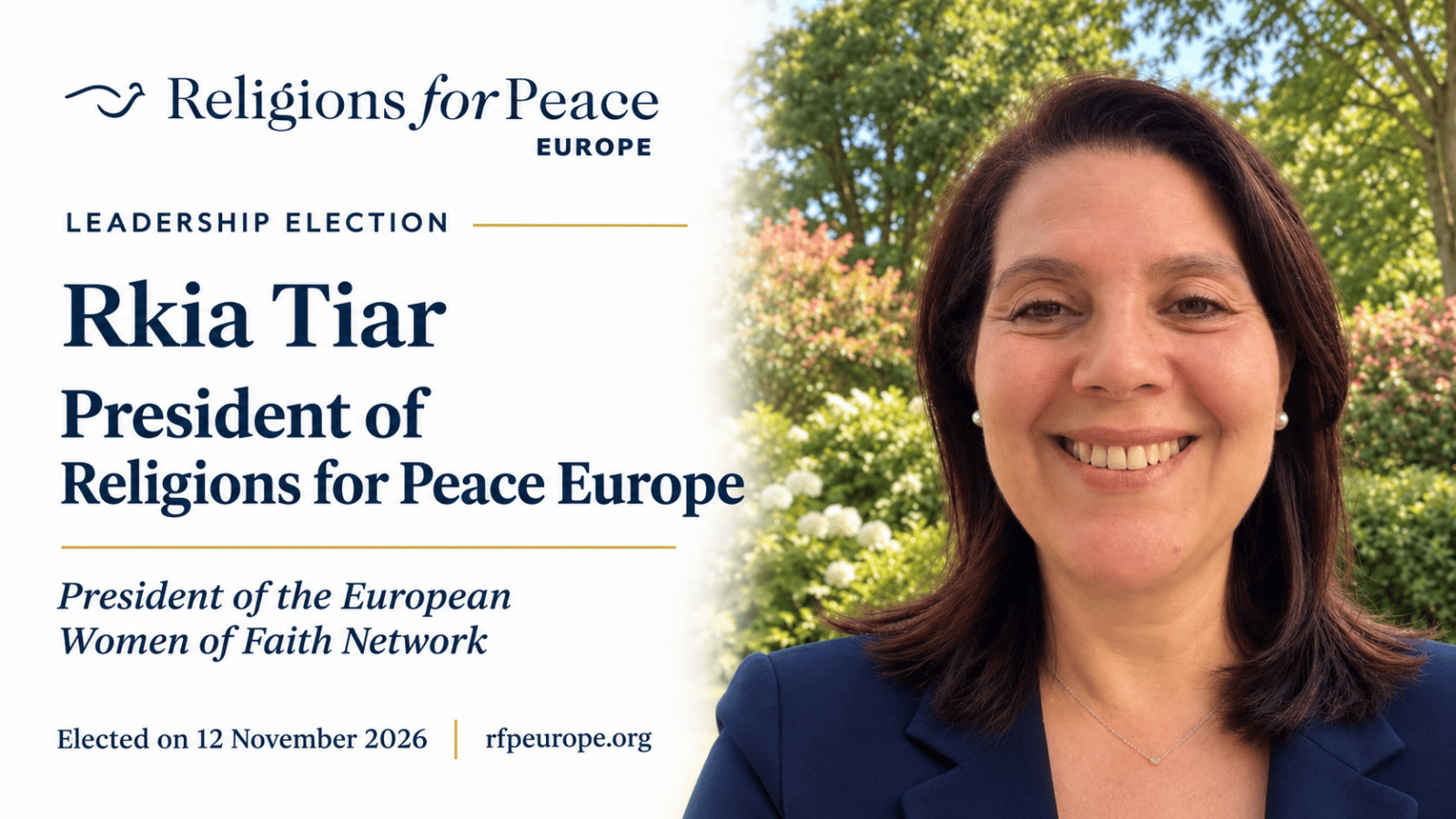
Religions for Peace Europe has elected Rkia Tiar as its new president, placing the leader of its European Women of Faith Network at the head of an organization working to foster cooperation among religious communities across the continent.
The election, held during an online board meeting on November 12, comes as women lead each of the organization’s four constituent networks. Tiar succeeds Professor Genti Kruja, who was elected secretary general at the same meeting.
Her appointment follows the organization’s practice of rotating the presidency among its constituent bodies, Religions for Peace Europe announced.
From women’s network to European presidency
Tiar has led the European Women of Faith Network since 2023 and has been a member of both the network and Religions for Peace Europe since 2017. The organization described her work as focused on community service, social conditions and solidarity.
She also brings experience in healthcare and hospital services. According to the organization, she has collaborated with nonprofit groups and supported educational activities and training programmes aimed at community well-being.
Following her election, Tiar thanked board members for their trust and said she was committed to strengthening cooperation among the networks and advancing their shared work on dialogue, mutual understanding and peace. She also thanked Kruja for his leadership and contribution to the organization’s partnerships.
Four networks led by women
Religions for Peace Europe is part of the global Religions for Peace movement. Its European structure brings together networks representing religious leaders, national interreligious bodies, women of faith and young people.
According to the board’s account of the meeting, each of those four structures is now led by a woman. Alongside Tiar, their leaders are Bishop Kari Mangrud Alvsvåg, Dr. Lejla Hasandedic-Dapo and Professor Elisabeth Naurath.
Naurath was elected to lead the European National Interreligious Bodies network on November 10, two days before Tiar’s election. The University of Augsburg, where Naurath is a professor of religious education, also reported her appointment.
The leadership changes put women in prominent roles across the European organization, although they do not on their own establish how broadly women are represented in interfaith leadership elsewhere.
Dialogue and peacebuilding ahead
The board said the organization’s recent work has included interfaith forums in Athens, Helsinki and Tirana, cooperation with European and international institutions, and initiatives in education and peacebuilding.
At its November meeting, the board also discussed a review of its governing documents, preparations for a general assembly and meetings planned for Oslo in December. Other items included an interfaith art and photography competition and initiatives to encourage the participation of women and young people in peacebuilding.
For Tiar, the presidency offers an opportunity to connect those strands of work across the organization’s networks. The board says its aim is to strengthen Religions for Peace Europe’s role as a platform for dialogue, freedom of religion or belief, and solidarity among religious communities.