


Nicolas Levrat says constitutional guarantees cannot deliver equality while only three faiths receive legal recognition
GENEVA — The United Nations Special Rapporteur on minority issues has urged Egypt to recognise religious communities beyond Islam, Christianity and Judaism, warning that formally neutral laws can still expose members of minorities to discrimination in marriage, civil documentation and other areas of daily life.
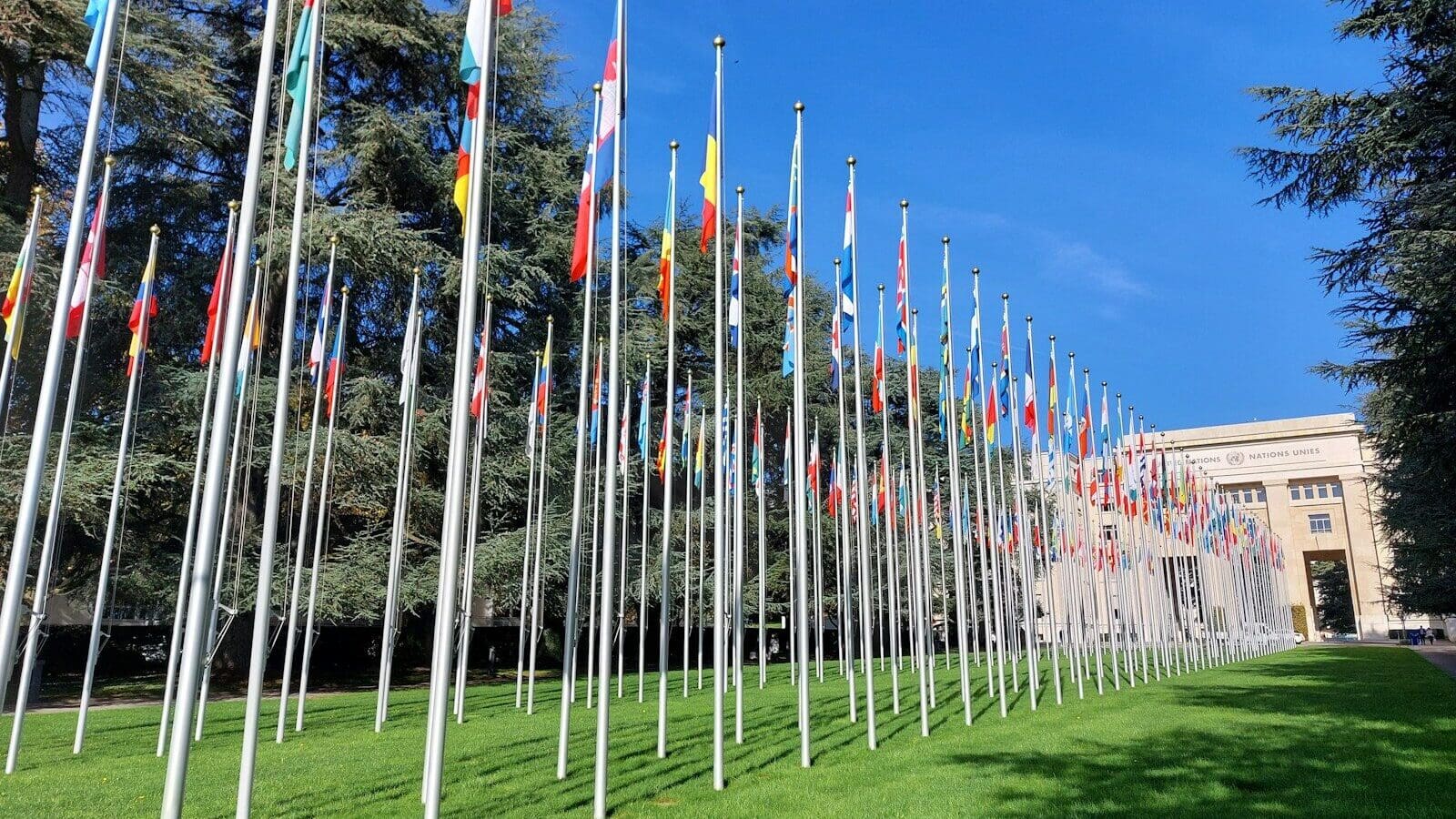
Professor Nicolas Levrat delivered the warning on Wednesday at “Freedom of Religion or Belief in Egypt,” a side event during the 63rd session of the UN Human Rights Council at Geneva’s Palais des Nations. The discussion was organised by the Egyptian Initiative for Personal Rights, Amnesty International and the Bahá’í International Community.
Levrat stressed that his mandate concerns minority rights rather than freedom of religion or belief as a whole. Religious minorities nevertheless fall squarely within it, he said, particularly when laws or administrative practices place them in a different position from the majority population.
Discrimination beyond the legal text
Egypt’s constitution presents a complicated legal framework. Article 64 declares that freedom of belief is “absolute”, while limiting the right to practise religious rituals and establish places of worship to followers of what the English text describes as the Abrahamic religions. Article 2 establishes Islam as the state religion and the principles of Islamic Sharia as the main source of legislation.
Levrat argued that these provisions must be assessed through their practical consequences. Discrimination, he said, does not always take the form of an explicitly hostile rule. A regulation that appears neutral may place people belonging to a minority at a particular disadvantage because their religious identity is not recognised elsewhere in the legal system.
He identified family law and administrative law as two areas in which this distinction can affect people’s lives. In Egyptian legal and administrative practice, formal religious recognition is generally confined to Islam, Christianity and Judaism.
Levrat argued that designating a state religion also creates an institutional hierarchy that can disadvantage other communities. His concern was not limited to Egypt, he added, but reflected a broader difficulty encountered by religious minorities in many countries.
Recognition as a condition of protection
The Special Rapporteur grounded his argument in the 1992 UN Declaration on Minority Rights. Article 1 calls on states to protect the existence and the national or ethnic, cultural, religious and linguistic identity of minorities, while encouraging conditions in which those identities can develop.
Recognition, in Levrat’s account, is therefore more than a symbolic concession. It enables a community to maintain its identity and gives individuals a legal basis from which to challenge unequal treatment.
“As long as there is no recognition, then it is a denial of the situation,” he told participants.
Levrat acknowledged that extending recognition would not by itself resolve every difficulty facing Egypt’s religious minorities. It would, however, make it possible to identify the legal and administrative level at which particular forms of discrimination should be addressed.
Bahá’í rights under scrutiny
The Geneva event coincided with the publication of a new report on Egypt’s Bahá’í community by the Egyptian Initiative for Personal Rights. The organisation says its findings draw on 30 written testimonies, 13 detailed interviews and 42 personal-status judgments, alongside administrative court decisions and state legal submissions.
According to the report, a 2009 legal change allowing Bahá’ís to place a dash in the religion field of official identity documents addressed one immediate barrier but did not secure recognition of the faith. EIPR says the resulting system continues to create obstacles involving marriage, parenthood, employment, travel and burial.
The report’s release follows a Court of Cassation ruling earlier in 2026 that overturned judicial recognition of a Bahá’í marriage. The court treated marriage as a religious rite restricted to adherents of the three recognised religions, according to EIPR’s account of the judgment.
The concerns echo issues examined in a recent analysis of religious minorities in Egypt, including civil registration, burial rights and restrictions affecting Bahá’ís and other communities outside the recognised framework.
Egypt points to tolerance measures
Egyptian authorities present their religious-freedom record differently. The government’s National Human Rights Strategy highlights the legalisation of additional churches, revisions to educational material and programmes involving Al-Azhar, Christian churches and government ministries to promote tolerance and coexistence.
The strategy also refers to the constitutional guarantee of absolute freedom of belief. Its own wording, however, associates the practice of religious rituals and construction of places of worship with followers of the recognised “heavenly religions”, leaving the central question raised by Levrat unresolved.
His intervention placed the emphasis on equality in practice: whether people can marry, register their families, obtain documents and preserve their communal identity without being compelled to fit within a legally recognised faith. For religious minorities, he argued, recognition is not the conclusion of reform but the point from which meaningful protection can begin.