

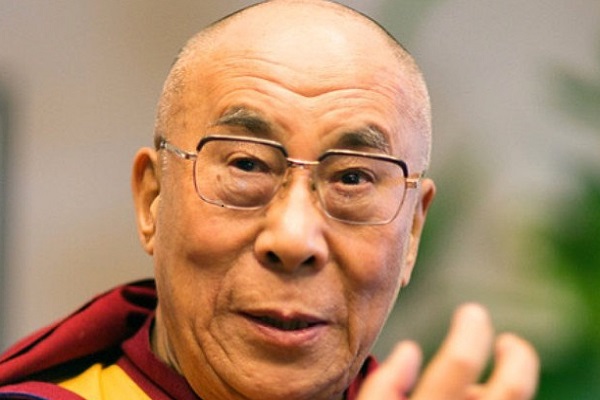
In a new video, the Dalai Lama calls for united action on global warming.
1989 Nobel Peace Prize winner and the 14th Dalai Lama has called for action to restrict global warming and subsequent damage to the Tibetan plateau and the Himalayan glaciers.
In a video released from Dharamsala in India, where the political head of an estimated 128,000 Tibetans lives in exile, he said that all of humanity has to take responsibility and act, instead of merely relying on prayer to God or Buddha, which he felt was illogical.
The 80-year-old spiritual leader also urged the younger generation to be more proactive in protecting the environment. Temperatures in Tibet have on an average risen by 1.3° C over the past 50 years. This has contributed to glaciers in the Himalayas shrinking by as much as 21% in the last 30 years.
This poses an immediate danger to humanity because both methane and carbon-dioxide have been proven to be present in the ice. The ice of the Tibetan plateau melting could release these greenhouse gases, thereby contributing further to the problem of global warming. Methane is accepted to be 30 times as strong as carbon-dioxide when it comes to trapping heat within the Earth's atmosphere.
A new study published indicates that by the next century, average summer temperatures will be 113 degrees Fahrenheit with humidity raising the heat index to over 165 degrees, a temperature that makes the region uninhabitable by humans.
"Our world is our home. There’s no other planet where we may move or shift.” Dalai Lama #ClimateAction https://t.co/YpsZDuHKts
— Tom Cook (@Tom4tnc) October 20, 2015
The Tibetan government is expected to send a representative to the United Nations Climate Change Conference, due to be held in November 2015, although it will not have a vote. Nations from all over the world are understood to reach some sort of an agreement on limiting carbon emissions. The earlier Kyoto Protocol was not ratified by the United States, resulting in its partial failure, while the Copenhagen Accord of 2009, widely seen as its successor, is not legally binding on the signatories.
In his statement, the Dalai Lama stressed that climate change was not something that affected one or two nations, but was rather a threat faced by humankind as a whole. Our world is our home, concluded the Buddhist monk, adding that there was no other planet which we could move to.
Tibet accuses China of causing the problem by resorting to wanton mining without regard for the ecosystem, maintaining that Tibetans' wisdom in this regard is superior, by virtue of them being natural custodians of the land for centuries. Its tensions with China date back to 1950-51, when the People's Republic of China led a military expedition into the region and annexed it. A 1959 uprising against the Chinese failed, which resulted in the Dalai Lama and his supporters having to shift their base to neighboring India, which offered them refuge.
Dalai Lama: This is not a Political Matter, Not Religious. It’s About Survival.[/tweetthis]