


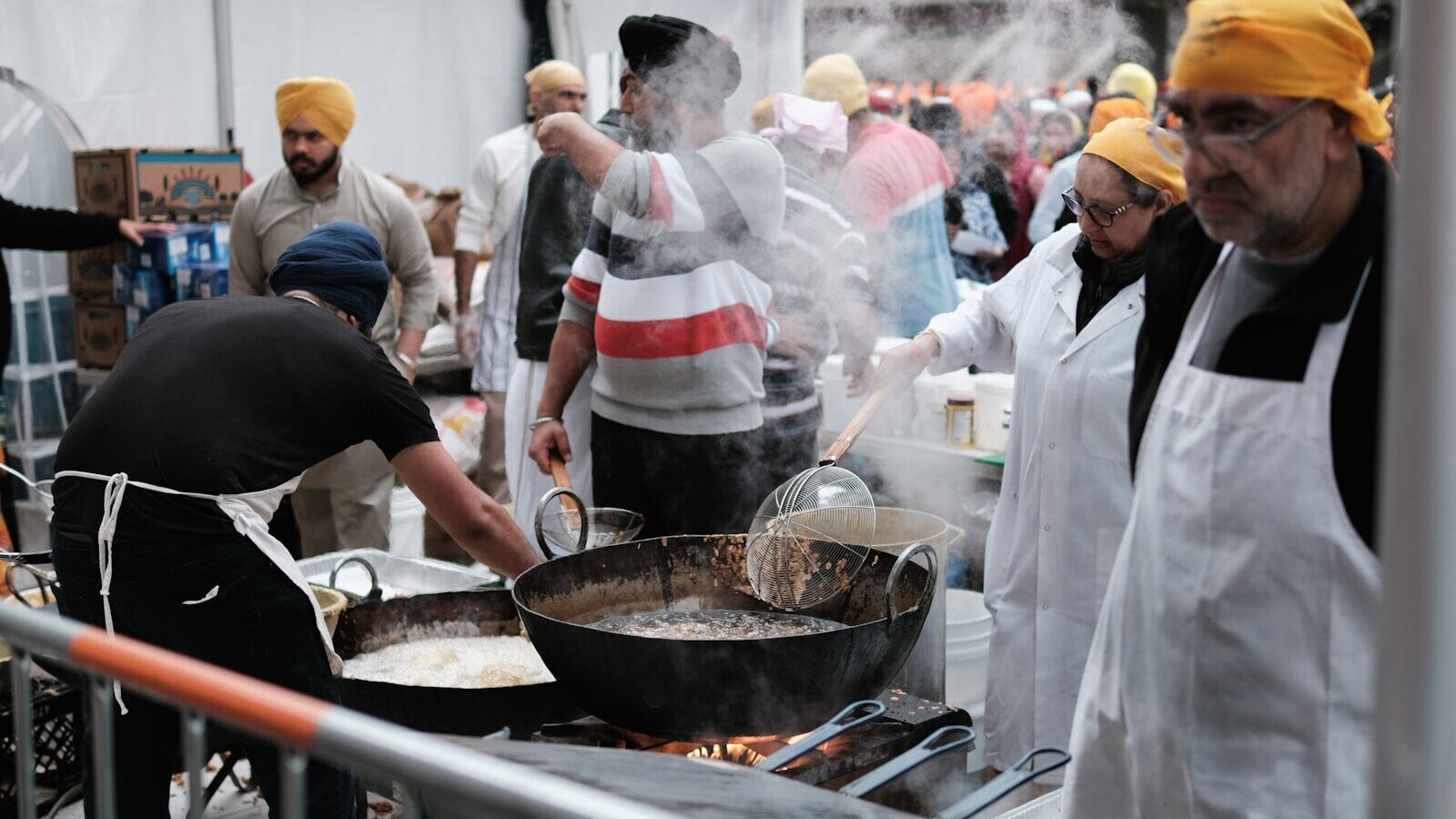
As thousands of people remain displaced by a fast-moving wildfire in British Columbia, a Sikh place of worship in Penticton has transformed its community kitchen into a large-scale relief operation.
Volunteers at the Penticton Sikh Temple were preparing and distributing more than 2,000 hot meals a day for people forced from their homes in Summerland and nearby communities, according to local reporting by Castanet. The temple has also been supplying produce and other essentials to evacuees staying at campgrounds, casinos and emergency-support locations around the city.
The response began after the Bald Range wildfire spread rapidly near Summerland, prompting the evacuation of more than 20,000 people across the region. The blaze had grown to approximately 184 square kilometres by Wednesday, destroyed homes and caused the death of an 80-year-old woman, the Associated Press reported.
A Community Kitchen Mobilized for an Emergency
Temple volunteers have prepared meals including rice, vegetables, pasta and bread, adapting their menus to immediate needs. Food has been delivered in batches to gathering points throughout Penticton, while meals and supplies have also been available directly from the temple.
The effort draws on langar, the Sikh tradition of preparing and sharing free food without discrimination. According to the Sikh Coalition’s explanation of the practice, langar expresses equality and communal responsibility by welcoming people regardless of religion, race, caste or sex.
That principle has given the Penticton response both its practical strength and its inclusive character. Although members of the Sikh congregation form the core of the volunteer team, other residents have also joined the work. Food donations have arrived from British Columbia’s Lower Mainland, expanding the temple’s ability to help.
Volunteers have said they intend to continue for as long as the assistance is needed. Their work is being organized around changing conditions, with the team assessing demand and adjusting its menu and distribution routes each day.
Faith Expressed Through Service
The temple’s emergency response is also an example of seva, the Sikh ideal of service inspired by love. Sikh educational resources describe seva as a central part of the tradition rather than an activity reserved for members of the faith.
British Columbia Premier David Eby publicly thanked the temple for feeding and caring for people who had been forced to leave their homes. The recognition placed the congregation’s work within a much wider response involving firefighters, emergency officials, businesses, charities and individual residents.
The temple cannot remove the uncertainty facing families who do not yet know when they can return home or what they will find there. It can, however, provide something immediate and deeply human: a warm meal, familiar hospitality and reassurance that displaced people have not been left to face the crisis alone.
In Penticton, a religious practice developed centuries ago is meeting a modern emergency with remarkable efficiency. Pots of food, volunteer delivery routes and an open door have become instruments of solidarity at precisely the moment the community needs them most.