


From a candid Gen Z conversation in Sri Lanka to peacebuilding encounters involving young Muslims, Jews and Druze, the United Religions Initiative is using August to place young people at the center of interfaith work.
On the evening of August 12, young people in Sri Lanka will log into a Zoom conversation with a deliberately informal title: “Gen Z Unfiltered: Beyond the Label.” They are being invited to speak openly, question familiar stereotypes and consider why people of different generations so often misunderstand one another.
The event, led by young members of the United Religions Initiative in Sri Lanka, offers a useful starting point for understanding how the organization is marking International Youth Day this year. Rather than organizing one central ceremony, URI has connected a series of online conversations, local gatherings and practical challenges stretching from early August into September.
The result is a geographically scattered program with a common argument: young people should not merely be invited into interfaith spaces created by adults. They should help shape the conversation and decide what action follows.
From lived conflict to shared work
That approach was already visible on August 3, when URI North America and the Abrahamic Reunion hosted “From Pain to Peace: Healing Together.” The online program brought together young Muslim, Jewish and Druze peacebuilders from Israel and Palestine.
Its emphasis was not on presenting religious diversity as an abstract ideal. Participants spoke from societies living with conflict and explored how interfaith dialogue, trauma-informed healing and intercultural leadership can help people continue working together across lines of fear and grief.
The Abrahamic Reunion has long brought Jewish, Christian, Muslim and Druze religious leaders together to rebuild trust in the Holy Land. Involving younger peacebuilders gives that work another dimension. They inherit the consequences of conflict, but they also form relationships and initiatives that do not have to reproduce it.
This combination of local experience and international connection reflects the United Nations theme for International Youth Day 2026: “Different Contexts, Common Aspirations.” At the United Nations gathering in Geneva, the theme is being explored through intergenerational dialogue. URI’s contribution moves the same question into religious and grassroots settings.
Four weeks, four areas of action
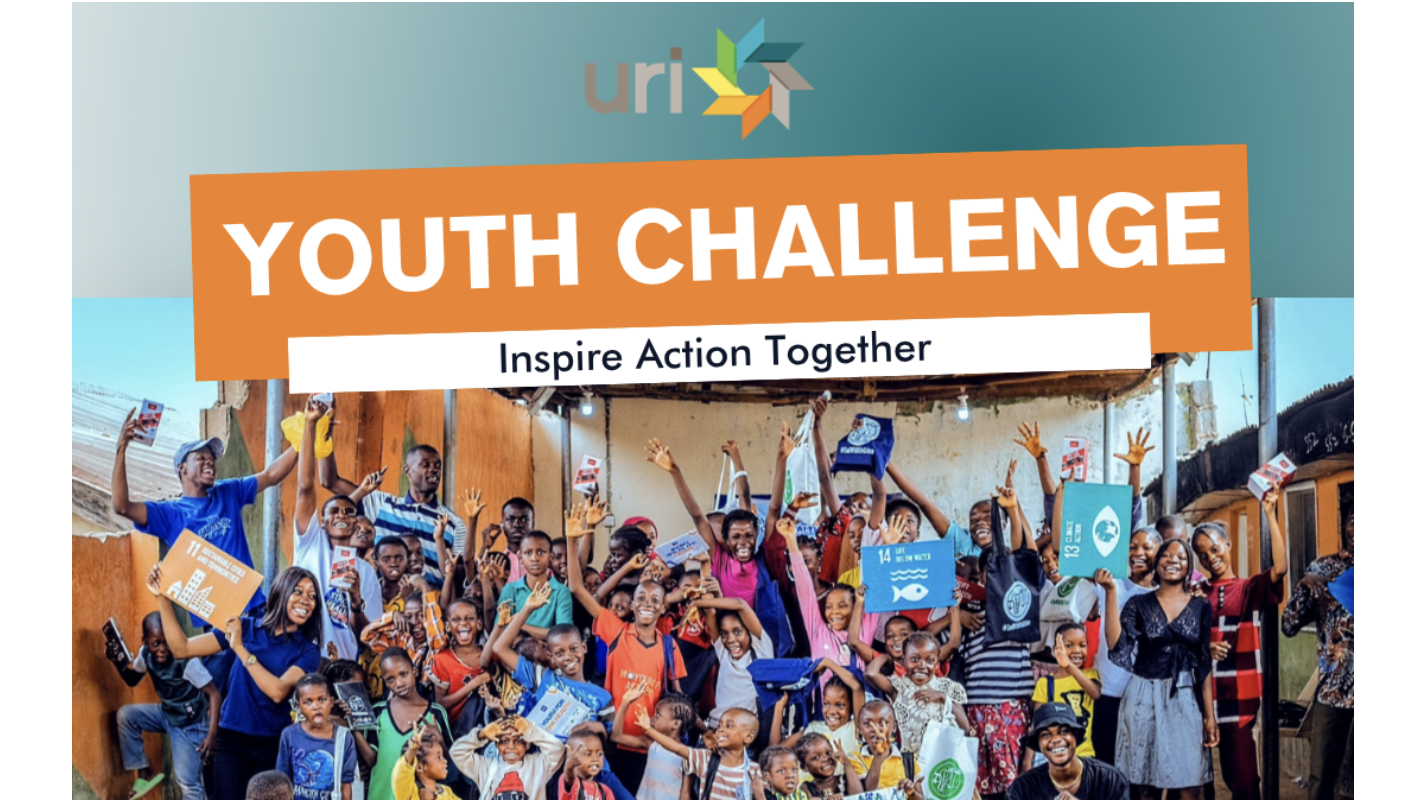
At the center of URI’s program is a global Youth Challenge beginning August 17. Participants will receive one task each week, accompanied by instructions and supporting resources. The four weeks correspond to the principal commitments in URI’s purpose: daily interfaith cooperation, ending religiously motivated violence, restoring the Earth and creating cultures of peace, justice and healing.
The precise 2026 tasks have not yet been made public. The structure, however, follows a model URI has used before. In the 2024 Youth Month Challenge, participants shared a meal with someone from another faith, created a message opposing hate speech, carried out an environmental action and wrote a letter calling for peace. According to URI’s youth engagement report, 60 people representing 24 countries enrolled that year.
This year’s challenge is open beyond URI’s established membership. Cooperation Circles, individual members, partner organizations and people encountering URI for the first time are all invited to take part.
Those completing all four tasks will receive a certificate recognizing them as a URI Youth Champion and an invitation to an online celebration. URI may also share participants’ stories through its social media channels. Creative work produced during the challenge is expected to be collected in an ebook linked to the International Day of Peace in September.
The incentives are modest, but the design is significant. It asks participants to connect religious understanding with something observable, would it be a conversation held, a prejudice challenged, a place cared for or a public appeal made.
A network moving at different rhythms
Other events will unfold according to local circumstances. In South India, URI is preparing its Annual Youth Assembly for September 5 at St. Joseph’s Nazareth School in Puthoor. The gathering will also mark the seventh anniversary of the “One Billion Youth for Peace” initiative.
In Sofia, Bulgaria, the BRIDGES Cooperation Circle will bring 30 young people from different religious and cultural backgrounds together for Garden of Peace, beginning August 28. The forum will explore interfaith dialogue, nonviolence, ecological justice, identity and youth leadership.
Garden of Peace builds on two years of European youth work. The Seeding the Peace camp, held in The Hague in 2024, combined visits to religious communities with workshops on environmental and social justice. The following year, URI Europe and BRIDGES organized Rivers of Peace in Ruse, Bulgaria, where teenagers from several countries used art, ecology and dialogue to explore peacebuilding.
URI’s multiregional team is also highlighting intergenerational leadership through a three-part video campaign. This is more than a side theme. Across the August program, the relationship between generations appears repeatedly—not as a ceremonial passing of responsibility, but as shared work in the present.
International days can easily produce statements that disappear once the date has passed. URI’s program is attempting something more durable: turning one day of recognition into several weeks of encounter and action. Its success will depend less on certificates or online visibility than on whether young participants are able to carry what they begin in August back into their religious communities, schools and neighborhoods.