


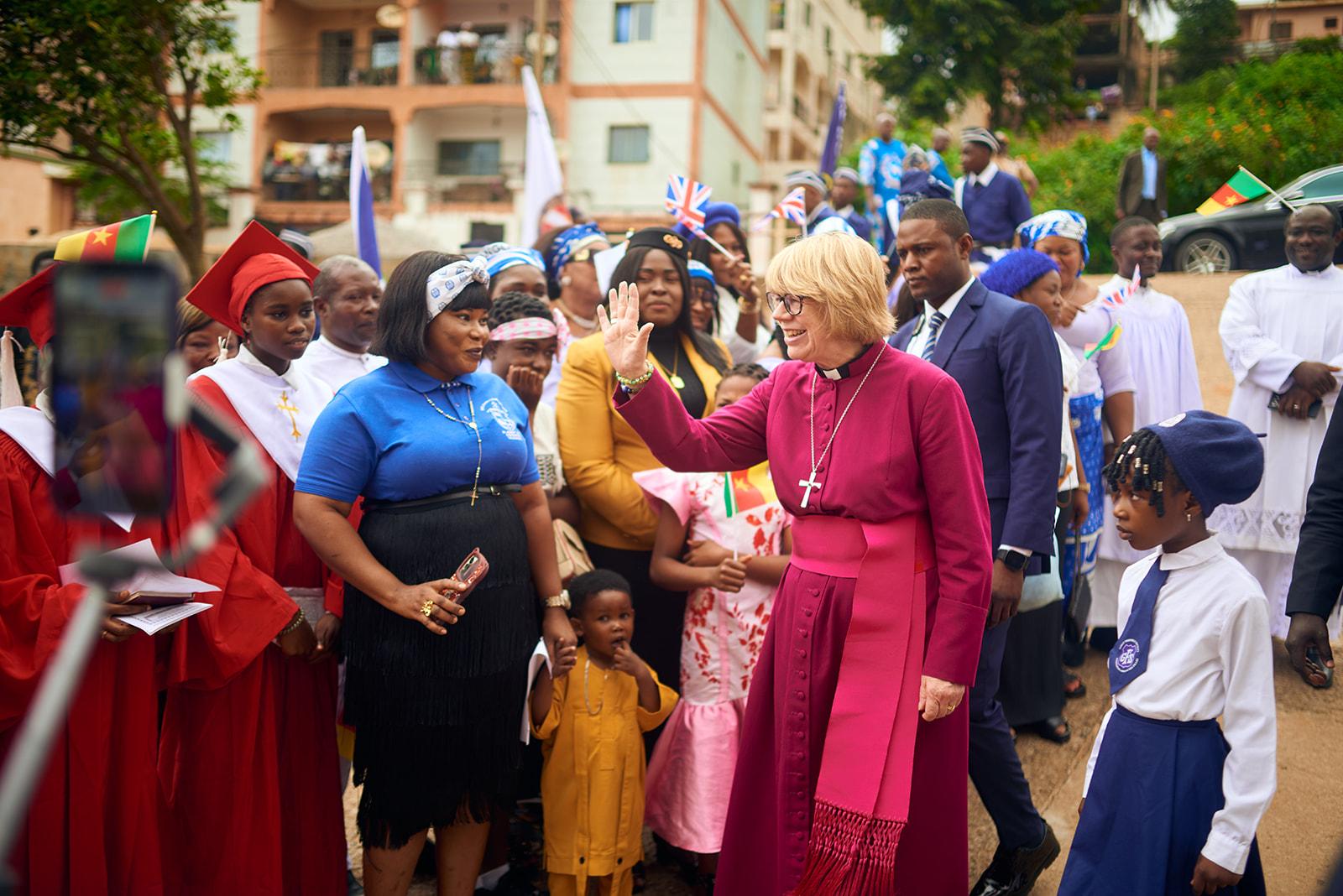
Archbishop of Canterbury Sarah Mullally concluded her first pastoral visit to Africa with a message that joined honest remembrance of the past to practical hopes for healing, service and peace.
The 10-day journey through Ghana and Cameroon placed the Anglican Communion’s complicated history alongside the living work of African churches. As documented by Religion News Service, Mullally acknowledged the church’s involvement in transatlantic slavery while highlighting initiatives intended to strengthen communities and relationships today.
A place of painful memory
One of the visit’s most significant moments came at Cape Coast Castle in Ghana. Enslaved African men and women were imprisoned at the British-controlled fortress before being forced onto ships bound for the Americas.
Mullally walked through the castle’s underground dungeons and the passage known as the Door of No Return. She also prayed in a former Anglican chapel located above the men’s dungeon, a physical reminder of the contradiction between Christian worship and the dehumanization taking place below.
According to the Archbishop of Canterbury’s account of the visit, Mullally prayed in lament for the church’s involvement and for the courage to continue a journey of repentance, justice and reconciliation.
The setting made clear that healing cannot be built on vague expressions of regret. It requires institutions to examine how their beliefs, wealth and influence became entangled with injustice, and to listen carefully to communities that continue to experience slavery’s social and economic legacy.
Turning remembrance into welcome
The Ghana visit also pointed toward a practical expression of repair. In Accra, Mullally joined Archbishop Cyril Kobina Ben-Smith, the Anglican primate of West Africa, in breaking ground for a new pilgrimage hostel.
The hostel is part of the Church of Ghana’s Heritage Anglican Culture Village and Resorts initiative. Supported by the Anglican mission agency USPG, it is intended to welcome people of African descent who travel to Ghana to explore their heritage and visit sites connected to the slave trade.
The project’s groundbreaking followed a joyful service in Accra led entirely by women clergy. Together, the two events offered complementary pictures of renewal: a church creating space for historical rediscovery while recognizing women’s leadership in its present ministry.
A hostel cannot by itself resolve the enduring consequences of slavery. Yet it can become a place where difficult history is approached through hospitality, education and encounters among people separated by geography but connected through ancestry and memory.
A wider ministry of care
Mullally’s itinerary extended beyond historical commemoration. In Kumasi, the former nurse opened a clinic at St Monica’s Nursing and Midwifery Training College during its centenary year. More than 1,000 students from the college and neighboring Anglican institutions attended a service celebrating healthcare as a vocation capable of transforming ordinary lives.
She also met St John Ambulance volunteers, members of the Mothers’ Union, young Anglicans and representatives of different faith communities. An interfaith gathering in Accra focused on peacebuilding, community cohesion and the contribution of faith organizations to Ghanaian society.
These meetings broadened the meaning of reconciliation. Repair is not only about institutional statements or financial commitments. It is also expressed through healthcare, education, youth leadership, interfaith trust and sustained support for families.
The Church Commissioners for England has committed £100 million toward a proposed long-term program addressing its historic links to African chattel enslavement. Church officials say the initiative is intended to advance healing, justice and a more equitable future, although its implementation will remain subject to public scrutiny and accountability. The Church Commissioners’ January 2026 statement said steps were still being taken to establish the fund in accordance with charity law.
A call for peace in Cameroon
In Cameroon, Mullally became the first archbishop of Canterbury to visit the country. She met congregations, clergy, traditional and government leaders, healthcare workers and farming communities amid the continuing effects of conflict and displacement.
At the final service in Yaoundé, she called for “genuine and inclusive dialogue” involving every part of society. The farewell gathering included children, a youth marching band, music, dancing and extended prayer for Cameroon’s people and churches.
The tour’s hopeful message was therefore not one of easy closure. Historical wounds remain, peace in Cameroon remains unfinished, and institutional commitments must still become accountable action. But the visit demonstrated a constructive path: tell the truth about the past, listen to those most affected, invest in relationships and institutions that serve people, and make reconciliation visible through sustained work.
For churches confronting painful histories, that combination of remembrance and responsibility may be the most credible form of hope.