

Immigrant Muslims are economically stronger than the US-born Muslims
The fabric of Islam in the United States has a considerable proportion of immigrants sewn into it. A whopping 58 percent of adult American Muslims have their roots in other parts of the world. They gained entry into the United States thanks to the 1965 Immigration and Nationality Act which relaxed previous barriers to Asian and African immigration.
Muslim Life in America[/tweetthis]
This does not mean that immigrants make up a majority of American Muslim population. 42 percent of the total U.S. Muslims were born here. This population is a mix of the descendants of the Muslim immigrants who came here and converts to Islam. There are also the descendants of converts. Interestingly, most of these converts are of African-American descent.
A Pew Research study conducted in 2017 on American Muslim adults revealed a lot of similarities and differences between American-born and foreign-born Muslims. Both the American-born and immigrants have similar levels of religiosity. When it comes to differences, Muslim immigrants enjoy a much better socioeconomic foothold compared to those born in the United States.
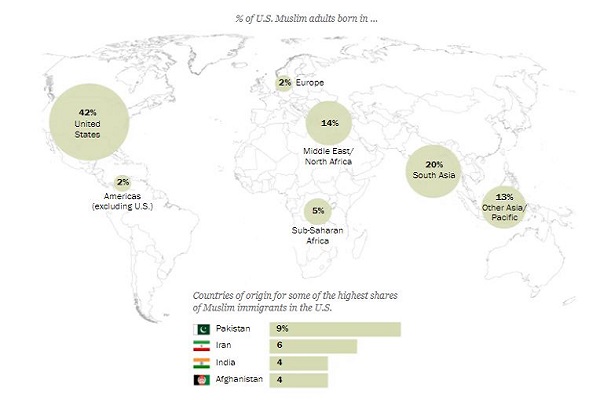
It is a given that both immigrant and U.S.-born Muslims are racially and ethnically diverse. Most foreign-born Muslims come from Asian countries. A majority of U.S.-born Muslims are either Hispanic or black. It is seen that a sizable proportion of the U.S.-born and foreign-born Muslims identify themselves as white. The latter category includes individuals who identify themselves racially as Persian, Arab, or Middle Eastern.
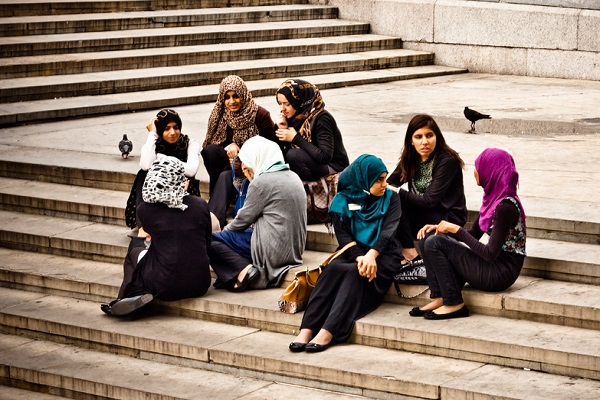
Both U.S.-born and immigrant Muslims show a similar intensity of religious observance. People of both groups will in all probability attend religious services for a minimum of one time in any given week. They also will fast similarly during Ramadan. People of both categories will wear clothes which identify themselves as Muslim. Women of both communities will wear head coverings regularly while going out. Both take pride in being both Muslim and American.
Differences come to the forefront when it comes to economic issues. Immigrant Muslims are much better off economically compared to U.S.-born Muslims. The former is more likely to have their own homes and a college degree. When compared to U.S.-born Muslims, immigrants are much more probable to express a positive outlook about the United States.