

![By Alexander Synaptic (Flickr: Gaya Street during Chinese New Year) [CC BY-SA 2.0], via Wikimedia Commons](http://www.worldreligionnews.com/wp-content/uploads/2016/02/Gaya_Street_during_Chinese_New_Year.jpg)

Traditions of Chinese New Year
Out of the many holidays that transpire in China every year, The New Year celebrations tend to be more dominating and valued. The majority of people in China know New Year as The Spring Festival. This is because the holiday comes at the break of spring.
Happy Chinese New Year![/tweetthis]
The main theme in the New Year celebration is to bring families together as and also to liaise with the traditional heavenly deities believed to be the core pillar behind the success of the Chinese community. After converting to the Western Calendar in 1912, the people of China recognize January 1 as New Year’s Day, but they also still celebrate Chinese New Year.
However, times seem to have changed remarkably among the people of China. The manner in which young people celebrate the New Year festival is far different from what older people used to do. The generation boundary is so explicit to an extent that the deep believe that they had in deities has changed. However, in as much as there have been changes in the way of celebrating New Year in China, traditional roots are still connected to the whole thing.
The main reason why Chinese people follow the ancient western calendar is because they believe that the calendar has a lot of religious connections. They also believe in the dynastic and social guidance that the calendar represents. According to credible sources, the ancient Chinese calendar existed from the 14 Century BC. This is when the Shang Dynasty was ruling the people of China.
Arguably, the calendar was not structured in a formal way when it was invented. However, changes took place and the calendar was transformed in a manner that it ran according to religion. The resetting of the calendar was directly connected with the lunar phases.
#FreshOffTheBoat is wishing you lots of wealth and good fortune this Chinese New Year!https://t.co/AYGwk0Gcqz
— Fresh off the Boat (@FreshOffABC) February 8, 2016
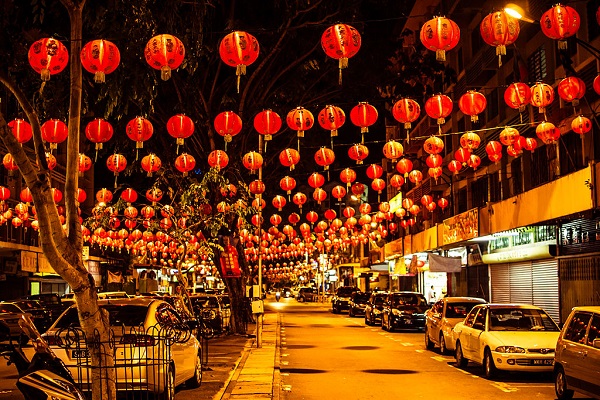
According to legend, a beast called Nian was eating villagers. They discovered the beast was afraid of the color red, so they began hanging red lanterns, wore red clothing, and put red scrolls on their windows. The creature was eventually caught by a Taoist monk named Hongjun Laozu.
The unique way that Chinese people used to identify the New Year was by using the characteristics of one of the 12 zodiacs. In this case, the main zodiacs that were used included; ox, tiger, rabbit, monkey, pig, snake, dragon, sheep, rooster and dog.
Traditionally, the Chinese year began at a different position in the calendar. Celebrations of the New Year began somewhere in the middle of the 12th month of the year. There was an extension of celebrations since everything could end at around the middle of the first month of the following year. All sorts of good will actions were done during this period. Older people could give children gifts, including money. The less fortunate were also not left behind. Messages of good luck were also shared among the people of China as they ushered in the new year.
The Buddhist Lantern Festival is also called “Little New Year” because it marks the end of the Chinese New Year celebrations.
Read more: Chinese New Year Traditions of Buddhism and Taoism