


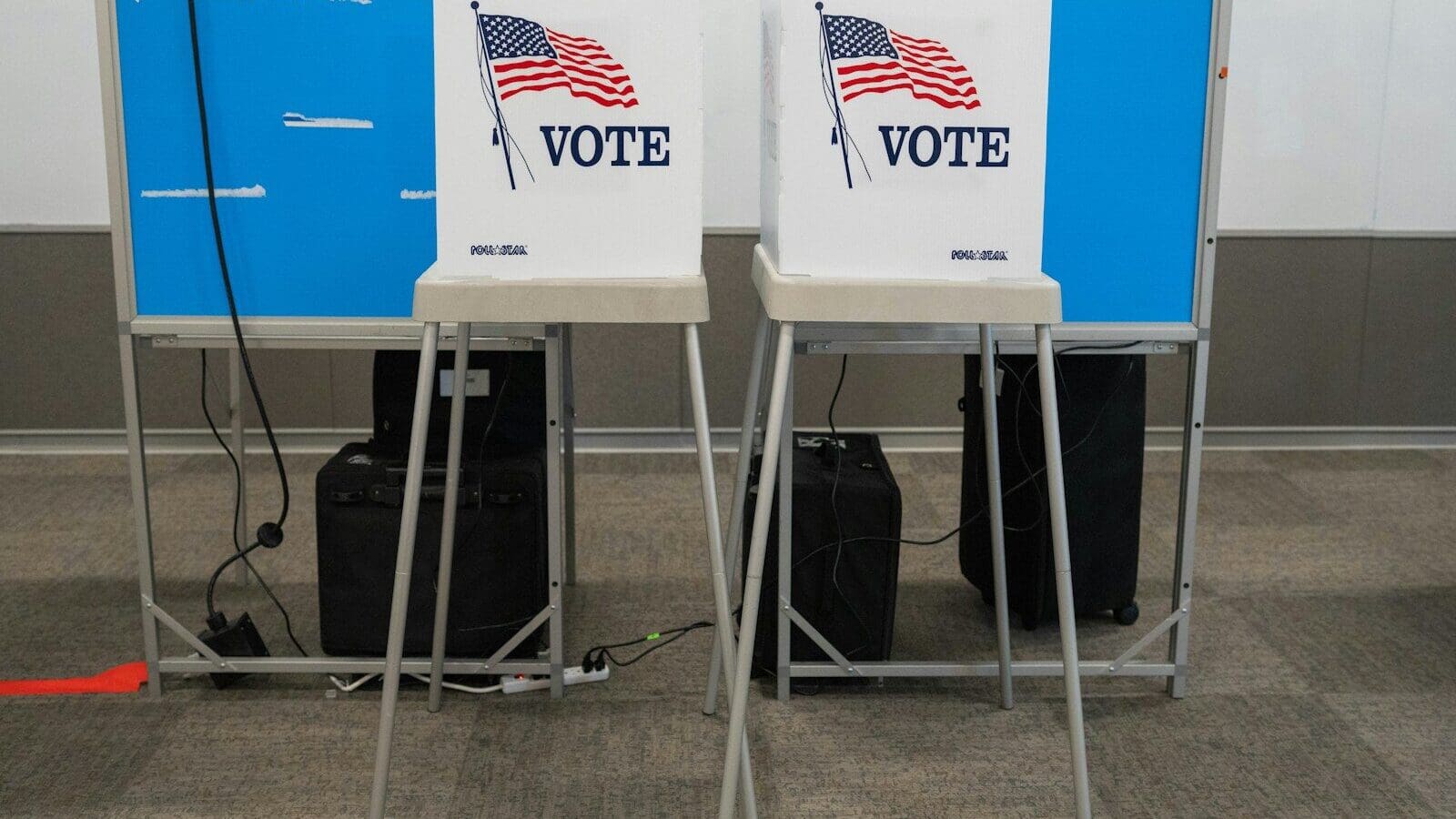
At polling places across nine U.S. states, clergy members and trained volunteers are preparing to offer voters something increasingly valuable in a tense political season: a calm and reassuring presence.
Faiths United to Save Democracy, a nonpartisan coalition of religious and secular partners, is training poll chaplains and peacekeepers ahead of the November 3 midterm elections. According to reporting by The Associated Press, the coalition had recruited 1,235 participants as of October 19.
The volunteers are expected to serve in Arizona, Georgia, Michigan, North Carolina, Ohio, Pennsylvania, Texas, Virginia and Wisconsin. They will remain outside polling centers, wearing identifying hats and vests while seeking to reduce tensions and help eligible voters feel safe exercising their rights.
Different traditions, a shared civic purpose
The initiative brings together an unusually broad group of participants. Quakers, Baptists, mainline Protestants, rabbis, imams and Buddhist practitioners are among those preparing to serve, alongside secular peacekeepers and other community volunteers.
The coalition’s 2026 voter-protection program describes Faiths United to Save Democracy as a multiracial, interfaith and intergenerational campaign. It is coordinated by the Skinner Leadership Institute in partnership with the Georgetown Center for Faith and Justice and Sojourners.
Although the effort has deep roots in the Black church and its history of protecting voting rights, it has grown into a wider network that serves vulnerable voters from many backgrounds. That expansion offers a constructive example of religious communities drawing from their own traditions while working toward a purpose that does not require theological agreement.
Participants receive training in de-escalation, immigrant rights and the practical steps to take when a difficult situation develops. The chaplains are not election officials, law-enforcement officers or campaign representatives. Their role is pastoral and preventive: listening, offering reassurance and helping prevent fear or confrontation from escalating.
Care without partisanship
The word “chaplain” can suggest a formal religious office, but chaplaincy increasingly takes place beyond congregational walls. Hospitals, universities, disaster zones and other public settings regularly rely on chaplains to accompany people during stressful moments. Poll chaplaincy applies that same ministry of presence to civic life.
That approach is especially important because volunteers may encounter voters whose political or religious views differ sharply from their own. The coalition says its work is strictly nonpartisan. Its stated concern is not which candidate a person supports, but whether that person can vote without intimidation.
In Arizona, a training session held at Temple Chai in Scottsdale illustrated the interfaith character of the program. The Rev. Katie Sexton of the Arizona Faith Network and Rabbi Emily Segal were among the leaders preparing to participate. Similar efforts are bringing together religious figures who might rarely share a pulpit but can still cooperate in protecting human dignity.
A modest but meaningful public ministry
Poll chaplains cannot remove every source of political division, nor can they replace the trained election workers responsible for administering the vote. Their contribution is narrower but still meaningful: creating a visible reminder that disagreement does not have to become hostility.
The initiative also presents a hopeful model for religion’s role in public life. Rather than seeking privilege for one tradition, participants are using spiritual practices such as attentive listening, hospitality and peacemaking in service to neighbors of every faith and none.
At a time when political language can make opponents appear less than human, the presence of a rabbi, imam, pastor, Buddhist nun or secular peacekeeper standing ready to help may carry a simple message: every person who arrives deserves to be treated with patience and respect.
Suggested categories: Interfaith, Religion and Public Life, Peacebuilding
Suggested tags: poll chaplains, Faiths United to Save Democracy, interfaith cooperation, voting rights, chaplaincy, United States