


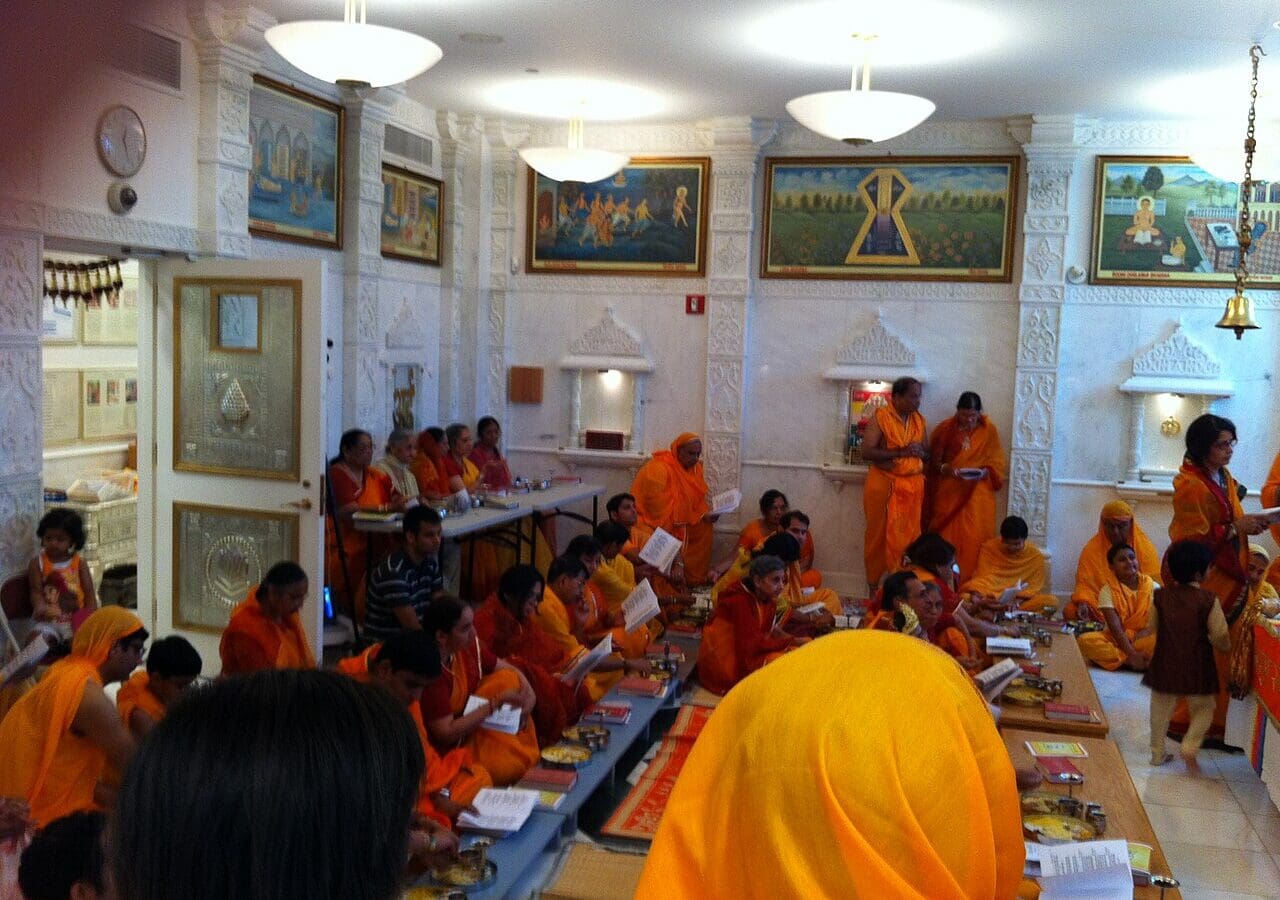
After weeks of fasting, reflection and spiritual discipline, Jain communities turn toward one of their faith’s most demanding ideas: seeking forgiveness from every living being.
Across Jain communities this September, a remarkable religious season has been unfolding. There have been fasts, extended periods of prayer, study of sacred texts and deliberate withdrawal from some of the distractions of ordinary life. But the culmination is not a feast, a procession or the exchange of gifts.
It is an apology.
As the major Jain observances of Paryushan and Das Lakshana conclude, forgiveness comes to the foreground. Śvetāmbara Jains completed Paryushan earlier this month with Samvatsari, while Digambara communities completed the ten-day Das Lakshana festival on September 25 and are marking their associated period of forgiveness, Kshamavani, around this weekend. Precise observance can vary by local calendar and community tradition.
The result is one of the most distinctive religious practices found anywhere: believers intentionally approach relatives, friends, acquaintances and the wider community to ask forgiveness for harm they may have caused, whether knowingly or unknowingly.
Yet in Jain thought, the request extends further still. Forgiveness is ultimately sought from all living beings.
Two traditions, a shared movement inward
Jainism is an ancient Indian religious tradition whose followers are divided principally between the Śvetāmbara and Digambara traditions. Their practices and interpretations differ in important ways, and their principal September observances should not simply be treated as two names for the same festival.
Śvetāmbara Jains observed Paryushan from September 8 to 15 in 2026. The eight-day period emphasizes introspection, religious study, austerity and purification, culminating in Samvatsari, when practitioners undertake a particularly extensive form of pratikraman — reflection, confession and repentance.
Digambara Jains then observed Das Lakshana from September 16 to 25. Its ten days focus successively on ten virtues, beginning with Uttam Kshama, supreme forgiveness, and continuing through humility, straightforwardness, purity, truthfulness, self-restraint, austerity, renunciation, non-attachment and celibacy or disciplined conduct.
The Federation of Jain Associations in North America, JAINA, describes supreme forgiveness not simply as pardoning someone after an offence, but as overcoming the anger and passions that disturb the inner self.
This weekend, many Digambara Jains observe Kshamavani, when forgiveness moves from contemplation into direct human exchange.
“If I have caused you harm”
Perhaps the best-known expression associated with the Jain season of forgiveness is Micchami Dukkadam, commonly used among Śvetāmbaras at Samvatsari and also familiar more broadly across Jain communities.
The phrase is generally understood as asking that harm or wrongdoing be rendered fruitless: in practical terms, “If I have hurt you, knowingly or unknowingly, I ask your forgiveness.” Digambara communities commonly use the expression Uttam Kshama, invoking supreme forgiveness.
JAINA presents a traditional Jain prayer whose meaning reaches considerably beyond interpersonal reconciliation: “I forgive all living beings” and ask all living beings for forgiveness, while declaring friendship toward all and enmity toward none.
That universality is essential to understanding the practice.
Jain forgiveness is connected to a view of life in which human beings are not morally isolated from animals, insects and other living organisms. Actions matter because they affect other forms of life as well as the person performing them.
Ahimsa goes beyond simply not killing
This brings forgiveness directly into relationship with the principle for which Jainism is perhaps best known: ahimsa, or non-violence.
In Jain ethics, ahimsa extends beyond refraining from physical violence. Conduct, speech and even states of mind receive moral attention. Anger, hostility, carelessness and excessive attachment can become sources of harm.
According to JAINA’s introduction to Jain philosophy, three particularly important principles are ahimsa or non-violence, anekantavada or non-absolutism, and aparigraha or non-possessiveness.
Together, they create an unusually demanding ethical framework. Non-violence asks the individual to reduce harm. Non-absolutism encourages recognition that reality can be approached from more than one perspective. Non-possessiveness challenges attachment to material things and desires.
Forgiveness therefore does not stand apart from the rest of Jain life. It is woven into a larger attempt to reduce anger, ego, attachment and hostility.
Forgiveness without forgetting responsibility
From outside the tradition, a universal call to forgive can sound like an instruction simply to overlook wrongdoing. Jain teaching is more complex.
The annual practice includes examination of one’s own conduct. The first question is not merely whether somebody else deserves forgiveness, but what harm the practitioner has personally caused.
Pratikraman, an important Jain practice particularly associated with these holy days, involves looking back at actions and attitudes, acknowledging faults and renewing the intention to act with greater discipline.
The emphasis is consequently on responsibility rather than self-justification.
Young Jains of America explains that these observances are periods of intensive study, reflection and purification. Practitioners may undertake temporary vows, fasting and other disciplines while reducing ordinary activities and turning their attention inward.
This helps distinguish Jain forgiveness from a casual apology offered because custom requires one. The religious ideal demands an examination of the passions — especially anger and pride — that contributed to harmful behaviour in the first place.
A religion of radical carefulness
The intensity of Jain ethics is visible even in ordinary daily practices.
Many Jains follow strict vegetarian diets. Jain monks and nuns traditionally observe particularly rigorous disciplines intended to avoid harming even very small forms of life. Laypeople apply the same principle according to different levels of religious commitment and practical circumstance.
The five great vows identified in Jain teaching are non-violence, truthfulness, non-stealing, chastity and non-possession. For ascetics they are undertaken in their fullest form; householders traditionally observe corresponding commitments adapted to lay life.
Underlying them is a distinctive vision of moral responsibility. Small actions count. Intentions count. Words count. Habits count.
From this perspective, the annual request for forgiveness is not surprising at all. If ethical responsibility extends into the details of everyday existence, then acknowledging that one has inevitably fallen short becomes part of religious realism.
Forgiveness as a community practice
There is also something socially unusual about making apology collective.
In many cultures, asking forgiveness is associated with a specific dispute: one person has offended another and eventually apologizes. The Jain observance creates a recurring moment when the entire community is encouraged to examine relationships, release resentment and seek reconciliation even when no dramatic conflict has occurred.
Modern communications have expanded that practice. Jain families and communities now exchange messages of forgiveness across countries and continents, while younger Jains use social media and online gatherings to maintain the tradition far from temples or established Jain population centres.
The technology may be new, but the underlying question is ancient: what would happen if people periodically assumed that they might have caused harm they had failed to notice?
From non-violence to humility
Jainism is often introduced to outsiders through vegetarianism or the remarkable care its ascetics take to avoid injuring living creatures. Those practices are important, but the season now concluding reveals another side of the same religious vision.
Non-violence is not only about what a person refuses to do to another body. It also concerns anger, possessiveness, speech, judgment and the relationships human beings construct around themselves.
That is why forgiveness occupies such an important place in Jain spirituality.
After fasting, study and reflection, the believer eventually has to turn toward another being and confront a much less abstract spiritual exercise: admitting the possibility of having caused harm.
For Jain communities completing this sacred season in 2026, the final religious gesture is therefore one of deliberate humility — forgiving others, asking forgiveness from others and attempting to leave behind enmity.
In a religious tradition built around reducing harm to life in all its forms, perhaps the most difficult form of non-violence begins with the words: forgive me.