


AI-generated illustrationTransparency information
AI-generated images: One or more images accompanying this report were generated or substantially modified using artificial intelligence. They are illustrative and should not be understood as documentary photographs unless explicitly stated otherwise.
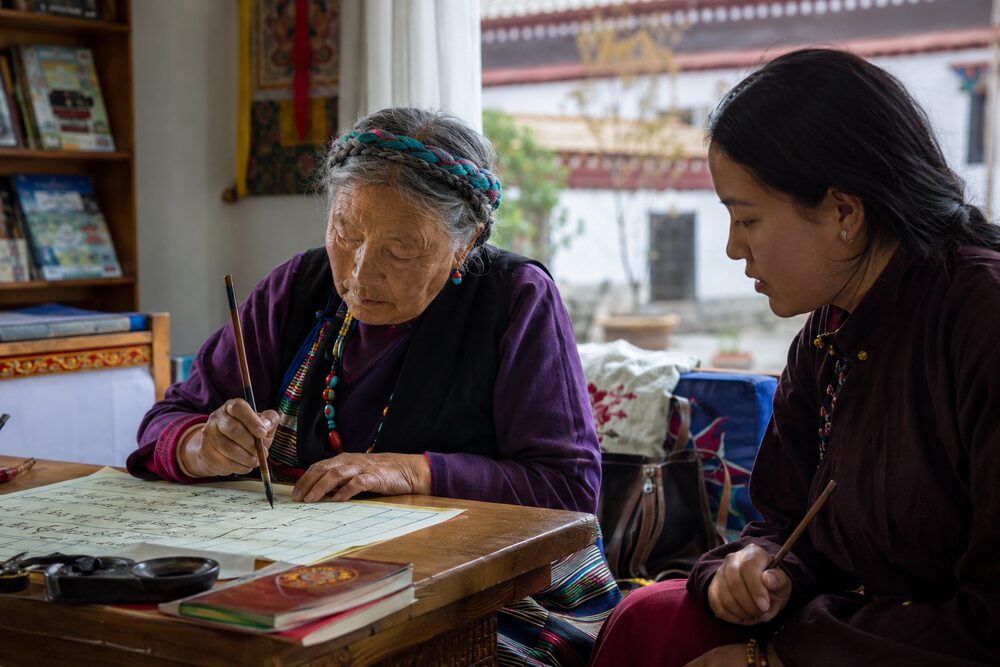
At 73, retired nurse Kalsang Lhamo is learning to write the language she has spoken throughout her life. Her study of Tibetan calligraphy, grammar and poetry illustrates a quiet but determined effort to pass cultural and religious identity from one generation to the next.
Lhamo attends classes at a center for older adults in Lhasa, where she tries to study each day. She was unable to attend school as a child, but retirement has given her an opportunity to gain the literacy she missed. Her story was documented in recent Associated Press reporting from Tibet.
The same report described younger Tibetans speaking their language at home, learning traditional crafts and attending Buddhist rituals. Nineteen-year-old aspiring teacher Qongqiu Quco, who visited Lhasa’s Jokhang Temple with relatives including Buddhist nuns, spoke about her generation’s desire to carry Tibetan culture forward.
Language and Religion Remain Closely Connected
Language preservation has particular importance in Tibetan Buddhist life. Tibetan is used in religious teaching, scripture, philosophy, ritual and the transmission of knowledge between monastics and lay communities. Losing access to the written language can therefore weaken more than everyday communication; it can also limit direct engagement with a centuries-old spiritual and intellectual tradition.
The Jokhang Temple remains one of Tibetan Buddhism’s most sacred sites, while the Potala Palace carries profound religious and historical meaning as the former winter residence of successive Dalai Lamas. Thousands of local believers and visitors continue to pray and leave offerings at these places.
Yet the environment surrounding that practice is tightly controlled. The current Dalai Lama, whom Tibetan Buddhists regard as their spiritual leader, is not publicly represented at either site. He has lived in exile since 1959, and the question of his eventual succession remains disputed between his office and the Chinese government.
Preservation Under New Pressure
The cultural work is unfolding after China implemented a new “ethnic unity” law on July 1. The legislation makes Mandarin the primary language of schools and government agencies and calls on institutions and families to strengthen a unified national identity. A separate Associated Press account of the law examined concerns that it could accelerate assimilation among Tibetans and other minority communities.
Chinese authorities maintain that their policies expand educational opportunity and strengthen national cohesion. Critics and specialists argue that the new law formalizes a longer shift away from minority-language education. The AP also disclosed that its journalists traveled on a government-organized visit, were accompanied by officials and could not report independently outside the arranged itinerary.
Those limitations make careful interpretation essential. Public displays of crafts or culture do not necessarily demonstrate that religious and linguistic freedom is secure. At the same time, the choices made by individuals such as Lhamo and Quco should not be overlooked.
An older woman learning to write, a young teacher speaking Tibetan with her family and worshippers continuing to visit sacred sites are modest acts, but together they sustain a living inheritance. Their example shows that cultural preservation is not confined to museums or official celebrations. It also happens at kitchen tables, in classrooms, within families and through the continued practice of faith.
The hopeful element of this story is therefore a careful one. It does not erase the restrictions or disagreements surrounding Tibet. It lies in the persistence of people who continue to learn, teach, pray and remember, keeping open a path by which their language and Buddhist heritage may reach another generation.