


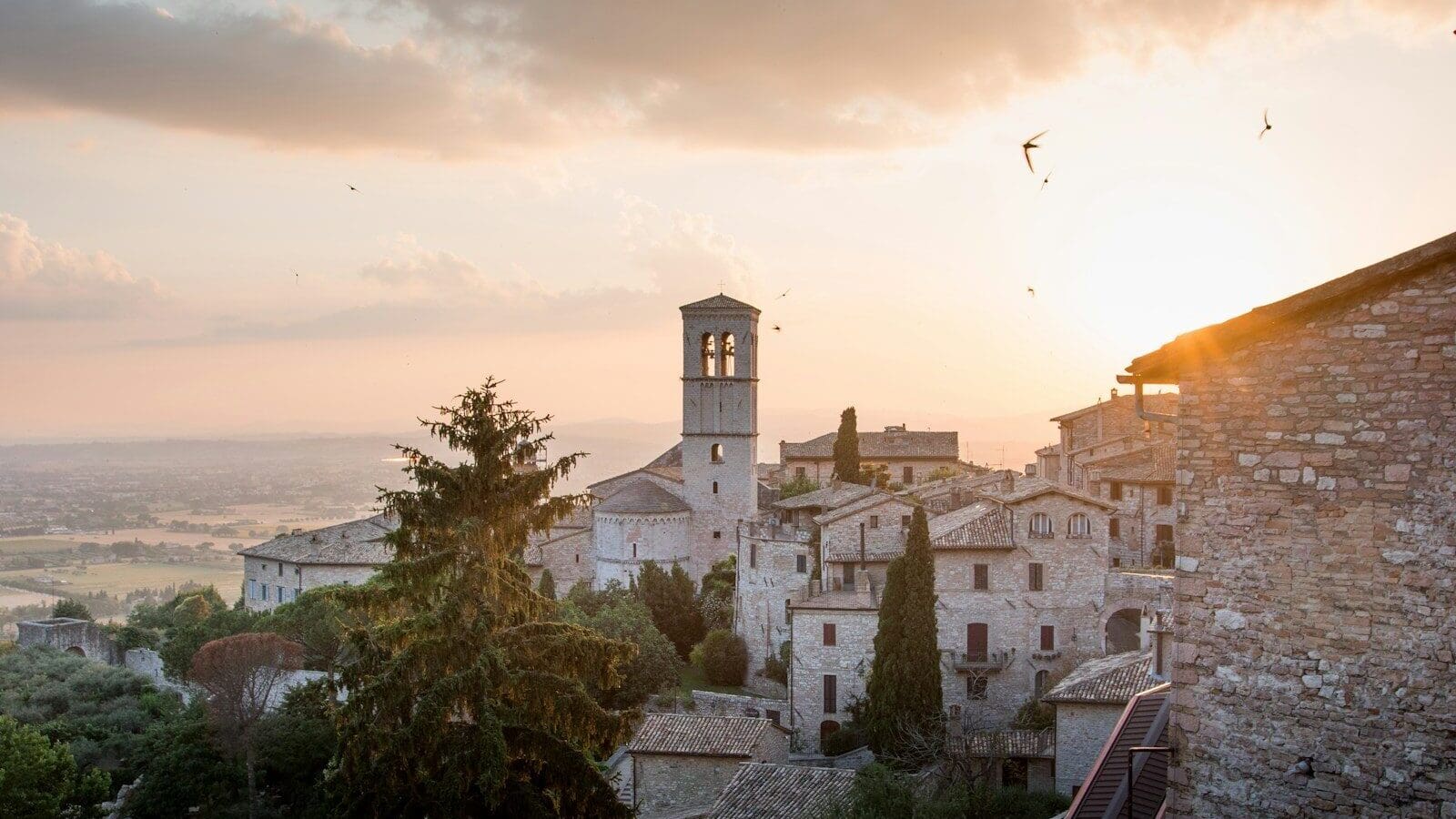
ASSISI, Italy — Forty years after a landmark gathering placed this Italian hill town at the heart of modern interreligious dialogue, religious leaders have returned to Assisi with a shared message: faith communities can help create peace without surrendering their distinct identities.
The Oct. 25-27 International Meeting for Peace, organized by the Community of Sant’Egidio under the theme “Unarmed and Disarming Peace,” has brought together representatives of religious communities, civic institutions and cultural organizations. According to the official Assisi event program, the gathering includes 384 representatives from 53 countries, 155 speakers and 24 thematic forums. Organizers expected approximately 5,000 participants, a figure the World Council of Churches said the meeting had surpassed.
The event commemorates the World Day of Prayer for Peace convened in Assisi by Pope John Paul II on Oct. 27, 1986. That unprecedented meeting brought Christians together with representatives of Judaism, Islam, Buddhism, Hinduism and other traditions. Four decades later, Assisi is again serving as a meeting place for communities confronting war, displacement, environmental degradation and political polarization.
Participants in this year’s forums have addressed conflicts, nuclear disarmament, migration, democracy, poverty, technology and the environment. The breadth of the agenda reflects a central premise of the gathering: peace is more than the absence of armed conflict. It also depends on human dignity, responsible institutions, care for vulnerable people and attention to the conditions that allow communities to flourish.
Climate responsibility has been one significant part of the discussion. Bishop Heinrich Bedford-Strohm, moderator of the World Council of Churches’ central committee, presented the council’s Ecumenical Decade of Climate Justice Action. In reflections reported by the World Council of Churches, he urged religious communities to reach both the minds and hearts of people while advocating for an economy compatible with ecological responsibility and the well-being of future generations.
The meeting’s final day is designed to preserve the integrity of each participating tradition. Christian leaders are scheduled to pray in the Basilica of St. Francis, while Jewish, Muslim, Buddhist, Hindu and other participants pray simultaneously in separate locations according to their own customs. ANSA reported that 13 prayer locations were prepared for the different communities.
Pope Leo XIV is expected to join Ecumenical Patriarch Bartholomew and other Christian leaders in Assisi on Tuesday. Muslim, Jewish, Hindu and Buddhist representatives are also participating in the wider gathering. After the separate prayer observances, leaders are scheduled to assemble in the Lower Square of the Basilica of St. Francis for the closing ceremony and a public appeal for peace.
This structure carries an important message. Interfaith cooperation does not require different religions to blur their beliefs or worship practices. It can instead begin with mutual respect, honest encounter and a willingness to work together on urgent human problems.
No conference can end a war by itself, and participants in Assisi are meeting amid conflicts that demand sustained diplomatic and humanitarian action. Yet religious communities possess networks, moral languages and local relationships that can support reconciliation long after international attention moves elsewhere.
The constructive promise of the “Spirit of Assisi” lies in turning a symbolic gathering into patient work: welcoming displaced families, resisting religious hatred, educating young people, protecting the environment and keeping channels of dialogue open during periods of fear. Forty years after the original meeting, Assisi’s renewed witness suggests that religious difference need not be a barrier to solidarity. It can become a reason to listen more carefully and cooperate more deliberately.