


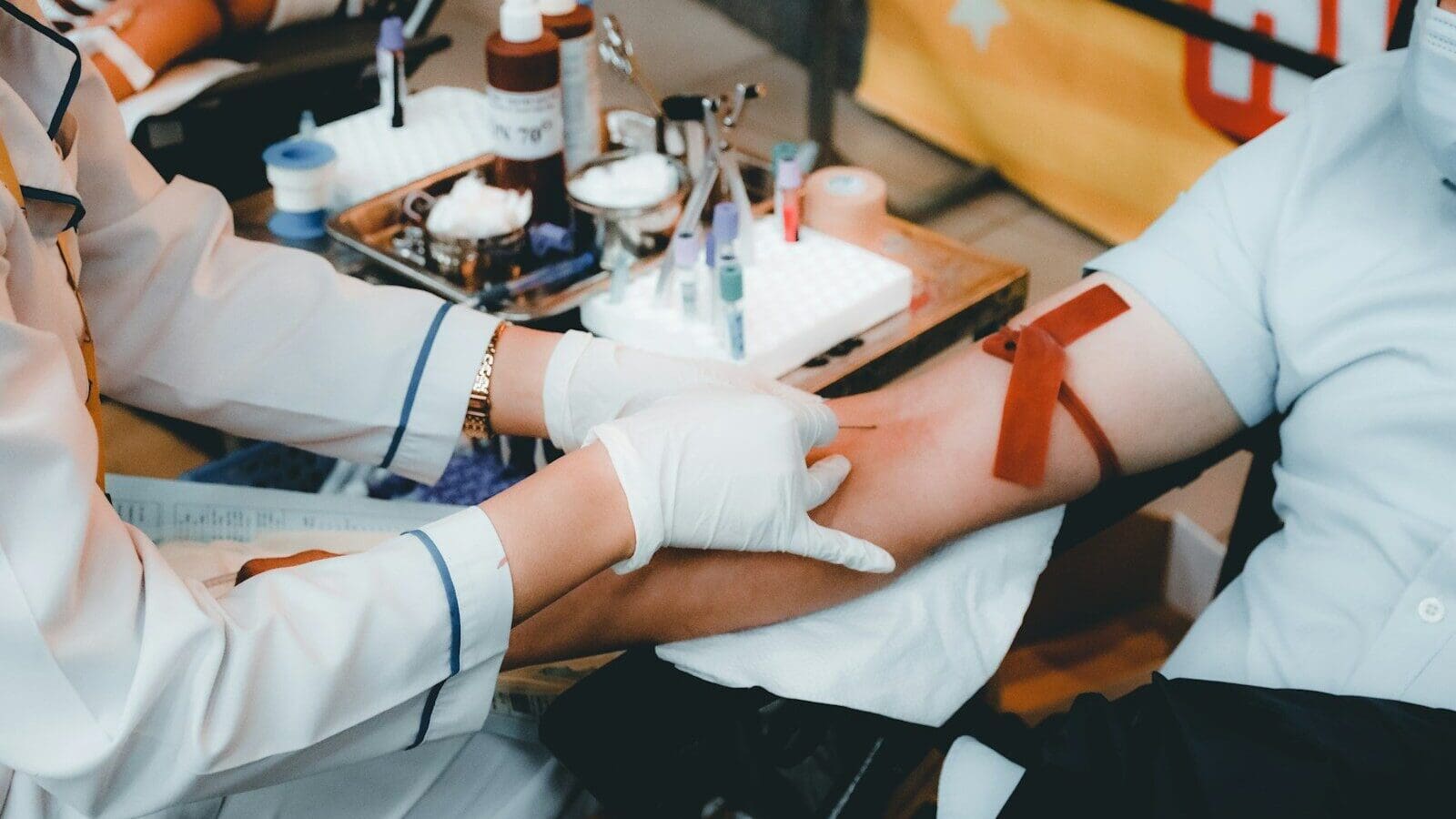
Members may now individually decide whether to accept or donate major blood components, while the religious prohibition on whole-blood transfusions remains unchanged.
Jehovah’s Witnesses have significantly revised one of their most distinctive religious practices, allowing individual members to decide whether they can accept red cells, white cells, plasma or platelets from another person’s blood.
The change, announced by the religious organisation on September 18, also permits each Witness to decide whether to donate blood specifically so that its components or fractions can be used in the medical treatment of another person.
The organisation stressed, however, that its longstanding rejection of whole-blood transfusions has not changed. Members are still expected neither to receive whole blood nor to donate it for use in a whole-blood transfusion.
A decision placed in individual hands
Until now, Jehovah’s Witnesses distinguished between the four primary components of blood—which were generally prohibited—and smaller fractions derived from those components, whose use could be left to individual conscience. The new position extends that freedom of conscience to red cells, white cells, plasma and platelets themselves.
“We recognize that medical decisions involving blood components are a matter of conscience between each Witness and their God, Jehovah,” Paul Gillies, an international spokesman for Jehovah’s Witnesses, said in the announcement.
The organisation added that congregations should not intervene in such personal medical decisions and should respect the choices made by individual believers.
This represents a substantial shift because the four components covered by the announcement account for virtually all of whole blood. According to the American Red Cross explanation of blood-component therapy, donated blood is commonly separated into specific elements so patients receive the particular component required for their condition.
Red cells transport oxygen and are frequently used in cases of anaemia, trauma and acute blood loss. Platelets help control bleeding and are important in cancer treatment, organ transplantation and surgery. Plasma contains clotting proteins and may be administered to patients suffering from burns, shock, liver disease or bleeding disorders. Certain white cells may be used to fight severe infections.
The practical consequence is that a Jehovah’s Witness may now accept many common transfusion treatments without automatically acting contrary to the organisation’s religious teaching. The decision must instead be made personally, in consultation with medical professionals and according to the believer’s conscience.
The whole-blood prohibition remains
Jehovah’s Witnesses base their position on biblical passages instructing Christians to “abstain from blood,” including Acts 15:20 and Acts 15:28-29. While most Jewish and Christian traditions understand such passages primarily in relation to consuming blood, Jehovah’s Witnesses have long applied the command to medical transfusions as well.
“Blood remains sacred to Jehovah’s Witnesses, who continue to regard life and blood as precious gifts from God,” Gillies stated.
The revised policy therefore draws a religious distinction between whole blood and the components into which blood can be separated. Although an individual may now accept all four principal components, accepting them together in the form of whole blood remains prohibited.
The Associated Press described the announcement as the second major modification of the Witnesses’ blood policy during 2026. In March, the Governing Body ruled that members could decide for themselves whether to have their own blood collected, stored and later returned to them during medical treatment.
Previously, Witness patients had generally been able to accept procedures such as dialysis or intraoperative blood salvage only when the removed blood was understood to remain in continuous circulation. The earlier 2026 adjustment broadened the options available for the planned storage and later use of a patient’s own blood.
Faith, medicine and informed consent
Religious objections to transfusions have produced complex medical and legal questions for decades, particularly when emergency treatment is required. For competent adults, the right to refuse a medical intervention—even one considered essential by doctors—is generally treated as an important expression of bodily autonomy and freedom of religion or belief.
Cases involving children are more difficult. Courts in several countries have authorised transfusions for minors when physicians concluded that the treatment was necessary to prevent death or serious harm, even where parents objected on religious grounds.
Jehovah’s Witnesses state that they do not practise faith healing and that members seek effective medical care. The community has also worked with hospitals and physicians to encourage blood-conservation techniques, including minimally invasive surgery, careful management of anaemia and methods intended to reduce blood loss.
Some of these approaches have developed into wider programmes of patient blood management that can benefit people beyond the religious community. At the same time, critics of the Witnesses’ previous rules have argued that the restrictions could leave patients without medically necessary treatment, particularly during unforeseen emergencies or in places where specialised bloodless procedures are unavailable.
The latest change does not eliminate those disagreements. Whole blood may still be required in some cases of severe haemorrhage or trauma, and the organisation continues to consider its transfusion religiously unacceptable. However, permitting the use of the primary components greatly expands the range of treatments that Witness patients may conscientiously consider.
A change affecting a global community
Jehovah’s Witnesses report more than nine million active members in congregations across over 200 countries and territories. A policy governing medical treatment can therefore have consequences for patients, families and healthcare institutions around the world.
The revision is also notable for the way it frames religious authority. Rather than prescribing one answer for every medical situation involving blood components, the organisation has transferred responsibility to the individual believer.
That does not make the decision simple. Members confronting serious illness will still have to weigh medical advice, personal conscience and their understanding of biblical teaching. Physicians, meanwhile, will need to establish what each patient is prepared to accept rather than assume that all Jehovah’s Witnesses hold identical medical preferences.
The enduring prohibition on whole blood preserves a central feature of Witness religious identity. Yet the expanding sphere of individual conscience marks a consequential evolution—one that could reshape conversations between millions of believers and the doctors entrusted with their care.